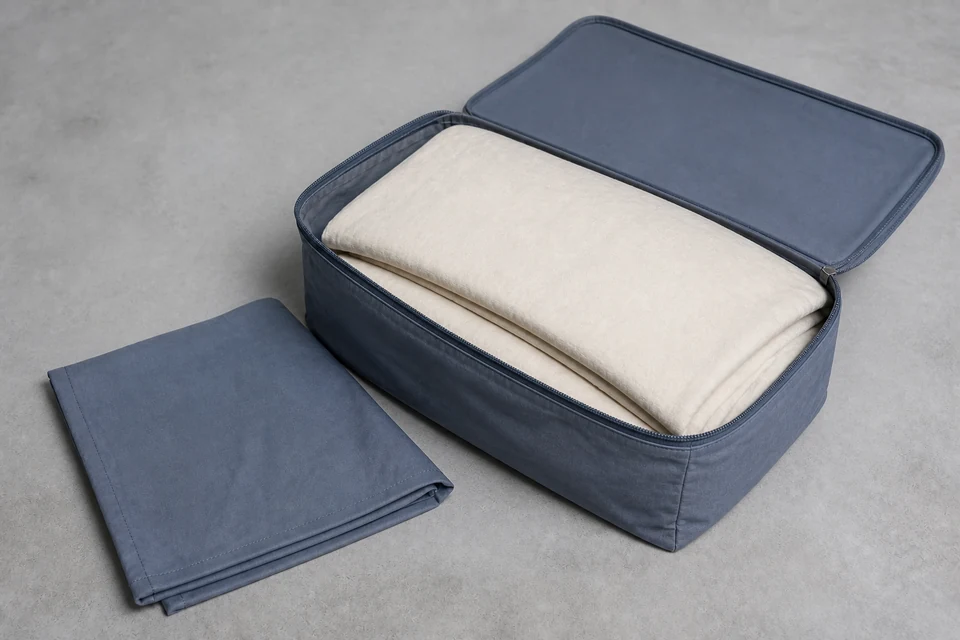
A bedding storage bag may look generous when a skilled packer closes it around a factory-folded sample, then become frustrating when a customer tries to put the same duvet away at home. Reusable packaging therefore needs a different approval exercise from one-time pack-out. The buyer must consider ordinary refolding, zipper clearance, seam loading, storage conditions and the instructions that accompany the bag. This guide sets a practical trial for a textile storage case. It does not claim a particular number of reuses, an environmental benefit or protection against dampness unless those statements have their own suitable evidence.
Define what the bag is expected to store
Factory packing and ordinary reuse are different conditions
List the bedding pieces, sizes and condition in which they will return to the bag. A freshly unpacked duvet, a laundered duvet and a carefully compressed factory sample may occupy different volumes. State whether the bag is intended for one item, a full set or an accessory combination. The packaging approval checklist should identify the storage function separately from the protective outer packaging used during shipment.
Define the intended storage situation and the user's likely folding method without assuming specialist equipment. If compression is required, state how it can be performed and whether that expectation is realistic for the customer. The compression-packaging guide addresses a related but distinct process; a transport compression result does not establish convenient repeated storage. Keep any proposed moisture, dust or other protective claim separate from the simple observation that the product fits inside.
- List every intended stored configuration.
- Distinguish factory and customer packing.
- State any required compression method.
- Separate fit from protective claims.
Review bag geometry and the closure path
Allow space for the product, not just its folded dimensions
Measure the usable internal space and opening rather than only the external panel size. Inspect corners, binding, seam allowances, lid shape and the path of the zipper around the filled bag. A case can have adequate volume yet an opening that makes insertion awkward. The zipper-component guide helps identify the proposed closure, while the assembled-bag trial checks whether it is positioned sensibly around the actual bedding.
Place the intended contents inside without forcing a precise showroom fold and inspect the clearance between fabric and zipper teeth. Check whether the lid closes naturally or requires the user to pull hard on one corner. Record local bulging and areas where the seam carries concentrated strain. Do not solve poor fit by accepting a more aggressive closure action; that can conceal a dimensional issue and does not demonstrate that ordinary users can repack the product successfully.
- Measure usable space and opening dimensions.
- Inspect the complete zipper path.
- Check fabric clearance at corners.
- Record lid tension and local bulging.
Run realistic repacking trials
Use several ordinary folds and independent participants
Give participants the bedding and the proposed instructions, then ask them to repack it using normal handling. Avoid coaching each person into the factory's exact fold before observing the first attempt. Record the sequence, difficult points, closure interruptions and whether any bedding is caught in the zipper. The retail folding guide supports the initial presentation, but repeated storage should also be assessed after that original fold has been lost.
Agree the number and scope of repetitions before the trial and retain the same identified bags throughout it. Inspect seams, binding, zipper operation and fabric appearance at the agreed intervals. If a component fails, preserve the bag and record the conditions instead of replacing it silently and continuing the count. Any claim about repeated use must be limited to the evidence gathered; a small internal trial should not be converted into an unqualified lifetime or sustainability statement.
- Observe first attempts without detailed coaching.
- Record catches and closure interruptions.
- Keep each trial bag identifiable.
- Preserve and investigate failed samples.
Check care instructions and storage assumptions
The bag and bedding may not share the same care route
Decide whether the bag is washable and, if so, define and validate its own care instruction. Do not automatically apply the bedding's instruction to different bag materials, trims or binding. After the agreed treatment, repeat the relevant fit and closure checks. The care-label checklist can keep the instruction linked to the tested bag revision rather than copied from a nearby product in the catalogue.
Review the instruction for returning only appropriately dry, clean bedding to storage according to the product's care requirements. A textile bag should not be represented as resolving moisture already present in its contents. The moisture-control guide provides broader handling context, but customer storage claims need their own relevant evidence. Keep the wording clear about what the bag does, what the user must do and which conditions were not evaluated.
- Validate the bag’s own care instruction.
- Repeat fit checks after bag care.
- State appropriate content condition for storage.
- Avoid unsupported moisture-protection promises.
Release the complete storage-pack system
Dimensions, contents and instructions must stay aligned
Approve the bag specification together with the bedding configuration, instructions, closure component and trial record. Include the bag in the product bill of materials so a supplier cannot substitute a smaller case or different zipper without review. If the bedding loft or set contents change, revisit the storage trial even when the bag itself remains unchanged; the interface between the two is what was approved.
At pack-out, verify that the correct case is paired with the correct SKU and that the initial fold does not conceal an undersized bag. Keep a retained example for later complaint comparisons. Send FY Bedding a storage-pack brief with the bedding sizes, set contents, expected reuse behaviour and intended instructions. This supports a practical prototype discussion while keeping commercial reuse and environmental claims within the evidence the buyer can actually defend.
- Release bag and bedding configuration together.
- Control zipper and dimension substitutions.
- Recheck fit after changes to contents.
- Retain a packed reference for complaints.
Can ordinary users repack the intended bedding without forced compression, zipper catches or excessive seam loading under the conditions actually claimed?