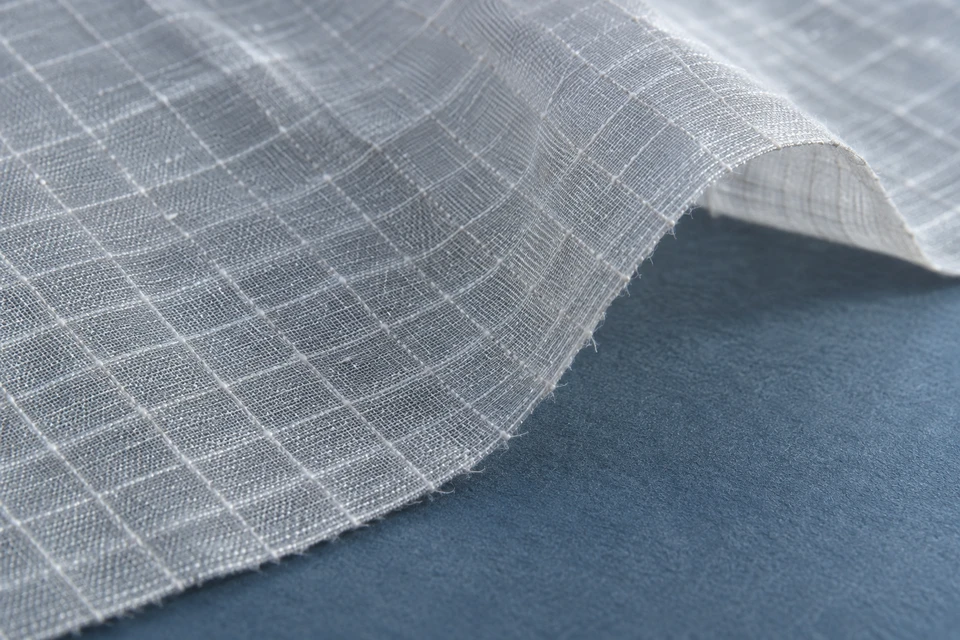
A small square grid can make a textile look technically convincing. For a buyer considering a ripstop shell for a home-textile accessory, that visible pattern is only a starting point. The purchasing decision requires a construction description, a defined use and appropriate evidence for any performance claim. A photograph of reinforcement yarns is not a tear-test result, and a fabric result does not automatically establish the performance of the complete sewn article.
Establish what creates the grid
Separate woven reinforcement from a printed appearance
Ask the supplier whether the visible lines are part of the weave and what yarn arrangement creates them. Extremtextil describes ripstop in terms of stronger threads introduced at intervals in the fabric directions. That construction description helps explain the familiar grid, but it does not assign a universal rating to every fabric carrying the name. Request the actual fibre composition and yarn-construction information relevant to the offered reference, rather than treating the trade word as a full technical specification.
Inspect an identified swatch on both faces and at a cut edge where practical. A printed checked pattern or a surface embossing should not be confused with woven reinforcement. Conversely, visual prominence alone is not a reliable measure of how a cloth will perform. Record the supplier's construction account and any unresolved identity questions. Do not use an improvised hand-tearing demonstration as proof of composition, weave identity or suitability for the intended article.
Define the job of the textile shell
Name the use before asking for a number
State whether the shell is proposed for a storage accessory, a cushion-related component or another clearly described home-textile item. Record likely handling, the supported or unsupported condition, closures, seams and any separate lining. Do not allow an outdoor-fabric description to imply that an indoor product is weatherproof, load-bearing or protective. Those are distinct claims requiring their own applicable assessment and evidence. A familiar material category cannot settle the complete product's use conditions.
Identify the failure or appearance concern that actually matters to the buyer. A concern about a cut propagating is different from concern about a seam opening, abrasion, snagging or leakage through a coating. Ask the responsible technical provider to propose an appropriate assessment for that concern. Keeping the question precise helps avoid a quotation that supplies an impressive but irrelevant result. It also allows an alternative fabric to compete on the intended requirement rather than on the visibility of its grid.
Connect any test report to the offered cloth
Read identity, direction and method together
Where tear performance is material to the purchase, request evidence for the exact fabric reference and relevant finished state. Check the sample description, composition where provided, report date, method, tested directions, units and reported results. Ask a competent testing provider which procedure and acceptance criteria suit the intended use. Different procedures can measure different responses, so two numbers should not be ranked simply because both are described as tear strength.
Confirm whether the report covers the coated, laminated or otherwise finished material being quoted, if such a finish is actually part of the offer. A result for a different weight, construction or processing stage is not automatically transferable. If the identity is incomplete, request clarification rather than filling the gap from a catalogue image. A report may support a narrowly worded material claim; it does not become a guarantee that an assembled accessory cannot tear in service.
Inspect how construction meets the grid
Seams and openings introduce new decisions
Request a representative sewn sample showing the proposed seam positions, closure openings and any attachments. Look at whether the grid remains visually acceptable across the assembled panels and whether construction details differ from the approved drawing. Do not prescribe a universal relationship between seam placement and reinforcement lines without the supplier's construction input. The correct arrangement depends on the actual fabric and article, not on an assumed rule about squares.
Review the sample in the intended supported or unsupported configuration. Record seam concerns separately from fabric concerns so that a change in sewing is not mistaken for a change in the cloth itself. If additional product-level testing is needed, define it with the responsible specialist and identify the exact assembled reference. A shell can contain a technically described fabric while still needing development at a corner, opening or attachment. Acceptance should address the completed item being purchased.
Check finish and presentation independently
Do not let a technical pattern conceal ordinary defects
Examine the full surface for unwanted visual variation, creases and finishing inconsistencies, using representative lighting and handling. Where a coating or other added finish is specified, ask what it is intended to do and what evidence supports the relevant claim. Do not infer water resistance, flame behaviour or washability from a glossy face or from the ripstop description. Each property needs a defined scope and appropriate supporting information for the offered material or article.
Open the proposed delivery pack and inspect the shell after its agreed recovery period, if recovery is relevant. A compact pack can change how folds and surface marks appear, without answering the tear-performance question. Record these presentation observations in their own section of the sample review. Separating identity, performance and presentation prevents a good result in one area from silently approving the others. It also makes a supplier's corrective action more specific and easier to verify.
Quote the verified construction and claim scope
Preserve the chain through repeat orders
The quotation should name the fabric reference, composition, finished state, dimensions and assembled product scope. Attach the agreed evidence requirements and approved sample identity. Ask whether alternative fabric references, grid arrangements or finishes change minimum order, sampling work or lead time. Keep those commercial answers current to the project; do not assume that a mill's standard-looking grid means immediate stock or an unchanged production route.
At repeat order, ask the supplier to disclose changes to yarns, construction, finish or source before presenting the cloth as equivalent. Decide which changes require a new sample or renewed evidence review. Public wording should describe the construction and only those performance claims actually supported. A restrained description is more useful to a purchasing team than a promise that ripstop means tear-proof. The buyer needs an offer whose identity and limits remain clear after the sample meeting ends.
Before ordering, verify the woven grid identity, intended shell use, relevant report scope, sewn construction and any separately claimed finish; never convert a visible grid into an unsupported performance rating.
Method references: Extremtextil: woven ripstop reinforcement construction.