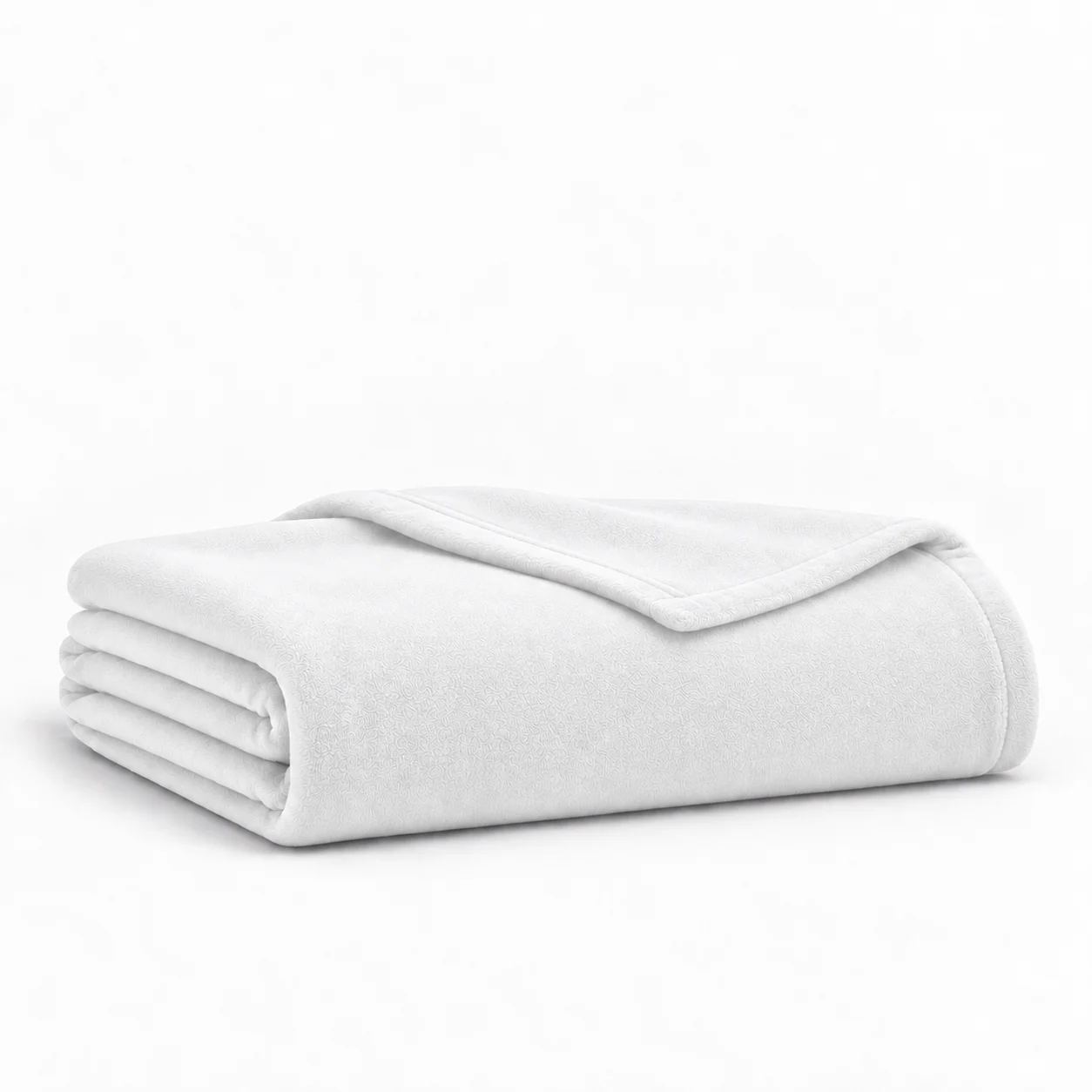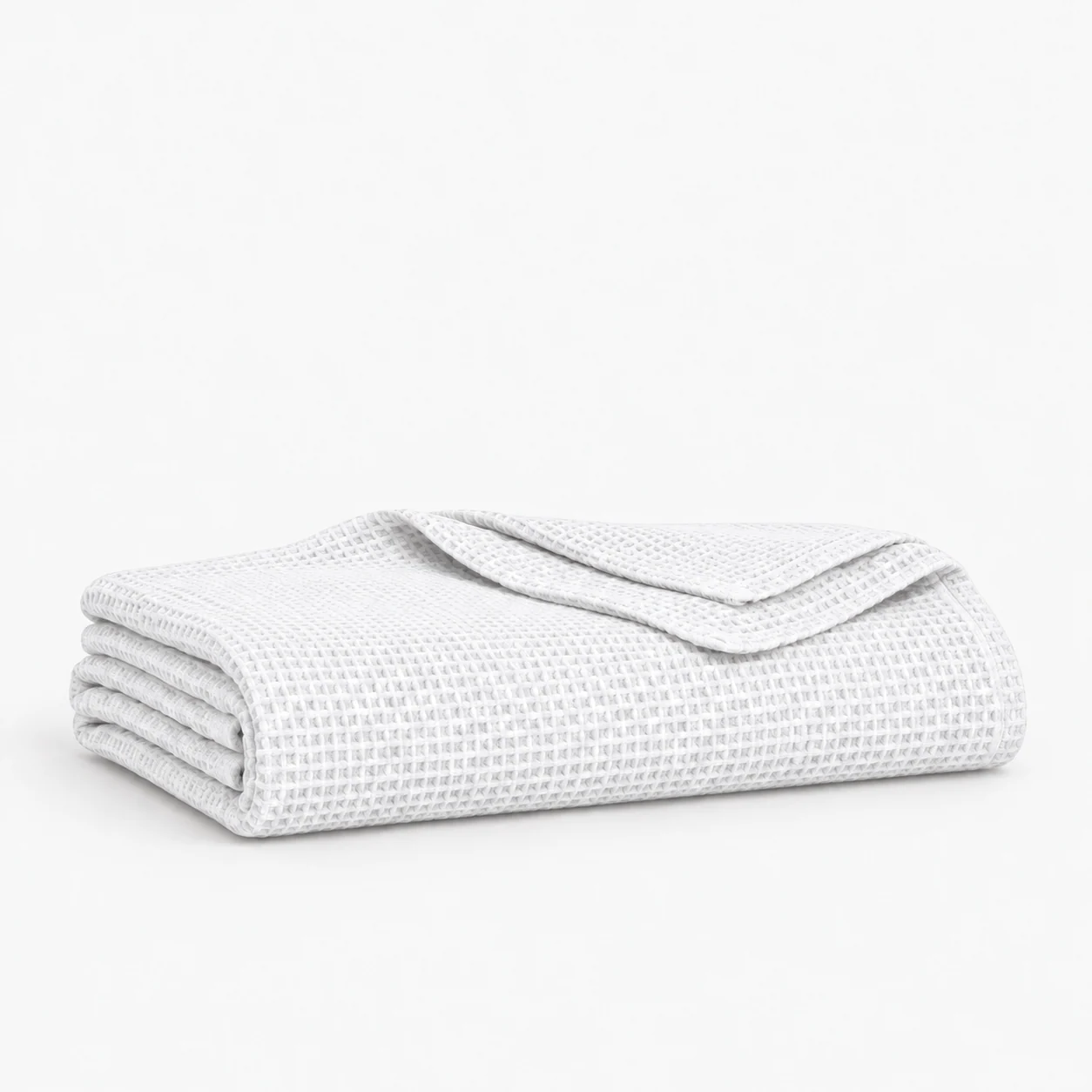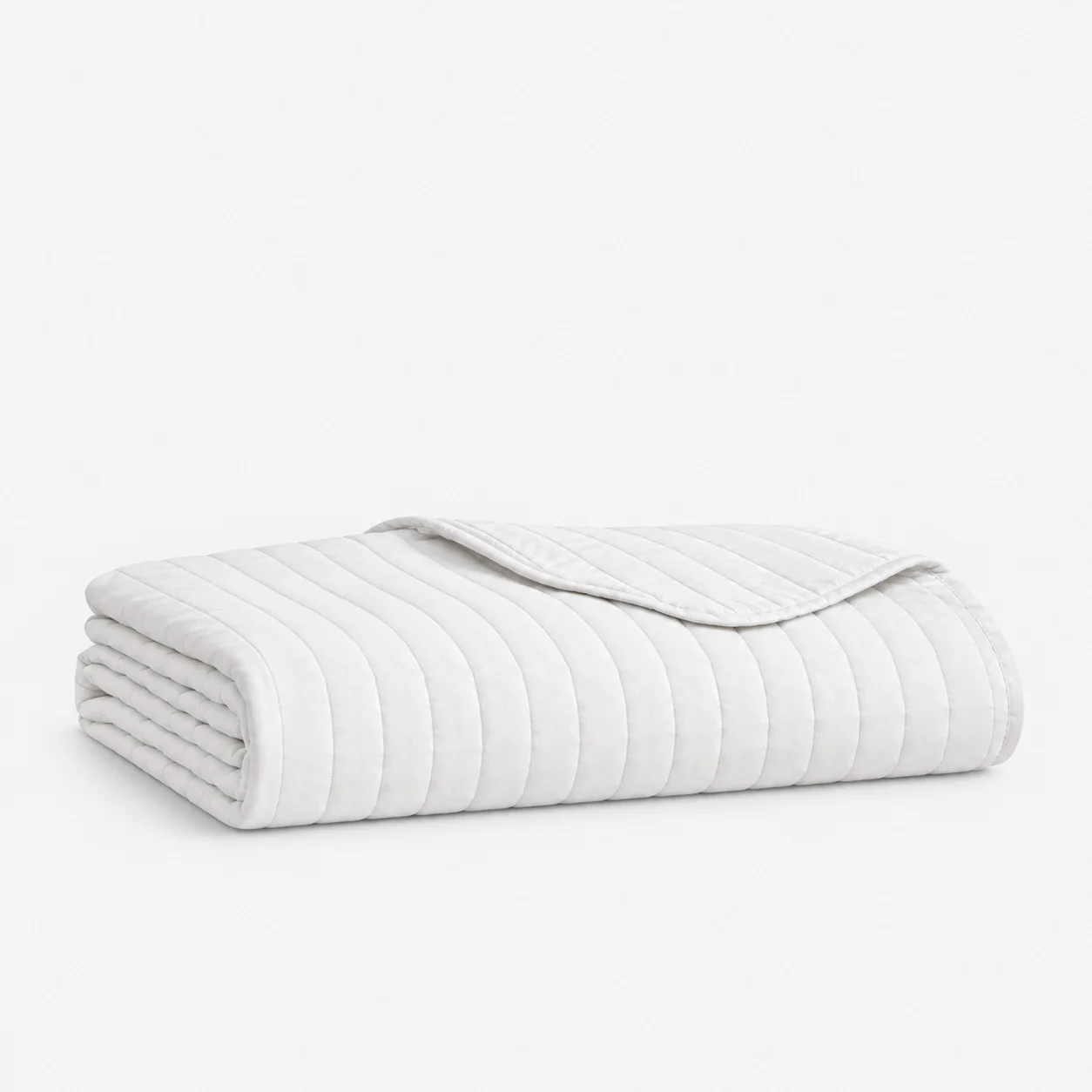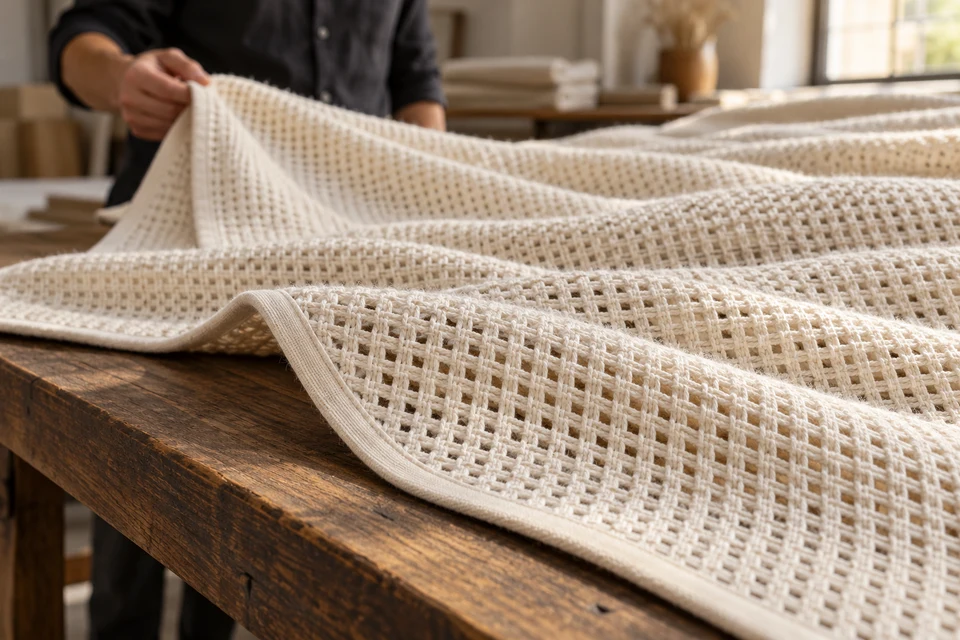
Two cotton cellular blankets can share a similar weight and still look and handle differently. The visible grid, yarn grouping and edge construction are part of the product identity, not details that can be left to a supplier after a colour is approved. For a buyer developing an everyday blanket range, the useful comparison is the complete woven field and finished perimeter before and after the agreed care process.
Describe the grid instead of relying on a style name
Make the reference reproducible
Ask the supplier to describe the proposed yarn and weave construction and to identify the sample used as the visual reference. Record the direction of the grid, the size and appearance of the openings under agreed measurement conditions, and the relationship between the yarn groups. A close photograph with a scale can support the specification, but retain a physical sample for hand and structure comparisons.
Do not allow the term cellular to stand in for a complete material specification. Confirm the fibre declaration, yarn details available for the project, finished dimensions and weight basis separately. The fabric-weight tolerance guide explains why a weight target needs a defined method. Weight alone should not be used to promise warmth, breathability or equivalence to a different blanket.
- Identify warp and weft directions on the reference.
- Record how the sample is relaxed before measuring the grid.
Inspect the woven field as a repeat structure
Look beyond one attractive close-up
Spread the blanket freely and inspect across its width and length. Look for local changes in the grid, pulled yarn groups, visibly uneven openings and areas that differ from the retained reference. Decide how appearance observations will be recorded and which departures require review. A photograph of one tidy square does not establish the consistency of the whole blanket.
Agree the inspection lighting, sample conditioning and handling so reviewers do not stretch the open structure differently. When comparing suppliers, conceal commercial labels if a blind visual review is useful, while retaining traceable sample identities in the record. The sample comparison scorecard can separate observations about the grid from preferences about softness. Do not turn a subjective ranking into an unsupported technical performance claim.
- Photograph representative centre, edge and corner areas.
- Use the same relaxed condition for each candidate.
Specify the bound edge with the open fabric
Approve the junction, not only the binding colour
Ask for binding width, material, seam placement and corner construction on the finished sample. Inspect whether the edge encloses the woven field consistently and whether stitches pull the open structure into a scalloped line. Review the corners from both faces. A binding that looks straight in a short swatch may behave differently around the full blanket perimeter, so include a full-size sample in the approval plan.
Discuss any proposed reinforcement or change in stitch arrangement before it reaches production. Keep those details with the accepted reference rather than allowing them to vary as hidden workmanship choices. The binding specification guide offers a way to name and photograph edge details. Its examples should be adapted to this open-weave blanket, not treated as automatic approval of a different construction.
- Measure visible binding width consistently on both faces.
- Record acceptable corner appearance and attachment to the woven field.
Compare grid and perimeter after the care sequence
Measure the relationship, not just the outer rectangle
Agree the care procedure and conditioning with the technical reviewer, then compare the same full-size blanket before and after. Measure the overall dimensions and examine the grid and binding together. A changed outer length does not explain whether the field, edge or both changed. Photograph any local pulling, curling or altered opening shape without stretching the blanket to recreate the original appearance.
Set acceptance criteria before testing and link the report to the exact yarn, binding and finishing combination. If the supplier changes one component, decide whether the existing evidence still covers the product. Use dimensional-stability planning to document the procedure. Avoid presenting unrecorded household washing as a formal test result, and do not infer a safe intended user or use category from the open-grid appearance.
- Keep field observations and perimeter measurements in the same record.
- Review changes to binding or finishing before reusing earlier evidence.
Choose the range using construction evidence
Keep merchandising claims separate from sample preference
Build the quotation around the approved construction, size range, colours, pack and care requirements. If a lighter or heavier option is proposed, request a separate comparison that shows what actually changes in the grid and edge. Do not assume a weight change is the only difference. Review the folded retail sample so the binding, colour and open structure are represented honestly in the presentation.
Use the retail claim matrix for any proposed comfort or performance wording. For specialized uses or user groups, obtain the appropriate product-specific review rather than extending an everyday blanket approval. FY Bedding can discuss a cellular-blanket brief containing the physical reference, dimensions and intended channel. Confirm sample scope, material availability and commercial timing through that project discussion.
- Keep each construction option identifiable in the quotation.
- Approve claims from evidence, not from the appearance of the holes.
A cellular blanket specification is incomplete if it names only cotton, size and weight. The approved grid, bound-edge construction and post-care comparison must be identifiable together so a reorder does not quietly become a different product.