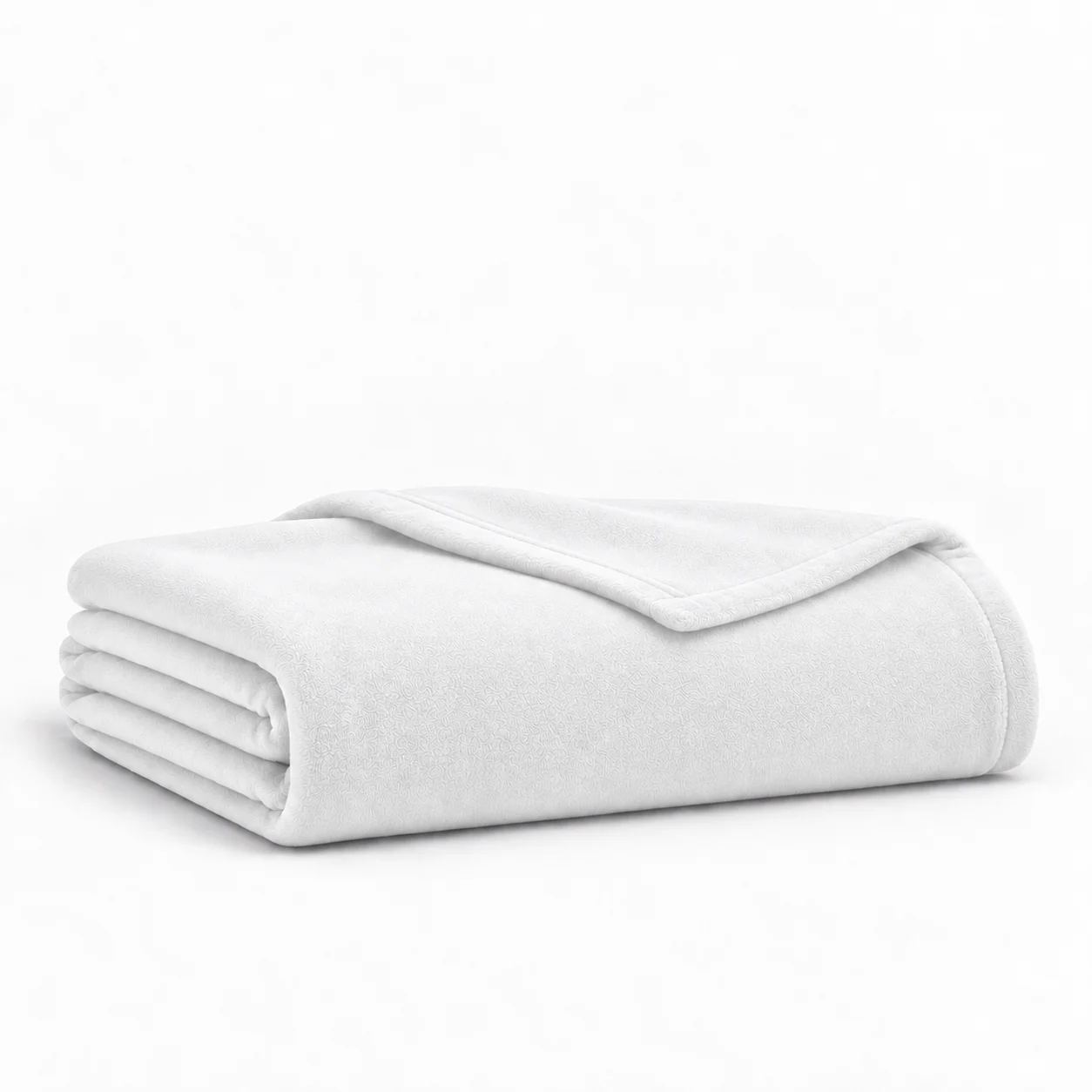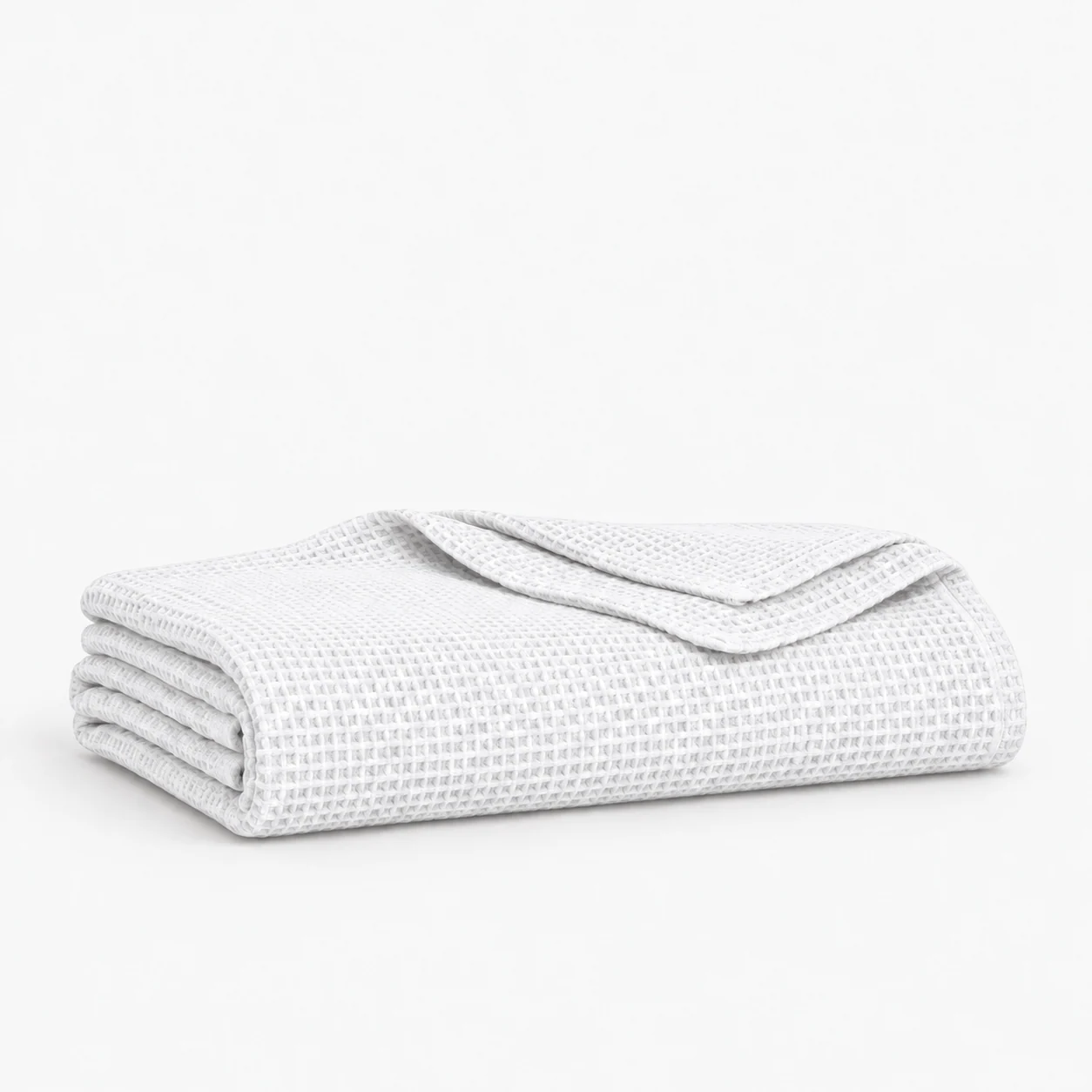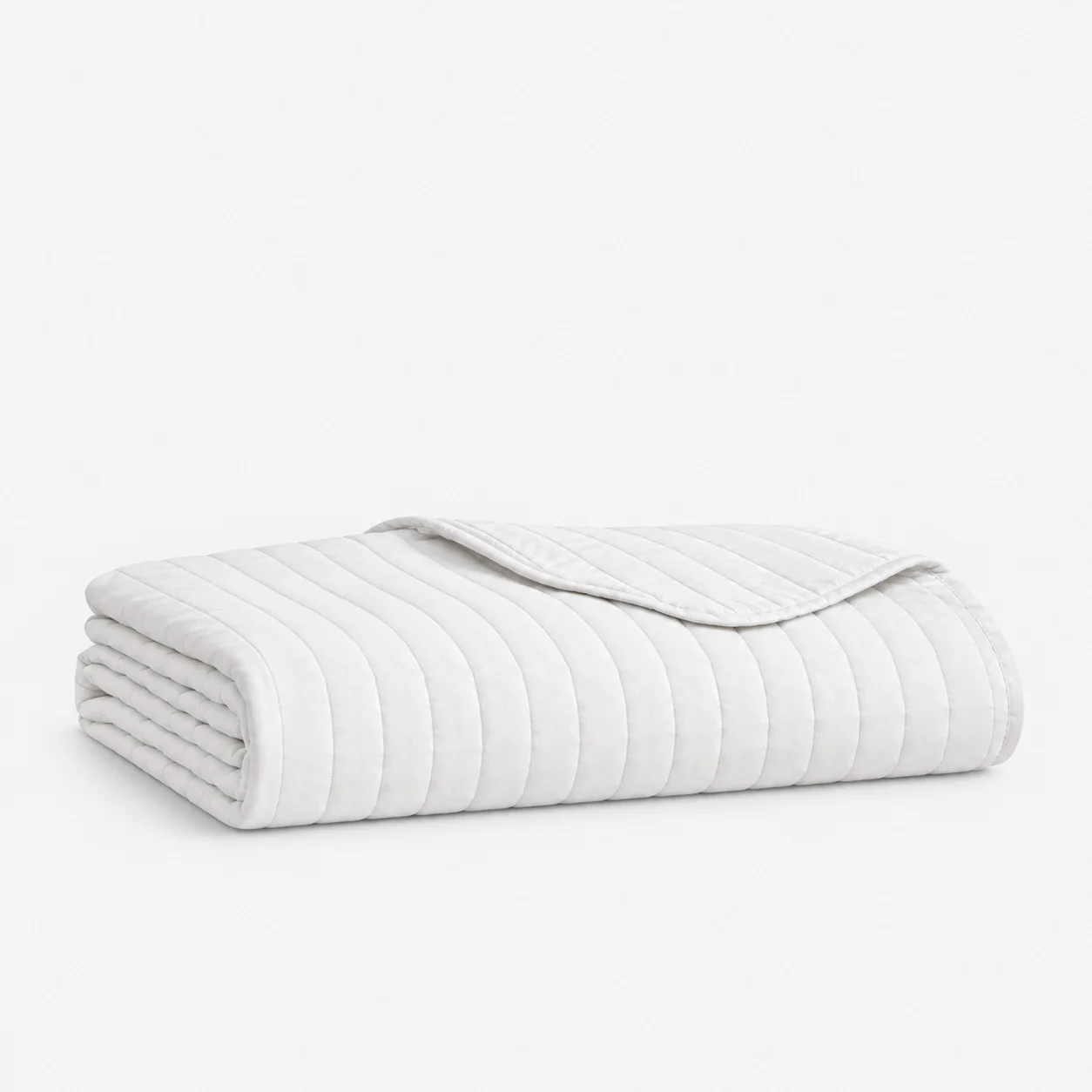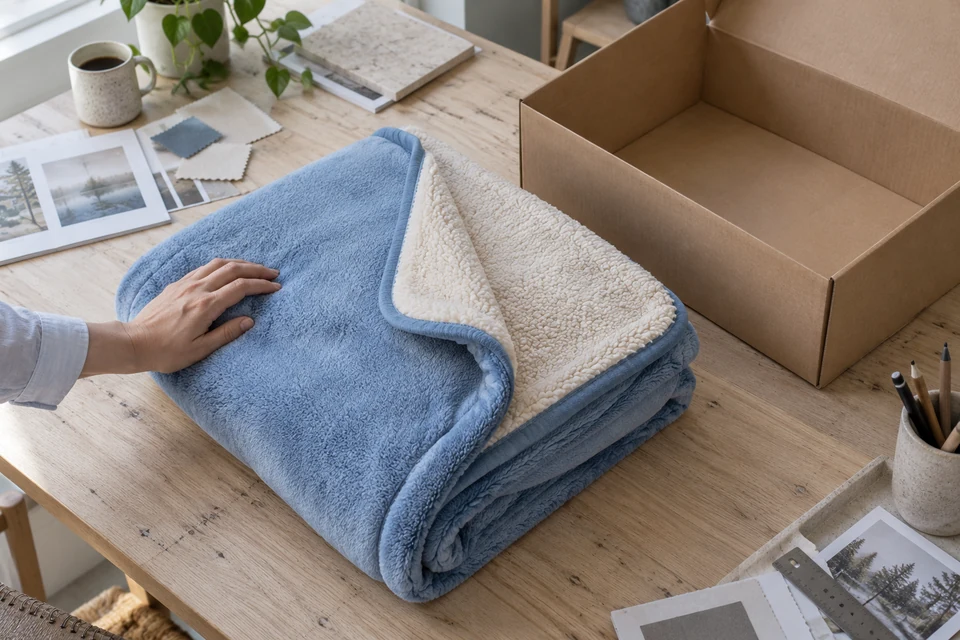
A sherpa-backed fleece throw offers a buying team more than one surface to approve. The displayed fleece face, the textured reverse, the way they meet around the edge and the space they occupy when folded all contribute to the actual item sold. Sherpa is not a sufficient fiber declaration, and a soft-looking image cannot establish warmth or durability. This guide focuses on the proposed two-face assembly and its retail fold. It is separate from selecting a generic hotel blanket by use case or reviewing directional effects on a chenille surface. Start with an identified complete sample and decide what the customer will see, handle and receive.
- 1. Name the two materials and the offered assembly
- 2. Set the two-face presentation before selecting a display fold
- 3. Inspect the face junction around the whole perimeter
- 4. Build the real retail fold with the complete throw
- 5. Review unpacking and care without inventing a warmth story
- 6. Release the paired throw and its pack as one purchasing unit
Name the two materials and the offered assembly
Do not let a surface nickname replace component identity
Ask the supplier for the actual material declaration and reference for each face. Write down which component is described as fleece and which is described as sherpa, alongside the offered construction and finish information. Do not assume the textured reverse contains wool or that the two components share a fiber composition. If the offer includes alternative face materials, give each pairing its own identity. A quotation saying fleece with sherpa back leaves too much room for two visually similar but different assemblies to be treated as the same product.
Ask how the source proposes to connect the layers and finish the perimeter. Record the explanation against the sample, without assuming that every throw using these names is made by one method. The component bill-of-materials approach helps keep the two material references and edge components together. A sample made only to demonstrate color cannot automatically approve the final assembly. Mark its limitations, then request the appropriate complete construction before choosing the item for a retail range.
- Identify each face separately, including declared composition.
- Connect the proposed layer assembly and edge treatment to the sample.
Set the two-face presentation before selecting a display fold
Decide what the reverse contributes to the sold item
Open the throw and place both faces in view, then turn back a substantial portion rather than displaying only a small corner of the reverse. Compare the color relationship, visible texture and border appearance in the intended room or shop setting. Ask the range team whether the reverse is a visible design feature, an alternative presentation or simply part of the handling experience. That answer should influence imagery and copy without turning a two-material construction into unsupported claims about either surface’s performance.
Review the sample from the customer side of the display as well as at handling distance. Keep ordinary lighting and avoid styling that hides a surface the customer will later discover. The two-face orientation guide deals with reversible bedding sets; here the narrower decision is how one throw communicates its paired surfaces. Where the design intends a preferred face, say so clearly. Both components must still correspond to the purchased sample, even when one is mostly concealed in the retail photograph.
- Show a meaningful area of each face in the presentation review.
- State whether the reverse is styled openly or mainly encountered during handling.
Inspect the face junction around the whole perimeter
The edge belongs to the assembly rather than either fabric alone
Follow the edge around the opened throw and examine how the two surfaces arrive at the junction. Identify any binding, turning, seam or other proposed finish from the source description. Check the face-to-reverse transition at straight runs and corners, recording where the result feels bulky, exposes an unintended material or creates an uneven visible border. These are local assembly observations. Do not convert a pleasing edge feel into a declaration about attachment strength or long-term layer stability.
Place the edge across an ordinary display support and fold it as the planned product presentation requires. A corner that looks neat when spread may form a concentrated lump in a narrow folded pack. Use the seam and stitch record to identify the accepted construction rather than asking a maker to reproduce neatness from a photo. If an alternative edge is offered, compare complete samples with the same face materials so the team can see the edge difference without simultaneously changing the entire throw.
- Inspect straight edges and corners from both sides.
- Keep edge appearance approval separate from attachment-performance evidence.
Build the real retail fold with the complete throw
Measure the packaged object rather than a fabric thickness claim
Choose the proposed fold sequence using the actual finished throw. Note which face is outward, where the corners lie and how the edge layers accumulate. Fold the same sample into the intended band or bag, then place it on the relevant shelf or display fixture. Record the complete package dimensions in its ordinary handled condition, without squeezing it merely to reach a desired size. The shelf-ready fold guide supports a reproducible pack record.
Have someone who did not create the fold open the package, inspect both surfaces and restore the intended presentation using the proposed instruction. Record unnecessary adjustments, a hidden label or a fold that depends on an unmentioned tool. Ask whether the store plans to display an open sample while keeping sale stock packed. Those arrangements can use different visual references, but they must show the same product. A proposed carton saving should not quietly change the accepted individual fold or prevent the intended reverse from being understood.
- Document face-out orientation and the actual fold sequence.
- Review the handled package on the intended fixture before fixing its size.
Review unpacking and care without inventing a warmth story
Observe this assembly in the conditions the buyer actually plans
Unpack identified trial items after the proposed packing evaluation and spread them without adding an undocumented treatment. Note surface appearance, edge shape and the effort needed to obtain the intended display condition. If compression is proposed, use the compression-pack review to frame questions for the appropriate technical owner. The buyer should ask what evidence supports the offered packing route, rather than assuming every paired fleece and textured reverse will respond identically after release.
Agree the care instructions for the complete assembly with the responsible source and technical team, then review the two faces, their junction and the retail fold again under the chosen conditions. The care-information checklist can connect the instruction to the actual material pairing. Keep observations about appearance and bulk distinct from any proposed warmth, shedding, pilling or lifetime statement. If such a statement is commercially important, ask for relevant evidence and an owner for its approval instead of writing the claim from surface feel.
- Identify any unpacking preparation required for the accepted display.
- Limit conclusions about care to the assembly and conditions reviewed.
Release the paired throw and its pack as one purchasing unit
The offer must identify more than a front-face color
Build a range sheet that connects each fleece face reference to its textured reverse, edge treatment, finished dimensions and individual package. If several face colors share one reverse, show that relationship explicitly. Ask which choices drive the source minimums and whether packaging has a separate commitment. A generic fleece product direction or the wider blanket-and-throw range can start the discussion, but neither confirms the availability of this particular two-material construction.
Give the selected complete sample and folded package linked identities so a later change of reverse material cannot be dismissed as invisible. Retain views of the opened assembly, the edge detail and the accepted retail presentation. Buyers can request a paired-face throw sample with the proposed shelf format and remaining construction questions. Ask FY Bedding to confirm whether a suitable source can offer that scope, then seek a quotation tied to the actual pairing, quantities, packaging and destination. Accept no substitutions solely on the basis of a matching fleece color.
- Connect every colorway to its reverse, edge and pack.
- Make a changed reverse material or fold an explicit purchasing decision.
Select the sherpa-backed fleece throw through the identified two-material assembly, the full perimeter and a reproducible retail fold. Approval of one soft surface does not approve the reverse, the package or any thermal or durability promise. Keep those distinct questions visible in the buying record.