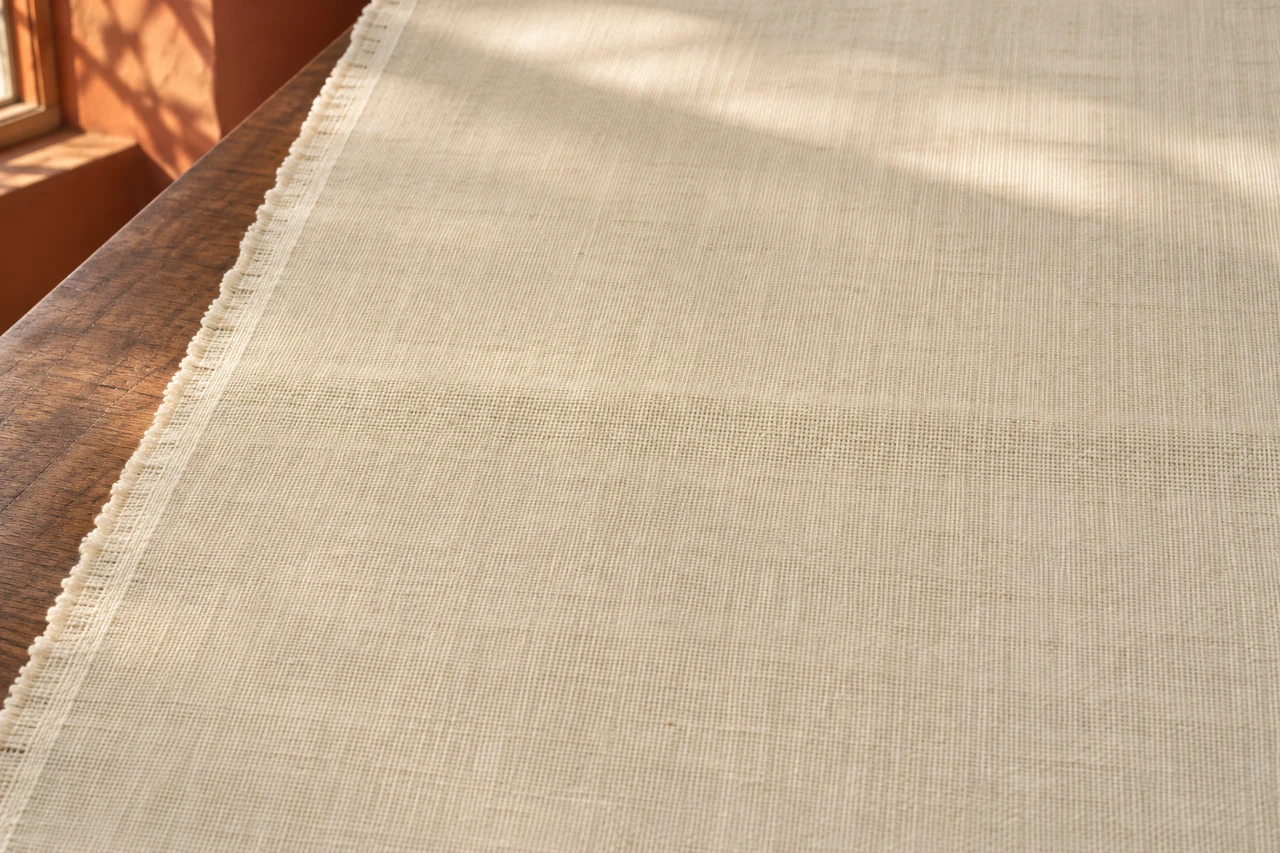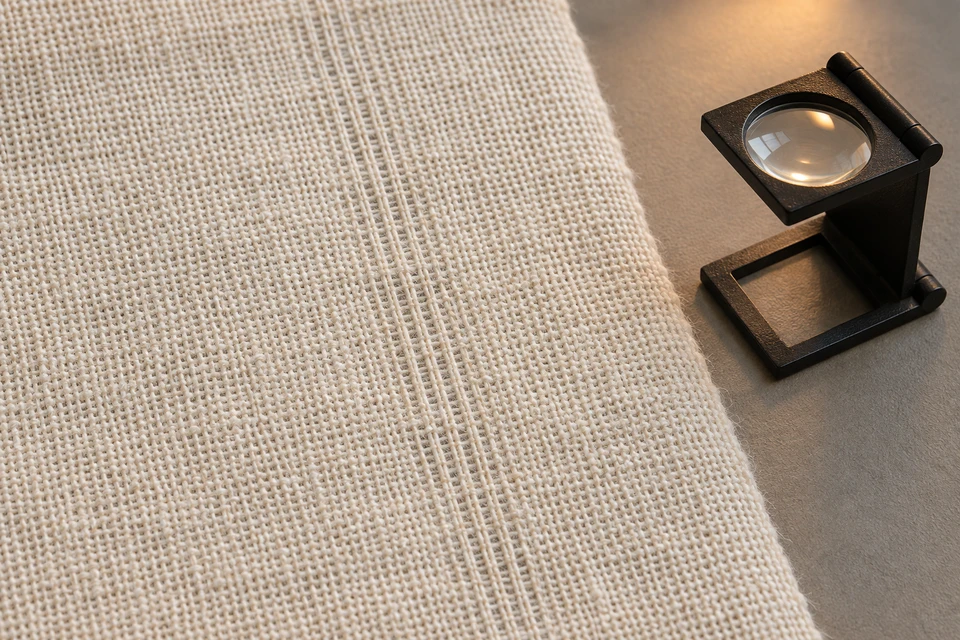
A narrow line running along a bedding fabric can prompt an immediate accusation of a dyeing fault or a damaged reed. Neither conclusion should come from a distant photograph alone. The buyer's first job is to preserve an identifiable sample and describe what changes at the line: colour, yarn size, yarn spacing or the interlacing itself. A useful investigation starts with the structure that can be observed and keeps the proposed production cause separate until the technical evidence supports it.
- 1. Establish which direction the line follows
- 2. Look at the yarn spacing before naming the fault
- 3. Separate the visible finding from the manufacturing explanation
- 4. Define the extent of the affected material
- 5. Decide disposition using the actual product requirement
- 6. Close the investigation with a repeatable observation
Establish which direction the line follows
Do not confuse the product's long side with the fabric warp
Identify the fabric directions from the available construction information or an uncut reference. A finished pillowcase or panel may have been cut in an orientation that makes its longer edge an unreliable guide. Mark the suspected line on an overview photograph and retain a corresponding physical sample. Record the article, lot and location so the mill can connect the observation to an actual piece of fabric rather than a general complaint about stripes.
Describe whether the line is continuous, intermittent or limited to one region. Note its position across the usable width where that can be established. Do not stretch, pull yarns out or brush the area in an attempt to make the finding clearer before recording the original condition. If further examination requires preparation, let the technical reviewer define it and retain enough untouched material to compare against the prepared specimen.
Look at the yarn spacing before naming the fault
A structural gap and a colour difference need different evidence
Compare the suspect area with immediately adjacent fabric under the same lighting and magnification. Look for a local change in the spacing of warp yarns, a different yarn or a change in the visible weft. Photograph the structure with an appropriate scale and orientation reference. The observation should say what is visible, such as a wider space between particular yarns, rather than presenting a guessed loom cause as an established fact.
CottonWorks distinguishes an open-reed example, where a bent reed wire holds warp ends apart, from a reed misdraw involving an end in the wrong dent. Those examples show why similar lengthwise findings can require different investigations. They do not identify the cause of a new bedding sample. Ask the producing mill to compare the actual yarn arrangement with its construction and production records before confirming the defect name.
Separate the visible finding from the manufacturing explanation
Request evidence that can distinguish competing causes
Send the technical team the original sample location, overall view, close structural images and a description of the observed line. Ask what additional evidence is required to distinguish a reed-related spacing issue from a yarn, weaving, finishing or colour issue. Keep the answer attached to the identified specimen. A general statement that the machine has been checked does not explain which observation supports the proposed cause in the delivered fabric.
Where the mill offers a diagnosis, ask it to identify the relevant comparison or record without requesting unrelated confidential production information. The buyer needs enough evidence to understand the finding and the proposed correction. If that evidence is incomplete, record the diagnosis as provisional. Avoid announcing that a particular machine component was defective simply because its fault name appears in a textile glossary.
Define the extent of the affected material
One close-up cannot describe the whole lot
Agree how the fabric will be examined for the same observable signature. Record where the line begins, whether it continues and whether comparable lines occur at other positions. Keep roll and piece identities intact. A sample cut near one end may establish that a finding exists at that point, but it does not establish that every metre or every finished article is affected in the same way.
For already cut goods, map the visible location on representative articles and relate it to the cutting orientation where possible. Do not erase the distinction between an isolated item and a repeated fabric-position issue. The agreed inspection plan should define how scope is assessed and how findings are escalated. A generic defect severity label from an example fabric is not a substitute for the buyer's product-specific acceptance criteria.
Decide disposition using the actual product requirement
A causal explanation does not automatically permit release
Compare the observed condition with the approved construction, appearance reference and agreed inspection terms. Keep the decision to accept, hold, rework or reject with the authorised parties. The mill may explain a cause correctly while the delivered appearance still falls outside the purchase requirement. Conversely, an unresolved name should not encourage a reviewer to invent a more severe classification than the evidence supports.
If a corrective process is proposed, request a representative result and evaluate the relevant consequences before approving its use. Do not assume that finishing can permanently remove a structural spacing issue or that a cosmetic improvement resolves every product concern. Retain the original and corrected references with their treatment history. Any performance claim arising from the correction requires its own applicable evidence, not a before-and-after photograph alone.
Close the investigation with a repeatable observation
Make the next receiving check more precise
Ask the supplier's corrective response to connect the observed signature, confirmed cause, affected scope and proposed prevention. Identify which parts are verified and which still require follow-up. The next delivery should be checked against the same observable criteria, not merely against a statement that the issue has been solved. Preserve the relevant sample and images so a new inspector can recognise the condition without relying on the original reviewer's memory.
When discussing woven bedding with FY Bedding, include the intended fabric construction, end use and the sample evidence you want evaluated. Request a proposed material and inspection approach for the project rather than assuming a named defect proves a particular factory route. Minimum quantities, sourcing options and delivery timing remain matters for the specific enquiry. A precise description of yarn spacing gives the technical conversation a useful starting point without pretending to diagnose a loom from a website image.
For a lengthwise line, preserve the sample, establish fabric direction and record the actual yarn-spacing change before accepting a cause, lot-wide conclusion or corrective treatment.
Method references: CottonWorks: an open-reed example, not a diagnosis of a new sample; CottonWorks: a separate reed-misdraw example.