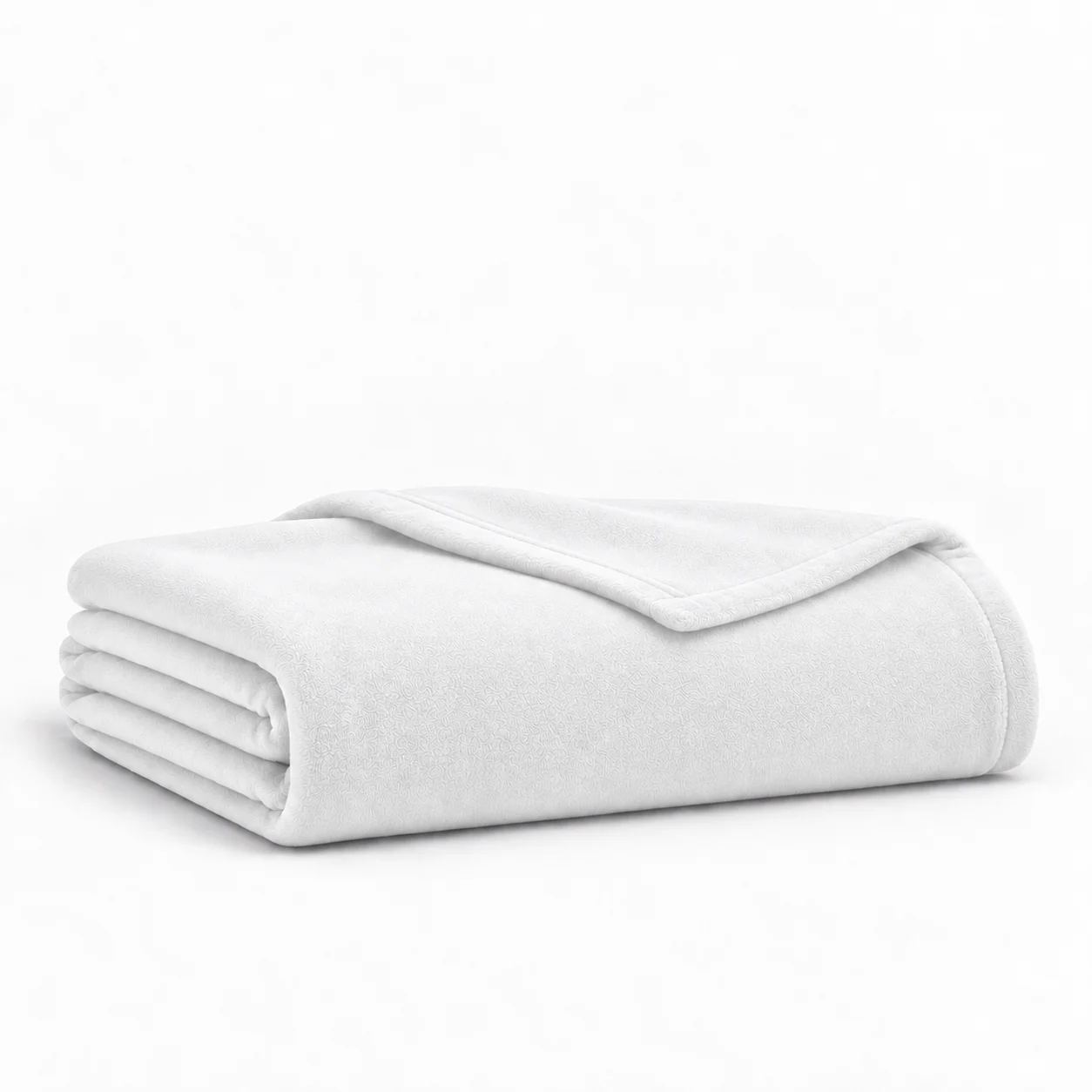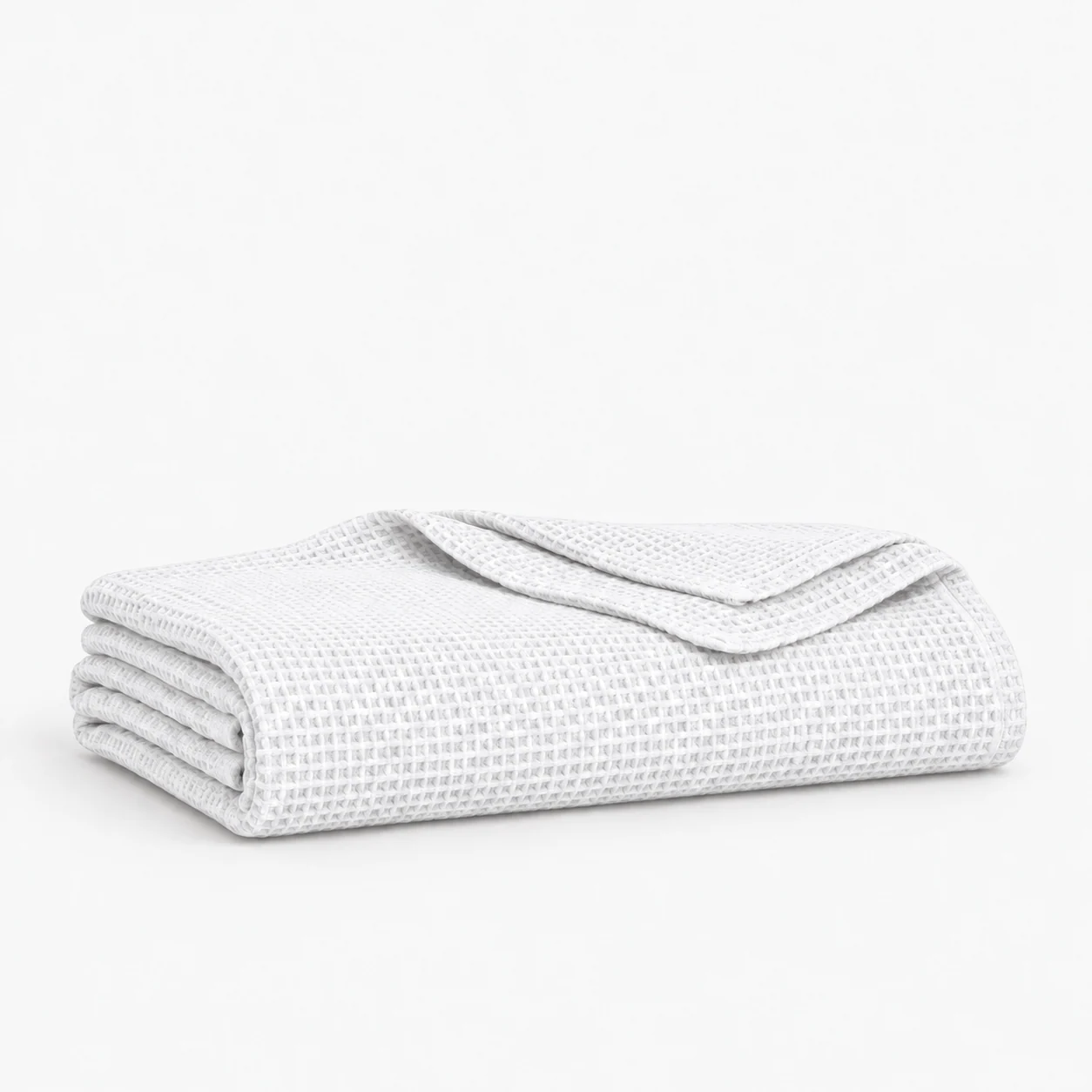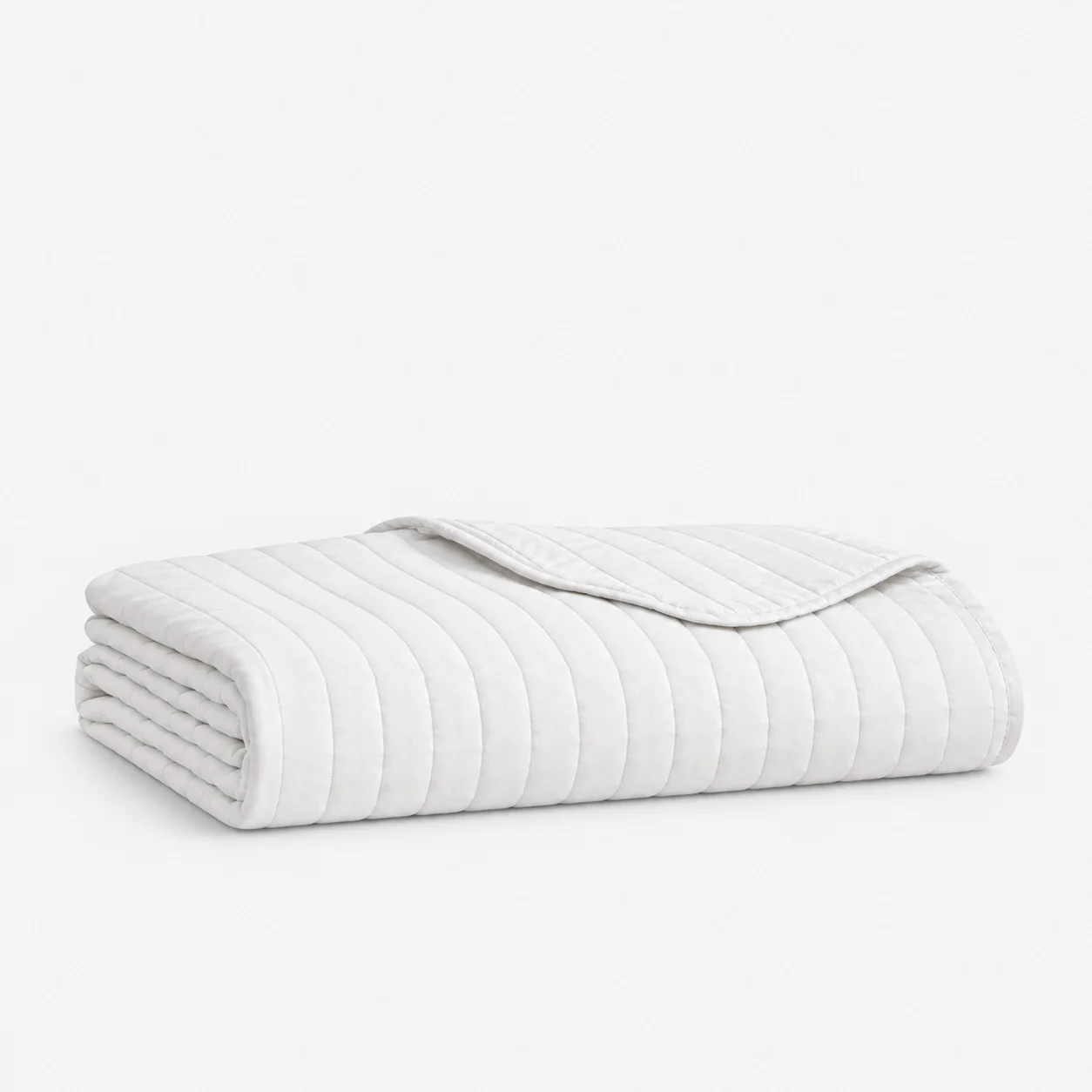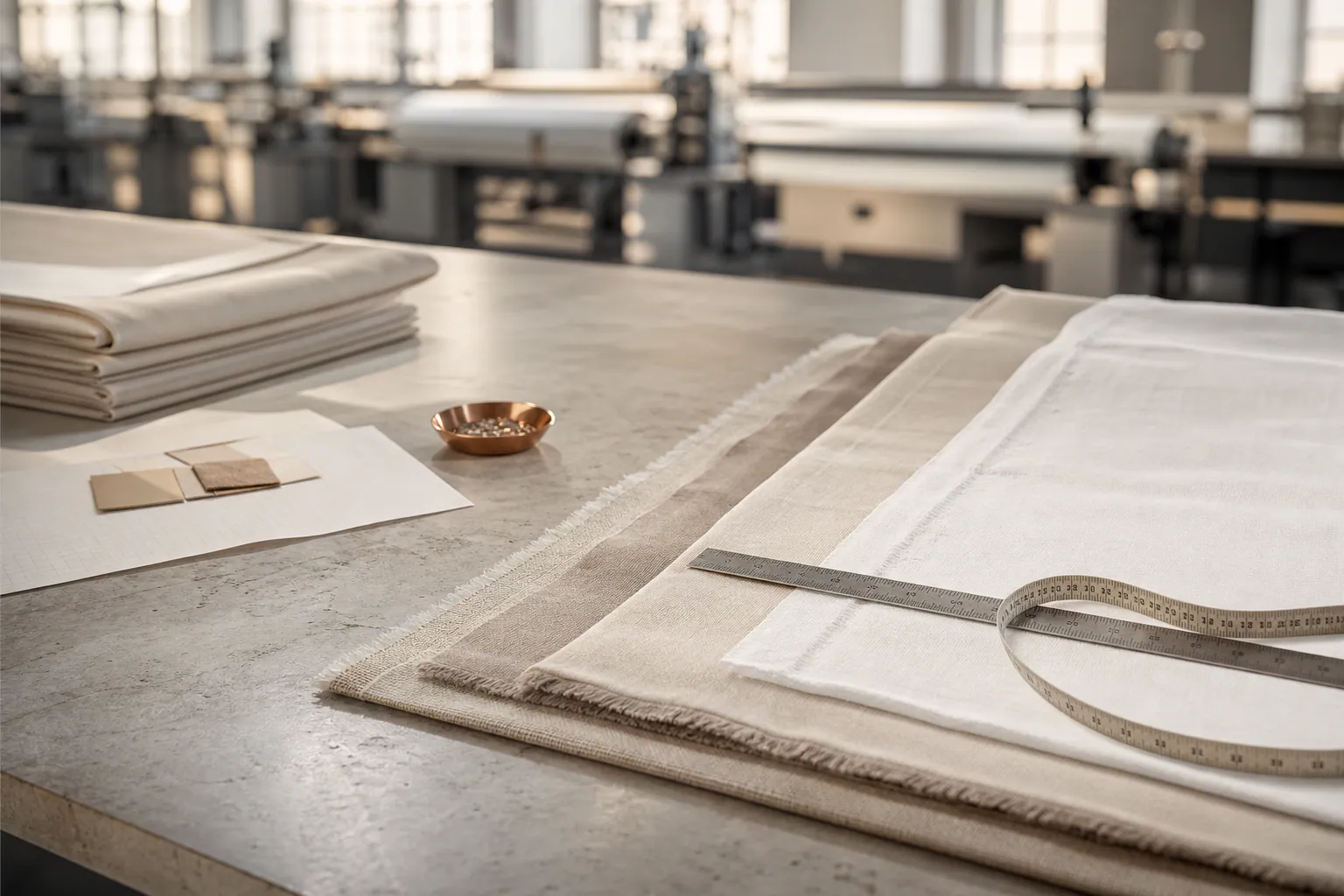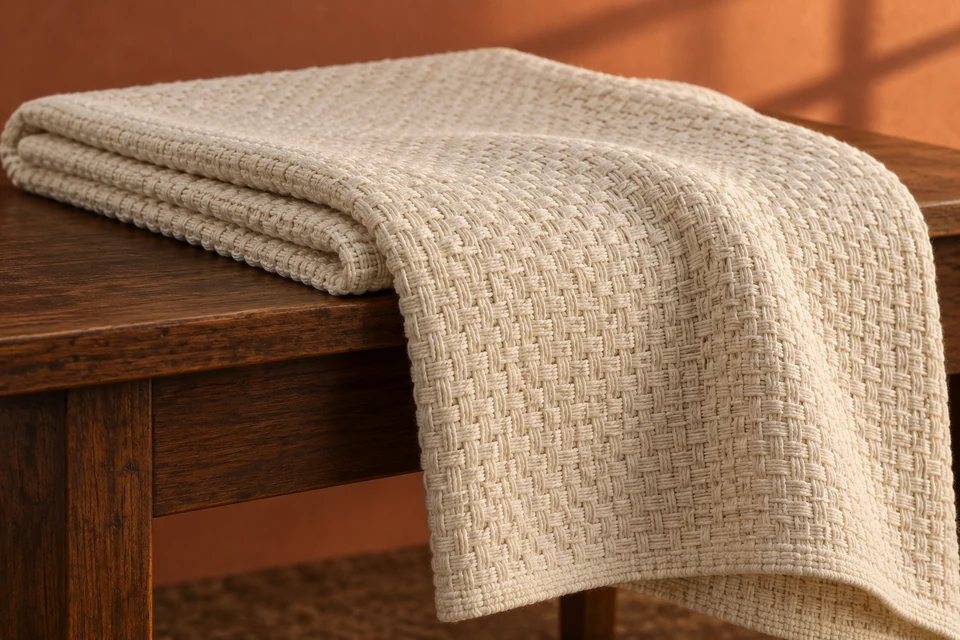
A basketweave throw can read as a small, orderly texture or a visibly open arrangement of grouped yarns. Those alternatives may look similar in a cropped product image while behaving quite differently as decorative layers. A useful cotton-throw brief therefore starts with the offered construction and the job the throw must perform. Select the surface, drape and edge as one object, then confirm the actual material and care details. Do not use the weave name as shorthand for warmth, resistance to snagging or a particular fabric weight.
- 1. Identify what is grouped in the weave
- 2. Compare open and compact candidates without hiding the gaps
- 3. Evaluate the complete throw over its intended support
- 4. Review ordinary handling without inventing a strength claim
- 5. Resolve the edges before approving the retail fold
- 6. Quote a defined construction and a manageable assortment
Identify what is grouped in the weave
Ask for the actual repeat rather than a marketing label
CottonWorks identifies basket weave as a variation of plain weave and distinguishes regular arrangements such as two-by-two from irregular arrangements. That definition helps a buyer ask the right question: which warp and filling yarns act together in this proposed cloth? Request a clear construction description and a close physical sample. A printed grid or a textured finish is not enough to establish that the cloth has the requested interlacing.
Record whether the decorative appearance comes from grouping, yarn thickness, spacing or a combination. Also confirm whether cotton describes the complete fabric or only part of a blend. Keep those facts next to the sample code when reviewing blanket and throw directions. The aim is not to prescribe a universal repeat; it is to ensure every quotation describes the same candidate that the buyer examined.
- Identify warp and filling grouping separately.
- Record fiber composition independently from the weave name.
Compare open and compact candidates without hiding the gaps
Use a consistent backing and a separate light-through view
Lay each sample against the same plain backing and inspect it without stretching it to improve the photograph. Then view a gently supported section against light to understand where the ground remains visible. Record the difference between the cloth's normal appearance and its appearance under tension. An open decorative construction is not automatically a defect, but a buyer expecting an opaque layer should discover that difference before ordering.
Choose the role first: a loosely draped sofa accent, a neatly folded bed-end detail or a practical additional layer. The blanket and throw procurement guide helps separate those uses from visual styling alone. If thermal performance matters, agree a suitable assessment independently. Seeing daylight through a cloth neither quantifies warmth nor establishes how it will feel in a particular room.
Evaluate the complete throw over its intended support
A small square cannot reveal the whole hanging shape
Request a finished-size development sample with the intended edge construction. Place it across a representative chair arm, over a sofa back or at the bed end according to the use brief. Observe whether the grouped texture remains legible, how the corners hang and how much of the reverse is visible. Compare candidates at the same orientation rather than rotating one into its most flattering angle.
Record the finished width and length, including a clear rule for whether any fringe is counted. Ask how those dimensions relate to the offered fabric's usable width and cutting plan. A wider decorative throw may require a different material route from a narrower sample. Do not approve an improvised joined version unless the seam, placement and complete appearance are part of the agreed design.
- Show the full throw in its intended position.
- Keep body dimensions and decorative extension dimensions distinct.
Review ordinary handling without inventing a strength claim
Texture selection and performance evidence are separate decisions
Handle the proposed sample as a customer or housekeeper would: unfold it, place it, refold it and move it between the intended locations. Note any visible yarn displacement or unexpected distortion. For a visibly open design, ask how normal clothing fasteners or nearby textured surfaces affect the chosen use case. Record observations consistently rather than assuming that a compact-looking candidate will always be the stronger one.
If snagging is a material risk in the intended setting, use the surface-damage evaluation framework to agree an appropriate assessment. Do not demonstrate durability by aggressively pulling individual yarn groups. Any claim needs evidence for the actual finished construction. Review the proposed care process too, with the finished throw laid out after care so its overall shape can be compared.
- Describe actual contact concerns to the supplier.
- Keep a cared-for sample beside the original reference.
Resolve the edges before approving the retail fold
The finish changes both the hanging view and the packed object
A hem, fringe or other edge treatment can create a different visual boundary around the same woven body. Inspect all four sides, not only the edge nearest the camera. If fringe is selected, specify its arrangement and refer to the fringe and tassel review for the distinct attachment questions. Keep edge decisions linked to the complete sample rather than a separate trim swatch.
Make the actual store-ready fold and evaluate the retail fold and pack dimensions. Confirm that the visible panel fairly represents the grouping and openness of the whole throw. A tightly folded stack can conceal an open construction, while excessive packaging compression may give a different first impression from the displayed sample. Open the packed sample and judge its presentation again.
Quote a defined construction and a manageable assortment
Make changes visible before the order is released
Ask the supplier to quote the chosen repeat, material, finished body size, edge, color and packed unit together. Separate fabric or dye minimums from sewing and packing minimums, then calculate how a proposed color range divides the available quantity. If a lower-volume alternative changes the yarn grouping or cloth spacing, treat it as a new candidate rather than a price-only substitution.
Agree the sequence for construction confirmation, finished-size sample, cared-for review and packaging approval before setting a delivery plan. The most useful sample request to FY Bedding includes the intended room role and a physical texture reference, not just a basketweave keyword. Ask what can be offered for that brief; do not assume a pictured throw establishes current capacity, standard minimums or an available color range.
Match the quoted yarn grouping and material to a finished-size throw, approve its ordinary drape and cared-for appearance, and show the same openness honestly in the retail pack.
Method references: CottonWorks: basket weave as a plain-weave variation with regular and irregular yarn groupings.