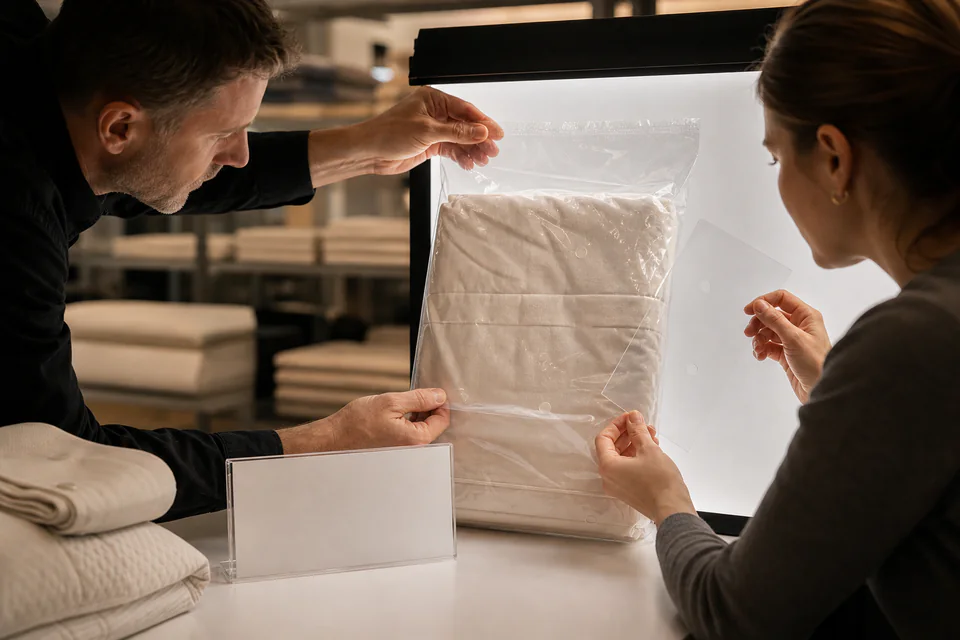
A polybag protects the bedding set, presents the product and affects packing speed, yet small specification gaps can cause split seals, trapped air, scuffing or unreadable artwork. Buyers should define the exact film and pack construction, then test it with the folded product and intended distribution route. Legal warning content must be confirmed for the destination by the responsible party rather than copied blindly from another market.
Define film material, thickness and appearance
State what is being measured
Identify the film polymer or agreed material description, nominal thickness, tolerance and test method. Clarify whether thickness is reported per wall and where it is measured, excluding seals or reinforced areas. Define clarity, tint, surface finish, recycled-content claim scope if any, and restrictions on odor, contamination or blocking.
Avoid selecting gauge by copying an unrelated pack. Product weight, corners, compression and handling influence the requirement. Connect the polybag line to the private-label packaging checklist so film changes remain part of the controlled packaging BOM.
- Film material and nominal thickness
- Measurement method and tolerance
- Clarity, tint and surface criteria
- Claim and documentation scope
Size the bag around the approved folded product
Use real pack geometry
Approve product fold first, then specify internal bag width, length, gusset if used and closure allowance. Allow enough clearance for packing without excessive loose film. Check sharp folded corners, zipper pulls or inserts that could abrade the bag. A size set may require more than one bag format.
Record the finished pack dimensions and how air is removed during closing. If compression is part of the process, use the compression-packaging validation guide because compression bags and simple protective polybags present different risks.
- Folded product dimensions
- Bag width, length and gusset
- Closure and handling clearance
- Size-family compatibility
Engineer and approve the seal system
Evaluate seal integrity, not only seal width
State whether the bag uses a permanent heat seal, adhesive flap, zipper or another closure. For heat seals, define location, continuous appearance, minimum usable width and criteria for channels, wrinkles, burn-through or weak edges. Test the sealed pack after normal packing and handling, not only an empty film strip.
Agree an integrity method appropriate to the pack, such as controlled manual handling, drop or transit simulation combined with visual inspection. The carton drop and transit guide can connect inner-pack and outer-carton performance without claiming that one test predicts every shipment.
- Closure type and location
- Seal appearance and continuity
- Packed-product integrity trial
- Failure mode and rework rule
Plan venting for packing and product protection
Control hole size, count and placement
Vent holes can let air escape during packing and reduce ballooning, but they also create entry points for moisture or contamination. Specify diameter or construction, count, position and permitted variation. Keep holes away from seams, product edges and artwork areas where they may tear or weaken the bag.
Evaluate venting together with the carton, liner, container conditions and storage route. For export moisture risk, consult the odor, moisture and mold prevention guide. Venting should support the defined packaging system, not substitute for dry goods and appropriate logistics controls.
- Vent-hole construction and dimensions
- Count and placement drawing
- Tear and contamination review
- Moisture-control system connection
Approve artwork placement and production controls
Keep compliance content market-specific
Reserve panels for size, product, barcode, recycling or warning information as required by the buyer and destination. Confirm text, language, type size and placement with qualified market review; this guide does not determine legal wording. Ensure seams, folds and vent holes do not obscure required content. Use the artwork checklist as a model for controlled copy and versions.
Approve a printed, packed sample and retain the file revision, film reference and physical pack. During production, check film identity, dimensions, seal appearance, vent placement, print registration and pack integrity. Share the fold and distribution brief through the packaging team.
- Market-approved copy and language
- Print file and revision
- Packed approval sample
- Inline seal, vent and print checks
Approve the polybag as part of the full pack: film identity and thickness, dimensions around the real fold, seal system, vent pattern, print revision and packed-product handling result. Obtain destination-specific warning requirements from the responsible expert.