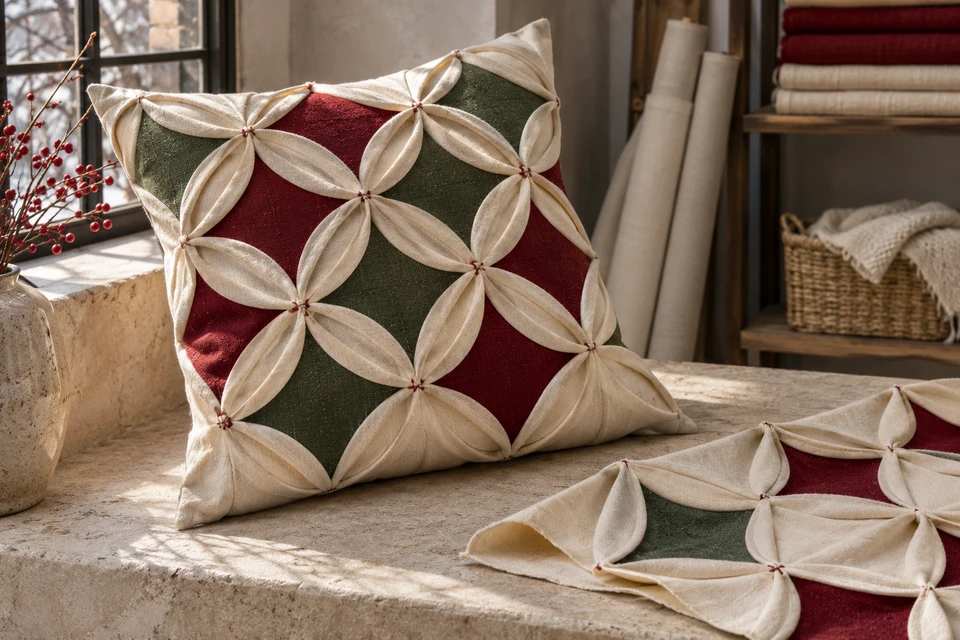
A cathedral-window cushion can look convincing in a small photograph while the delivered construction feels quite different. For a Christmas collection, the buying decision is not simply whether red and green appear in the right places. It is whether the folded frame, exposed insert and accumulated cloth at each junction produce the relief your retail presentation needs.
Ask for the construction behind the name
A visual label is not a bill of materials
Suppliers may use cathedral-window language for different folded or pieced interpretations. Request an unfilled front panel and an accessible junction sample alongside the presentation cushion. Identify which fabric forms the turned frame, which forms the visible window and whether another layer supports the assembly. A printed imitation should be quoted as a different construction, even when its photographed geometry resembles the folded option.
Liberty's published cathedral-window cushion method illustrates one machine-pieced approach using folded elements; it is a technique reference, not an FY product specification or a pattern licence. Develop an independently approved arrangement for your project. Describe the required physical effect in the brief so that a factory can propose a viable method without silently changing a dimensional folded surface into a flat print.
Measure the window that remains visible
Separate cutting size from exposed colour
The coloured insert may begin as a generous piece but appear much smaller after its edges are covered. Specify the visible opening on a finished, relaxed panel and record how it is measured. Include the narrowest part of the opening and the distance between neighbouring junctions. Quoting only the original cut-square dimensions leaves the buyer without a useful acceptance reference.
For a restrained festive palette, a small change in the ivory frame width can change how much cranberry or green dominates the cushion. Compare proposed openings at the intended retail viewing distance before choosing one. Keep an actual approved window in the sample file, together with a full-panel photograph. Do not use that single opening to approve the alignment of every row across the face.
Review junction bulk before closing the cover
Local stacks behave differently from the open field
Folded cloth can accumulate where several windows meet. Examine a junction from both sides without forcing the folds flat for the photograph. Look for exposed raw edges, inconsistent turning, unsecured points and thread bunching that was hidden by the insert. Agree which parts of the fold are intended to remain dimensional and which must sit securely against the underlying layer.
Then compare a central junction, an edge junction and a corner near the perimeter seam. A successful central sample does not prove that the cut edge can be enclosed neatly. Ask the maker to show the intended seam allowance and closure location in the complete cover. If the design needs a wider plain border to avoid crowding the perimeter, approve that revision as a design change before bulk cutting.
Put the agreed insert inside the actual cover
The filled shape is a separate approval
Mount the front on the proposed reverse and fit the agreed insert. Observe whether filling opens the windows unevenly, pulls a junction out of line or exaggerates a ridge along one edge. Record the insert identity and dimensions used for the review. A different, fuller insert can change the appearance even when the front panel itself has not changed.
Include the way the cushion will be handled in a showroom or home. Compress and release it gently, turn it over and reopen the closure using the proposed access route. These observations are practical development checks, not a durability certification. Where care or strength claims are planned, request a separate agreed test programme on the finished construction and keep the evidence attached to the exact version evaluated.
Compare quotations on the same approved face
Count construction work, not just finished area
Ask each quotation to identify the window arrangement, number of junctions, frame and insert fabrics, reverse construction and packing form. A smaller number of larger windows may reduce assembly complexity but will also change the visual rhythm. Treat that as an alternative design with its own sample, rather than accepting it under the original photograph and price comparison.
For the Christmas launch decision, separate sample approval, material availability and confirmed dispatch arrangements. Do not build an advertised arrival promise from an attractive prototype alone. Record whether the first purchase is cover-only or insert-included and how the face will be protected during packing. Ask FY Bedding to review the proposed window layout, intended quantities and sample requirements before you settle the order specification; feasibility and timing remain subject to project confirmation.
Approve the exposed window, folded junction, perimeter and filled shape together. Retain both an unfilled construction sample and the identified filled-cover reference; neither replaces the other.
Method references: Liberty / Suzanne Campion: cathedral-window construction reference.