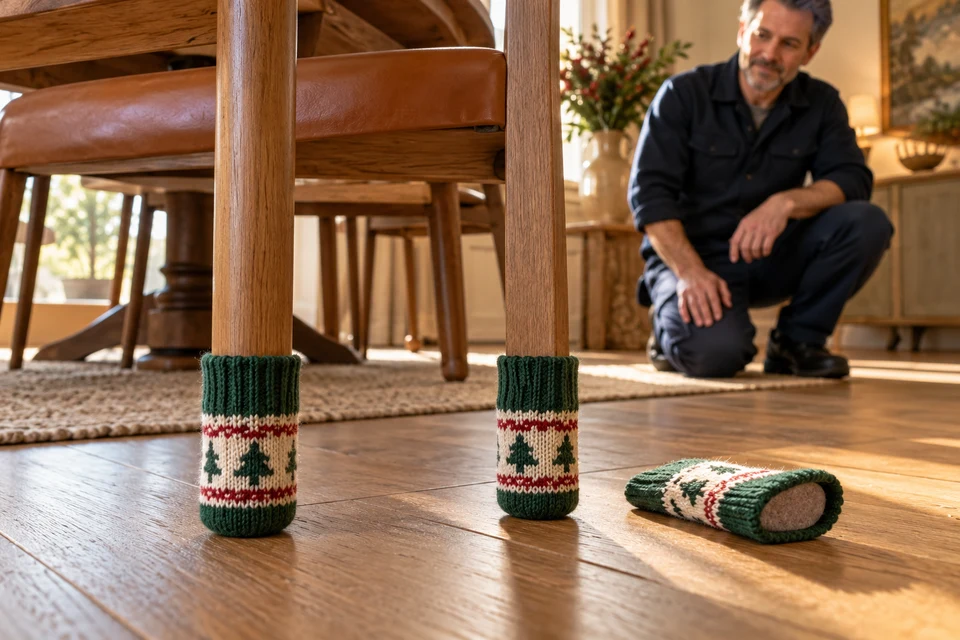
Knitted socks around chair legs can add a seasonal detail to a dining room, but a decorative cuff is not evidence of floor protection or stable furniture movement. The buyer needs to separate appearance, attachment and floor contact. Start with the actual chairs and floor finish, then decide whether the proposed sleeve is appropriate for that setting. Do not turn a festive product image into an unsupported anti-slip, scratch-prevention or load-bearing promise.
Record the furniture-leg geometry
Round and square legs need separate fitting observations
Identify the chair models included in the proposed rollout. Measure the leg near the floor and at the intended cuff position, noting taper, corners and any existing glide or foot. A single circumference does not describe a square corner or a strongly tapered leg. Photograph the reference condition so the supplier can understand what the textile is expected to cover and what must remain accessible.
Use the technical brief to distinguish the actual furniture references. Request fitted samples for materially different leg shapes. Do not force one nominal sock size onto the entire property simply because its relaxed opening can be stretched over every leg in a quick demonstration.
- List chair models, leg shapes and existing feet or glides.
- Approve different geometries on their own reference chairs.
Separate the decorative cuff from the contact face
Both construction zones need a specification
Ask how the cuff retains its position and what material lies between the chair foot and floor. A striped knitted sidewall and a textile contact face are not the same functional element. Review seams, joins and any proposed additional pad in the complete sample. A supplier's generic description of soft material does not establish compatibility with a particular polished floor.
The claims evidence matrix is useful for separating observable construction from unverified performance language. Record what evidence supports any proposed protection statement and which furniture and floor conditions it covers. If that evidence is absent, describe the decorative product conservatively and do not make the claim.
- Identify cuff, sidewall and floor-contact construction separately.
- Request support for every protection or movement claim.
Trial ordinary chair movement in the intended room
A static photograph cannot reveal displacement
Have the responsible facilities team assess a complete reference chair in the intended setting using an agreed trial. Observe whether sleeves move, twist, bunch or become caught during normal handling. Include the actual existing foot or glide if it remains in service. Do not instruct staff to compensate for an unstable arrangement or treat a decorative sleeve as a repair for damaged furniture.
Capture the setup in a room mock-up approval record, including chair and floor identity. This article does not provide a safety test method or a universal acceptance limit. The decision belongs to the responsible team with evidence suitable for the actual application; a failed trial should stop that proposed use.
- Record movement observations, not only the initial fitted appearance.
- Stop a proposal that interferes with normal furniture use.
Plan cleaning and inspection responsibility
Seasonal details become operational items
Clarify whether sleeves are removed for cleaning, how the chosen material is cared for and who checks them before returning chairs to service. Review a sample after the agreed care process for fit, seams and appearance. Keep dry, ready-to-use items separate from those awaiting inspection. A holiday pattern should not obscure a split seam or a misplaced contact layer.
The receiving and laundry handover guide offers a record structure that can be adapted to this small textile component. Agree replacement criteria with the responsible operator rather than inventing a lifespan. Record how missing or damaged pieces are handled so an incomplete chair set is not overlooked during a busy room reset.
- Assign removal, cleaning and return-to-service checks.
- Keep replacement decisions linked to observable condition.
Order and identify complete chair sets
Count legs as well as chairs
Confirm the number of pieces needed for each approved furniture model and the quantity included in one retail or service pack. A four-piece pack may suit one chair but should not be assumed for every furniture item. Keep size identification accessible without introducing a label that interferes with fitting. Record spare quantities as a buyer decision rather than an implied supplier recommendation.
Use the quantity planning framework to connect chair counts, sleeve sizes and seasonal colors. Ask about knitting minimums, sample timing and packing scope for the actual design. Release only the combinations that passed the relevant room review; purchasing an attractive pattern is not a reason to deploy an unapproved furniture interface.
- Calculate piece quantities from the approved furniture list.
- Keep unapproved chair-and-floor combinations outside the release.
Provide FY Bedding with the furniture-leg references, intended room and proposed decorative pattern. Request a fully scoped sample and evidence plan, then let the responsible facilities team approve the complete furniture-and-floor arrangement before any rollout.