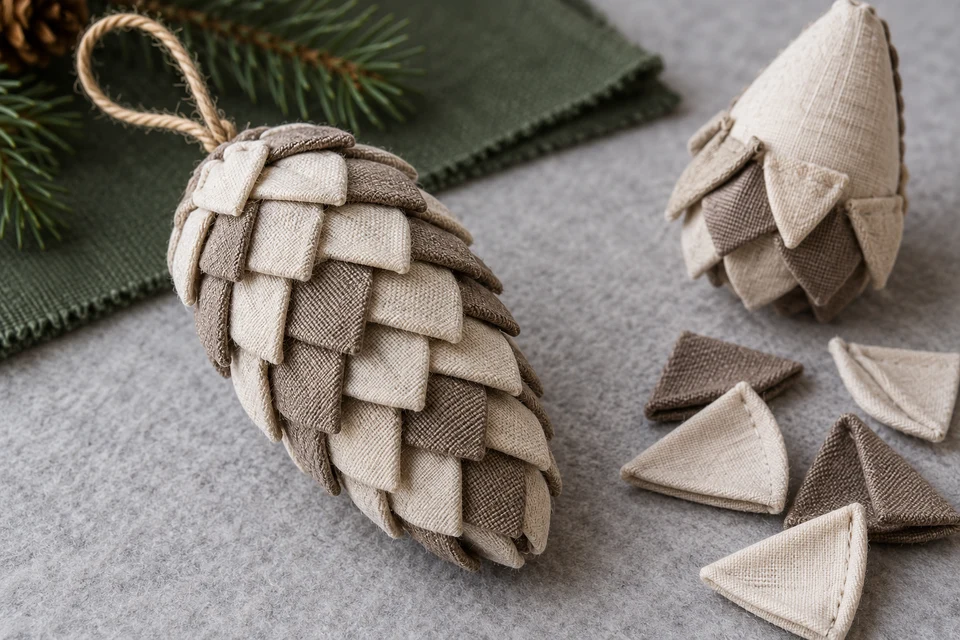
A textile pinecone is built from a sequence of overlapping fabric scales. Its appearance can change even when every individual component has been cut to the same size: row spacing, overlap and the direction of the folds determine whether the form reads as a pinecone or a loose cluster. A buyer needs a construction reference that explains the sequence, not only a finished photograph from its most flattering angle.
Define the core and the scale as separate parts
Overall size does not describe the assembly
Specify the intended finished length and maximum width, then ask how the supporting core is constructed. A soft tapered core and a rigid form can produce different handling, packing and attachment requirements. Record the folded scale dimensions separately, including the visible portion after overlap. Avoid describing the entire item only as a fabric ornament when other structural materials are part of the proposal.
The bill-of-materials review helps identify the core, scale fabric, hanging loop and any attachment materials. Request disclosure of substitutions before the final sample is made. A pinecone appearance does not establish that the components are natural, biodegradable or certified; any such claim needs its own appropriate evidence.
- List the supporting core and the visible fabric separately.
- Record folded size and visible scale size after overlap.
Approve the row sequence around the circumference
One attractive front view can hide an uneven reverse
Ask for a simple sequence diagram or staged sample showing how one row relates to the next. Define whether scales are staggered or aligned and where any color alternation starts. Turn the completed ornament through a full rotation and inspect the row transition at the back. A regular front with a crowded closing strip is not the same as an evenly constructed full object.
Use the visual defect classification approach to distinguish an intended handmade-looking variation from missing components or inconsistent overlap. Agree examples with the supplier rather than imposing an invented universal tolerance. Keep the approved reverse and side views in the inspection reference so production is not judged against only one hero image.
- Review the complete circumference and the final row junction.
- Keep intended texture variation separate from missing scales.
Check edges and attachment without disguising them
Folded points should remain understandable
Inspect the exposed tips closely for loose threads, bulky folds and uneven point placement. Ask how the scales are attached and review an unfinished sample where the method can be seen. Do not assume that a decorative overlap means the attachment is secure or suitable for every intended user. A supplier should explain any adhesive, stitch or other fixing used in the proposed construction.
The decorative attachment checklist provides a starting point for that discussion. Check the hanging loop at the same time and identify where it transfers force into the core. Avoid public safety or durability promises until the relevant use and evidence have been agreed. The object should remain described as a decorative ornament within its confirmed scope.
- Retain one partially assembled reference for attachment review.
- Record the hanging-loop connection to the supporting core.
Judge the taper in the hanging position
Weight distribution changes the visible sequence
Suspend the finished sample from the intended loop without holding the lower end. Note whether it hangs vertically, tilts or rotates toward an unintended face. Inspect the top cap and lower tip, where a broad row pattern must close into a smaller area. If the buyer wants an intentional angled display, document it rather than treating any tilt as acceptable variation.
The inspection photo record can tie these views to one sample and revision. Include an ordinary-distance image as well as a close detail. A macro photograph may emphasize beautiful fabric texture while concealing a lopsided overall form that is obvious on the retail display.
- Approve the top, lower tip and freely suspended profile.
- Capture both detail and normal display-distance views.
Pack the scales without changing the design
Review the first unpacked appearance
Compare packing options using the actual ornament rather than an empty packaging mock-up. Tight contact can flatten exposed scales or bend the loop against the top rows. Open a sample pack and inspect the row sequence before arranging each point by hand. Agree any reasonable customer presentation step explicitly, and do not invent a recovery time from one styled photograph.
Use presentation-box approval when the proposed pack uses a rigid box. Confirm whether the quotation is per ornament or per assortment, and define color sequence and count within each set. Ask about minimums for the selected fabrics and assembly work. Set the dispatch plan after the sample and protective packing have been accepted.
- Inspect the ornament immediately after opening its proposed pack.
- Specify the color sequence and piece count for each assortment.
Send FY Bedding the desired pinecone size, fabric palette and hanging presentation. Request a finished ornament, an exposed assembly reference and a packed sample before agreeing the bulk assortment.