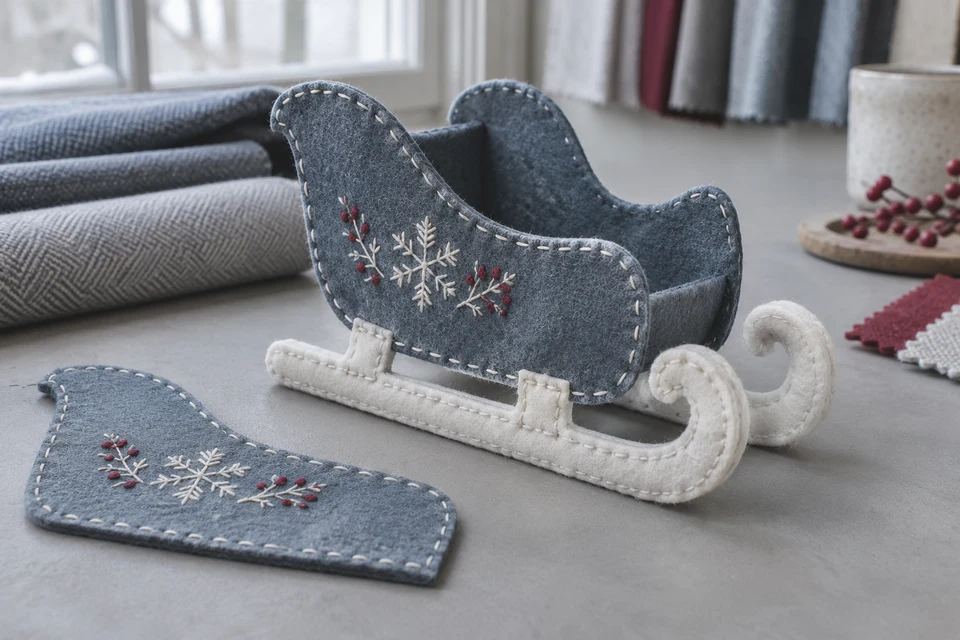
The visual character of a fabric sleigh comes from the relationship between its body and curved runners. A sample can resemble a sleigh from one angle while the two runners sit unevenly or pull away when it is suspended. Buyers should therefore specify the assembly, not just the outline of a side panel. This guide concerns lightweight decorative textile ornaments; it does not establish suitability as a toy, a container for heavy gifts or a load-bearing display support.
Separate the body, runners and hanging arrangement
Identify what is textile and what is an internal support
Ask for an exploded sketch of the proposed decoration. Name the base, side walls, front and rear profiles, each runner and every connection between runner and body. If any hidden support is proposed, request its material and enclosure details rather than assuming the object is entirely soft. A quotation for a textile-covered rigid form is not directly comparable with one for a wholly sewn flexible ornament.
Decide whether the item will stand on a shelf, hang from a loop or be offered for both display positions. The chosen position changes what is visible and what must be approved. For a hanging version, specify where the loop is attached to the body; do not let a decorative runner become the assumed suspension point. For a shelf version, agree the intended resting surfaces and the empty display condition.
- State whether hanging hardware or a display stand is included.
- Exclude unapproved contents from the product photograph and pack description.
Approve the paired curves together
Use the assembled front and rear views
Make a paired-runner drawing with an identifiable front direction. Show the outer curve, overall length and distance between runners on the completed object. Review the two runners from the front, rear and underneath, not only from the attractive side elevation. A pair can match as flat pieces and still appear uneven after sewing, stuffing or attachment to a body that is not square.
Ask the supplier to show how the curve is held in the proposed material. If a stiffener or extra layer is involved, include it in the approved component list and sample. Do not introduce additional reinforcement after approval without reviewing its effect on the profile and feel. Where a very tight curl is difficult to repeat, an openly approved simpler curve may be preferable to an intricate drawing that the finished sample cannot match.
- Compare both tips at the same camera angle.
- Record the approved spacing between the runners with the body assembled.
Inspect each runner-to-body connection
Make attachment visibility part of the design brief
Mark the connection points on the drawing and identify whether they are sewn tabs, enclosed seams or another proposed construction. Inspect the visible front and reverse of each connection on the sample. Look for asymmetric attachment, exposed unfinished edges and a body that leans because one connection is shorter. These are assembly observations, not a reason to invent a universal strength threshold for an unspecified ornament.
Agree a handling review appropriate to the intended display and obtain qualified assessment where the market or product classification requires it. Record the procedure and the observed result without describing the ornament as child-safe or certified unless that evidence exists for the actual product. Decorative appearance alone does not resolve age suitability, small-part questions or the scope of any supplied report.
- Check all connections, including those hidden in the hero photograph.
- Keep any unresolved product-use classification outside the approved marketing claims.
Review hanging balance and packed recovery
Do not let the shipping fold become a permanent design change
Suspend a finished sample using only its proposed hanging arrangement and photograph it after it has settled. Note whether the sleigh's body stays in the intended attitude, whether one side wall closes inward and whether the runners twist relative to each other. If a loop position changes, repeat the review on the revised sample rather than assuming the same balance will be preserved.
Pack the ornament in the proposed retail unit and outer assortment. Unpack it and compare the runner curves, wall spacing and attachment points with the retained sample. If the pack needs a shaped insert or separation between ornaments, include that material and the packout labor in the offer. Do not flatten the ornament aggressively for a smaller carton and then use an uncompressed sample to approve its final appearance.
- Retain a photograph of the actual pack arrangement.
- Specify whether store staff are expected to reshape the ornament and what that involves.
Quote the construction that was actually approved
Keep size and color variants traceable
Build the order line around a finished size, material combination, assembly drawing, hanging option and pack count. Ask whether changes to the runner material or body color create separate component minimums. A smaller version may need a new curve and attachment layout rather than a proportional reduction of every piece, so request a size-set review if several sizes are planned for one retail display.
For a Christmas range, reconcile sample completion, artwork release, pack approval and delivery planning before promising a launch date. FY Bedding can review the intended sleigh profile and assortment as a development brief, with feasibility and commercial scope confirmed for the project. Use the approved sample identifier on the purchase specification so a later substitution cannot be explained away as merely a decorative difference.
- List each variant's runner, body and loop materials.
- Do not combine a shelf-only sample approval with a hanging-product claim.
Approve the fabric sleigh as an assembled object in its intended display position. Release requires matched runner profiles, agreed connections, an identified hanging or standing arrangement and a pack that preserves the accepted shape.