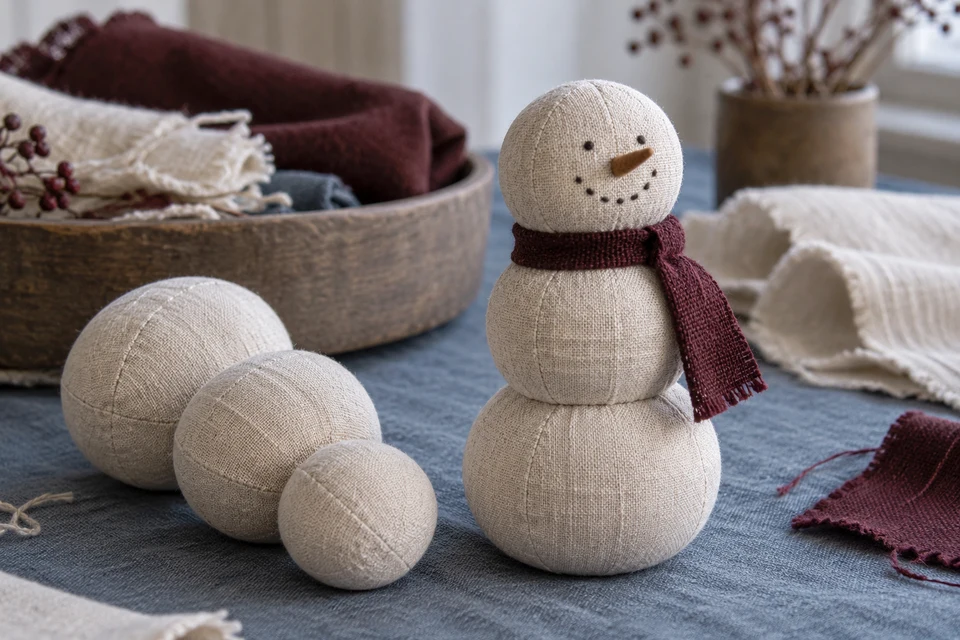
A decorative fabric snowman built from three rounded sections presents a different inspection problem from a one-piece stuffed shape. Each junction affects the visible alignment, while a scarf can conceal the neck join. The buyer should understand what connects the sections and what supports the finished display. Treat this as a decorative-product development brief, not a toy specification or evidence that a particular construction is stable, durable or suitable for children.
Set the three section proportions
Overall height does not control the whole silhouette
Record the proposed head, middle and base sections separately, using a defined measuring condition for the soft shape. Include the assembled height and the intended relative proportions in the technical pack. Two figures can share an overall height while having noticeably different heads or bases. Keep the measurement approach practical so a maker does not have to compress or stretch a section to reproduce the number.
Ask for a front and side view of the assembled sample in its natural resting condition. Compare the body proportions before adding the scarf or other decoration. This makes it easier to identify whether a visual difference comes from the section shape or the accessory placement. If filling quantity or material changes during development, revisit the complete silhouette rather than treating the revised section as automatically interchangeable.
- Specify each section and the complete assembled height.
- Review proportions before adding concealing accessories.
Inspect the two junctions directly
A scarf should not substitute for construction evidence
Identify how the head joins the middle section and how the middle joins the base. Request views that show the actual connection and any internal support proposed by the maker. A smooth front photograph cannot reveal the entire assembly. Use the seam record where a sewn join is offered, and describe other methods by their real construction rather than assigning a generic stitch label.
Check the visible alignment without holding the head upright or moving the base for the approval image. Record whether a lean is intentional and whether the section boundaries remain consistent with the accepted design. Ask the responsible product owner to define any required connection evaluation in the evidence plan. A visual check should not be presented as a strength test or a guarantee about handling.
- Show both body connections with the scarf moved aside.
- Separate alignment observations from required connection testing.
Place the scarf deliberately
The wrap and tails can alter the apparent neck
Specify whether the scarf is fixed, removable or attached in another stated way. Record the wrap direction, visible width and intended tail positions relative to the body. A thick scarf can make the head appear smaller or conceal more of the middle section than the reference. Approve its placement on the actual finished figure, not only as a separate rectangular fabric strip.
If the scarf uses a directional print or fringe, review which face and ends are visible after wrapping. Tie the accepted arrangement to the design version record. Keep any revised attachment or added trim in the component list. A styling adjustment that looks minor in a photograph can change assembly work, unpacking instructions or the complete product that the retailer receives.
- State whether the scarf is fixed or supplied separately.
- Approve the visible wrap and tails on the assembled body.
State the intended display support
A freestanding photograph does not identify the base construction
Clarify whether the proposal uses a shaped soft base, an internal support, a separate stand or another specified arrangement. Ask for the relevant component information and review the figure on the intended type of display surface. Do not infer a weighted base or a particular filling from its ability to stand during one photograph. Any performance claim needs evidence appropriate to the final construction and use.
Keep the decorative figure distinct from a functional doorstop or other load-related product. Those are different briefs even if the silhouette looks similar. The product inquiry should identify the intended display and any exclusions so quotation and retail copy describe the same item. If the buyer changes the display setting, revisit the sample scope instead of carrying over an unrelated approval.
- Identify the actual base and any supplied support.
- Do not relabel a decorative sample as a functional weighted product.
Review the received assembly after packing
Body joins and scarf position must survive the presentation process
Agree how the figure is placed in its selling pack and whether any assembly or arrangement is expected after opening. Inspect the unpacked body sections, junctions and scarf without first restyling them for photography. Record any permitted simple arrangement step and show it in the approval record. A pack that compresses the head differently from the base may produce a received silhouette unlike the studio reference.
For mixed sizes or colors, count complete figures and verify each accessory configuration using the assortment checklist. Align the quoted section construction, support, scarf and packaging before comparing MOQ and cost. Request actual sample and production milestones and keep delivery estimates conditional on the confirmed order, rather than implying that a Christmas design is immediately available.
- Compare the unstyled received figure with the approved sample.
- Verify complete body-and-scarf combinations in the assortment.
Share the intended snowman proportions, scarf arrangement and display setting with FY Bedding. Request exposed junction views and a packed sample so the body construction and received presentation can be reviewed together.