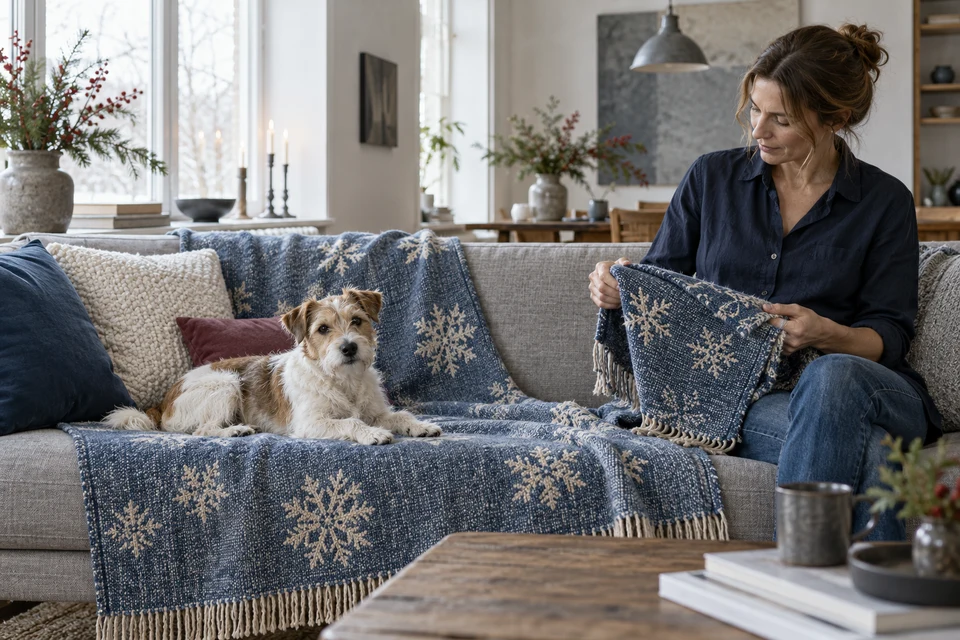
A Christmas throw for pet households combines seasonal room styling with a practical cleaning expectation. It should not be sold as an indestructible pet product simply because an animal appears in the photograph. For a private-label range, define seat coverage, textile construction, care and the exact retail promise, then compare finished samples under a documented review plan.
Choose the sofa area the throw is meant to cover
Distinguish a throw from a fitted protector
Record the target seat width and depth and decide whether the product is intended to cover only the seat, the backrest as well, or a larger lounging area. A decorative rectangle without retention features should not be described as a fitted sofa protector. Photograph the approved drape from the front and side on the intended furniture type, including the amount hanging beyond the seat.
Make the size description intelligible to the retail customer. Overall dimensions do not promise that the throw will remain fixed on every sofa shape. If retention, backing or anchoring components are proposed, include them in the complete development review rather than adding them after fabric approval. Use the finished-size and tolerance checklist to record the measuring method and the post-care size expectations.
- State whether furniture and other styled accessories are excluded.
- Review the throw on each furniture shape used in selling images.
Select the construction through samples
Compare both faces and the edge finish
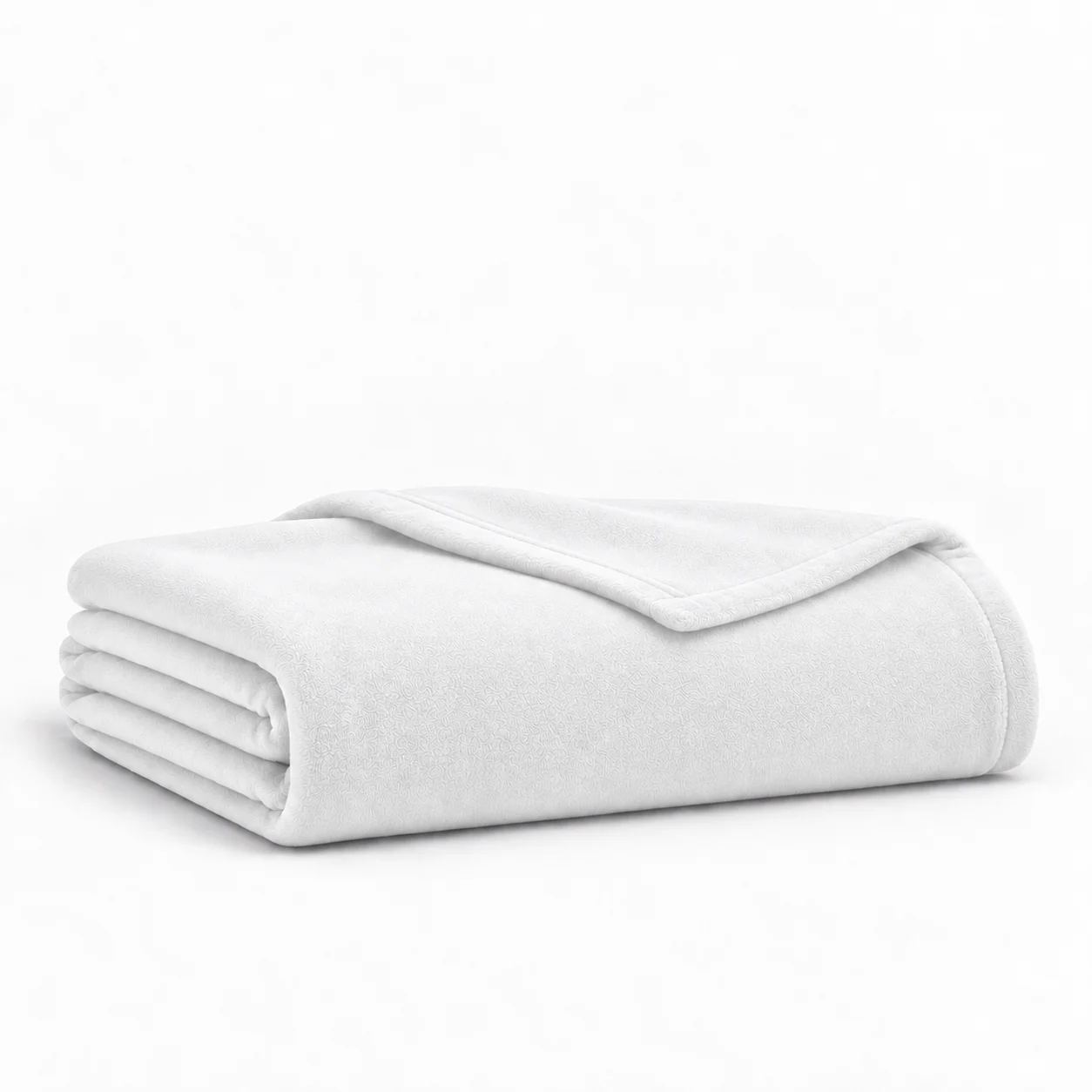
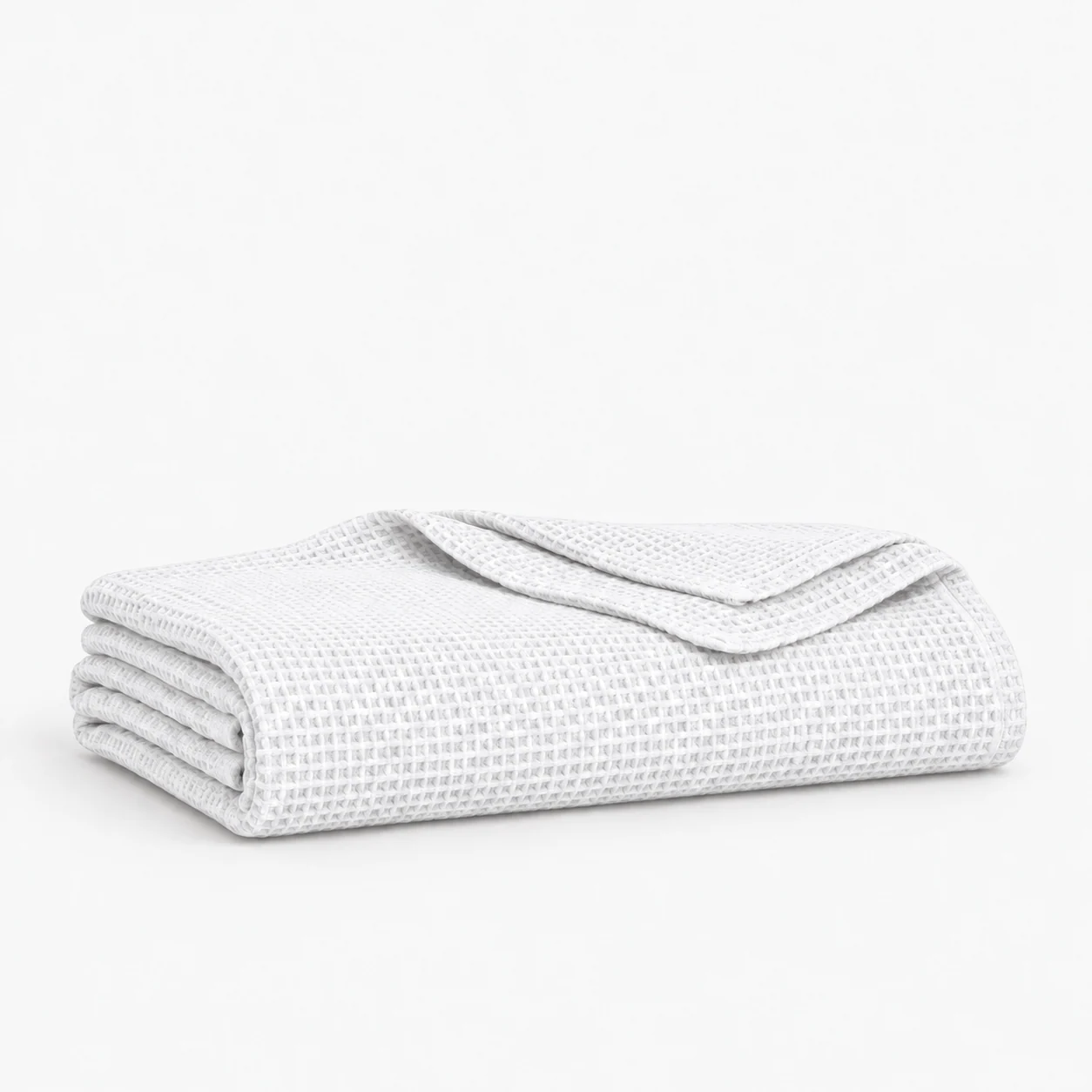
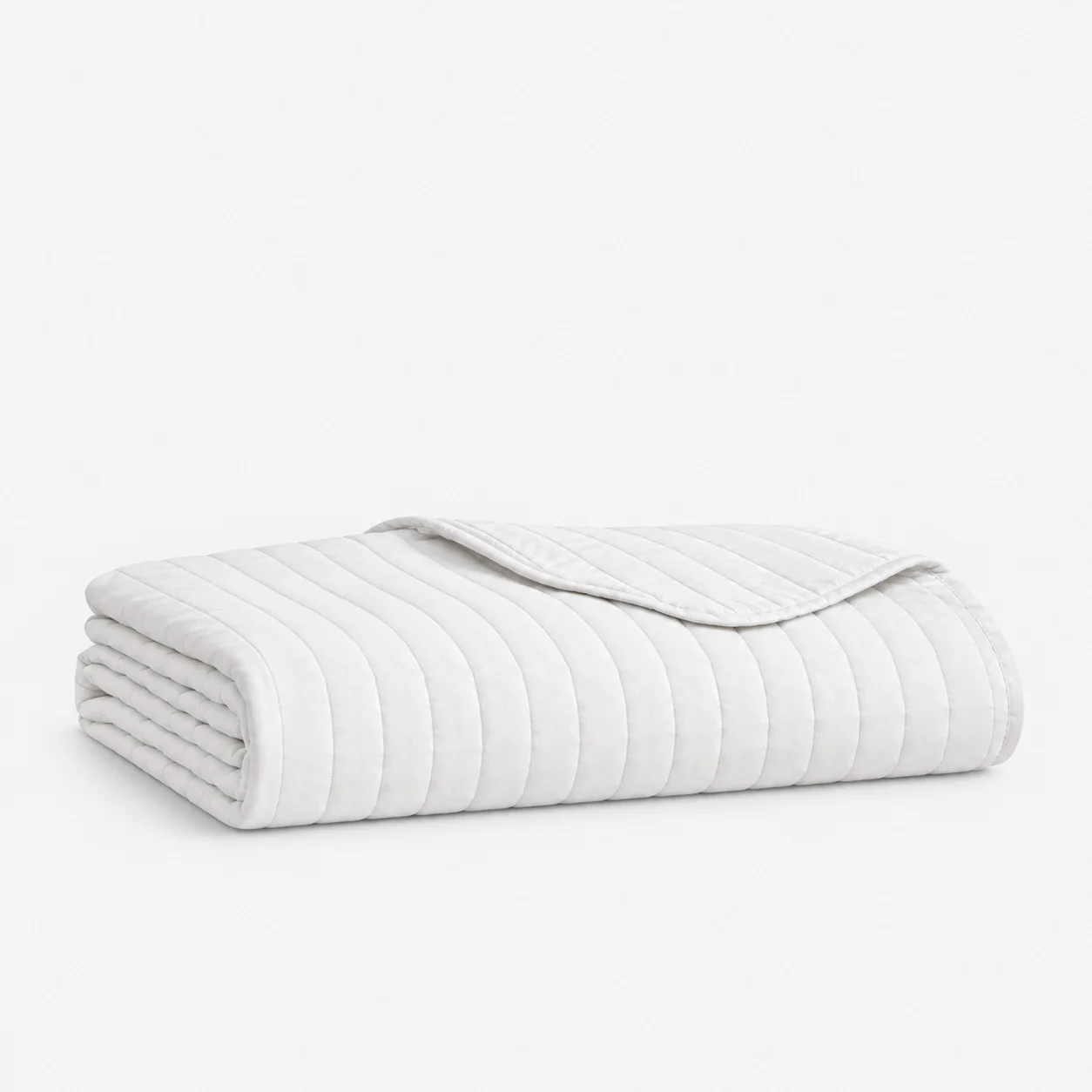
Ask for the actual proposed construction, fibre content, weight and edge treatment. Compare a woven surface, a brushed surface or another offered construction by handling samples rather than relying on category names. Inspect loose decorative elements, fringe, exposed loops and the reverse face. Any suitability assessment for use around animals belongs in the product review; a textile appearance check is not a pet-safety certification.
Christmas motifs should remain readable at the proposed drape scale. A large snowflake may disappear into a seat crease while a dense small repeat may dominate the room. Approve the motif and reverse face together, and list yarns, trims, labels and any backing in the component specification. Do not silently substitute a different construction because it gives a similar thumbnail image.
- Retain samples of both faces and the complete border.
- Review decorative trims as components, not merely styling.
Define an observable hair-removal comparison
Avoid universal easy-clean promises
A useful buyer trial starts with a clear comparison question: which proposed surface is easier to clean using the intended consumer method? Agree how samples will be prepared, what material will be used in the comparison, which removal tool is allowed and what observations will be recorded. Use the same conditions across alternatives. Record the limitations; an informal comparison does not establish performance for every animal, coat type or household.
Photograph the surface before and after the agreed procedure with comparable lighting and distance. Note whether fibres remain caught in the textile, whether the cleaning action changes the pile, and whether the border is harder to clean than the centre. If the product description makes durability or abrasion claims, request appropriate evidence rather than extrapolating from this trial. The abrasion evidence guide explains how to keep methods and claimed endpoints aligned.
Check the complete throw after the proposed care route
Keep special claims outside unsupported copy
Evaluate the final textile and edge construction under the proposed cleaning instructions. Record dimensional change, appearance, colour transfer concerns and whether the throw can be returned to its intended presentation. Keep the procedure distinct from any pet-health or hygiene claim. Do not add antimicrobial, allergen-control, waterproof, stainproof or claw-proof language without specific substantiation and appropriate review.
The care-label checklist can help the buyer reconcile the approved instructions with packaging and online copy. Ask the supplier to identify any limitations and review those limitations before photography. A product shown as a washable household throw must not require an undisclosed cleaning route that conflicts with its intended retail position.
- Compare the border, centre and reverse after care.
- Make consumer wording match the evidence actually retained.
Build a restrained seasonal assortment
Keep the commercial offer explicit
Separate the Christmas design options from the core construction. A small motif assortment can share a fabric platform, but ask which minimums apply to yarn colours, printing, weaving or trims. Confirm whether each sales unit contains one throw and whether a storage band or bag is included. Use the MOQ and cost-driver guide to compare options without assuming identical pricing for different processes.
Schedule a finished sample review before making delivery commitments. Keep the approved drape photographs, construction, care route and claim limitations attached to the purchase specification. For a new seasonal program, send FY Bedding the intended sofa coverage, preferred construction, motif direction and pack format. Those details support a scoped quotation and sample discussion; they do not imply confirmed stock or guaranteed holiday delivery.
- Approve the sales copy alongside the finished sample.
- Do not use pet imagery as a substitute for product evidence.
Choose the throw on documented coverage, construction and care observations. Keep pet-safety and protective-performance claims separate unless the actual product has suitable supporting evidence.