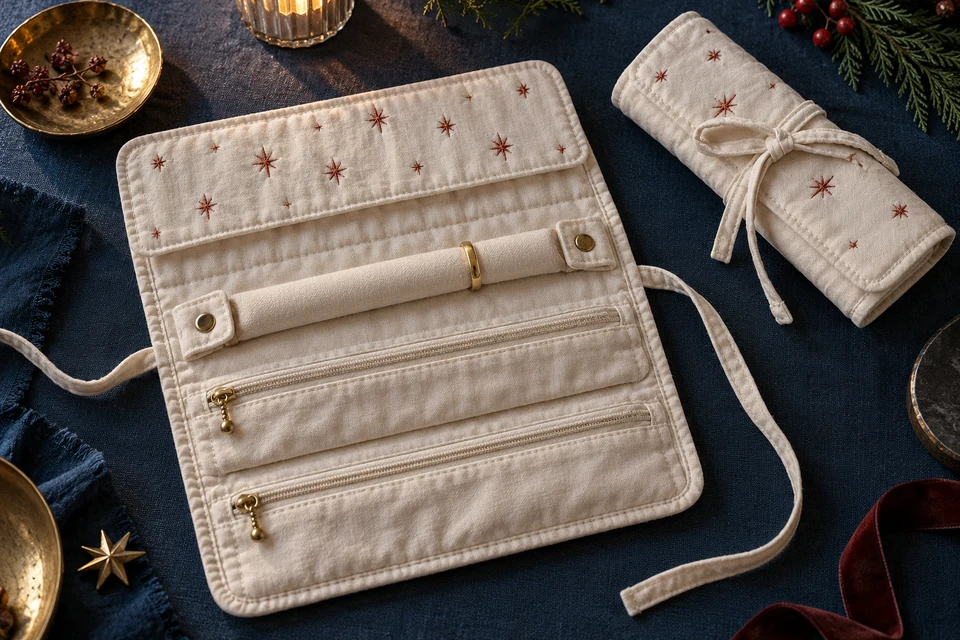
A quilted jewelry roll can be a useful adult Christmas gift accessory, but a tidy flat layout does not show whether the compartments remain accessible or conflict when folded. The ring bar introduces a raised element; pockets add changing bulk; the outer tie follows a path around both. The buying brief should identify the representative contents and intended folding sequence, then evaluate the complete filled sample. Appearance alone is not evidence of protection against scratching, tarnish, loss or impact.
Define a representative content set without promising universal fit
The sample load determines the layout being approved
List the categories and dimensions of the agreed sample contents, using inexpensive representative pieces where appropriate. Separate rings intended for the bar from items intended for closed pockets. Do not rely on a single small ring to imply that every ring profile will fit. State whether the roll is sold empty and identify jewelry shown in marketing as styling contents when it is not included.
Use the technical-pack record to attach a compartment drawing and sample-load list. Keep the intended adult use and selling scope clear. If the commercial proposal expands to other audiences or specific protection claims, obtain the relevant assessment before adding those promises to packaging. The current layout review concerns access, organization and folded fit.
- Identify the reference contents and supplied scope.
- Avoid treating one sample load as universal compatibility evidence.
Approve how the ring bar opens and closes
The access end must remain usable after quilting and binding
Describe whether one or both ends of the padded bar detach and name the proposed fastening. Place representative rings on it using the documented opening route, then close it normally. Observe whether the end tab is easy to reach or becomes buried beneath a flap. Record the bar's usable section separately from its full sewn length, because fixed ends and fasteners occupy space that cannot hold contents.
Refer to the bill-of-materials method for the bar filling, cover and fastening identity. A change from a snap to another closure is a construction revision, not a cosmetic substitution. Request the relevant durability and material evidence for the intended product rather than making retention claims based on one successful opening demonstration.
- Measure the usable bar section between occupied attachment areas.
- Record the fastening route and any proposed substitute separately.
Keep the pockets independent from the bar and fold line
A visible zipper is not proof of a useful compartment
Open each pocket and inspect the actual internal space, lining and closure ends. Confirm whether the two visible openings lead to separate compartments or one shared interior. Place the agreed sample items inside and close the pockets without forcing the sliders. Check that a pocket's filled edge does not push against the ring bar or require the roll to be opened in an undocumented sequence.
The zipper component guide helps identify the closure rather than accepting an unspecified generic zip. Add close views of the zipper ends and interior seams. Keep any jewelry-contact requirements explicit and evidence based. A soft-looking lining in a photograph does not establish that it will not mark every metal, finish or stone.
- Confirm the actual number of separate compartments.
- Review filled pocket closure and its relationship to adjacent components.
Fold the loaded roll using one agreed sequence
Empty compactness can conceal a filled-layout conflict
Follow the proposed fold or rolling direction with all representative contents in their assigned locations. Note whether the bar lies against a zipper pull, whether a pocket bulges into a fold and where the outer tie crosses the bundle. Test alternative layouts one at a time if the first configuration does not close comfortably. Do not increase tie tension merely to force a compact photographic result.
Use the reference-sample workflow to retain the chosen loaded configuration and fold sequence. Photograph it open, partly folded and closed. If the pattern is changed to accommodate bulk, repeat the empty appearance review too. Both states matter for a gift item that customers first see displayed flat or in a box.
- Record the folding sequence and reference load together.
- Check component contact before approving the closed bundle.
Align the Christmas decoration with the commercial specification
Seasonal styling must not obscure access or product identity
Locate any embroidered stars or festive border on the outer face and check whether quilting or the tie covers them in the normal closed state. Keep decoration away from functional opening paths unless the design has been tested in the complete sample. Decide which view the retail pack presents and ensure that photographs show the actual approved layout rather than an unrelated open organizer.
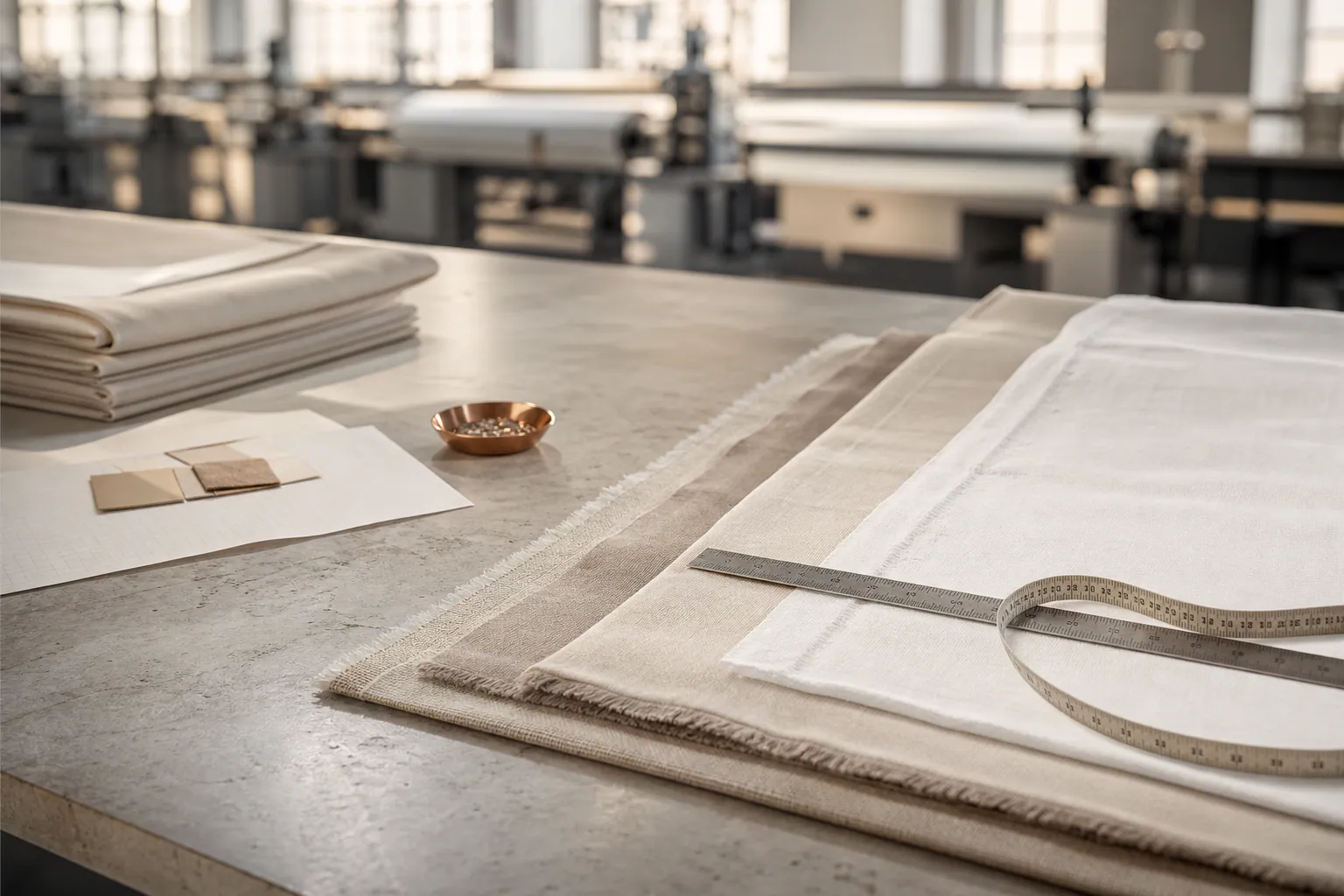
The private-label packaging checklist supports content identity and supplied-scope review. Confirm component minimums, sampling and current timing with the supplier. The generated editorial photograph illustrates a possible textile layout; it does not certify protective properties, jewelry compatibility or stock availability. Any care or performance statement requires evidence for the finished proposed construction.
- Approve decoration in the normally closed state.
- Keep styling jewelry and unverified protection claims out of supplied-scope promises.
Share your adult gift brief, representative contents and preferred compartment layout with FY Bedding. Request an empty and loaded sample review covering bar access, pocket separation and the fold sequence before approving the quilted Christmas jewelry roll.