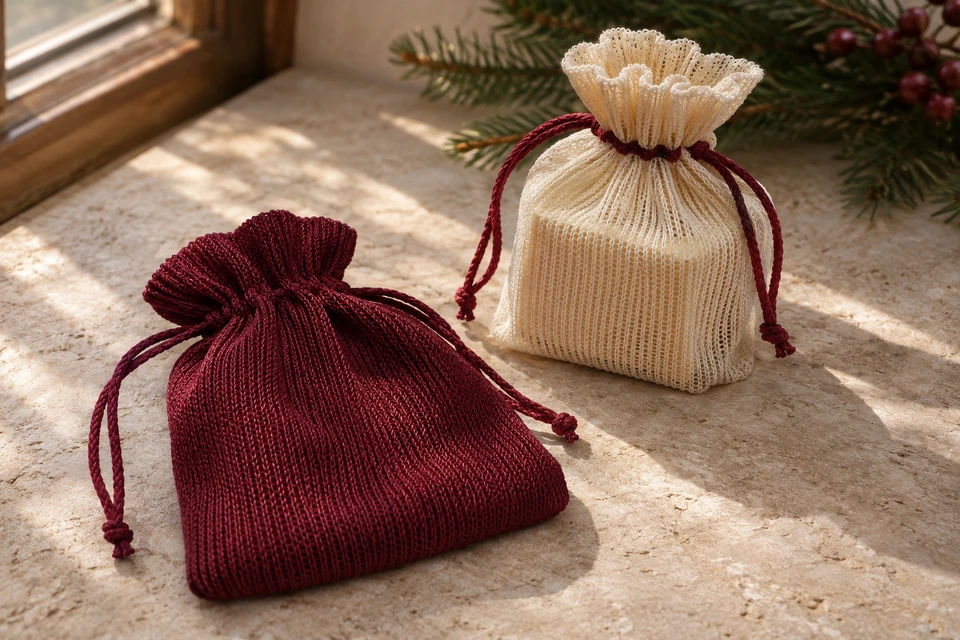
A small textile gift bag may look dense when empty and more open around its contents. For an interlinked sprang proposal, the buyer should approve that change deliberately, using the intended gift shape rather than treating an empty pouch photograph as the finished packaging reference.
Identify the proposed interlinked cloth
A net-like appearance does not establish the technique
The Art of Sprang describes basic interlinking as vertical threads repeatedly linking with their neighbours: rows sit close at rest and openings become visible when the cloth is stretched. This gives procurement a useful reason to compare relaxed and filled samples. It does not identify every openwork pouch as sprang. Ask the maker to name the actual construction, show the unfilled material and explain whether the offer uses interlinking, another sprang structure or a different textile technique altogether.
Keep alternatives honest in the purchasing record. A knotted, crocheted or knitted bag might suit the project, but it should not inherit the sprang description without confirmation. Record the proposed yarn, composition, colour and finished pouch reference. A traditional technique name is not evidence of hand production, a particular origin or a certified material. If those attributes matter to the collection, request support specific to the offered product instead of inferring them from the texture or from a craft reference used during development.
Nominate the gift before sizing the bag
Shape matters as well as nominal dimensions
Provide the actual gift or an accurately identified sample of its final enclosed form. A rectangular box, a soft folded textile and a rounded container can present the same pouch differently. Record the dimensions and ordinary handling condition of that item, including any inner wrap that will actually be supplied. Do not develop the pouch around an attractive substitute and assume the final gift can be inserted later. The bag's appearance is part of a combination, not a free-standing measurement exercise.
List the intended gift variants before asking the supplier to propose pouch sizes. A single pouch may accommodate several shapes, but the buyer must review the appearance of each combination it intends to sell. Identify the corners or protruding areas that alter the openings most clearly. Do not force an oversized item into the sample to demonstrate stretch. This review should determine a suitable packaging proposal, not turn the material's ability to open into an unsupported capacity or protective-performance claim.
Compare the relaxed and filled surfaces
Decide how much of the contents may show
Photograph the same identified pouch empty and around its intended contents under consistent light. Mark a few reference areas near the middle, lower corners and opening so reviewers can compare the structural change. Ask whether the buyer wants a relatively opaque impression, a deliberately open appearance or a specific balance. The decision belongs to the selling presentation. A dense empty sample cannot establish that a printed gift box or differently coloured inner wrap will remain visually concealed after filling.
Evaluate the filled pouch against the backgrounds used for merchandising. A pale box may make small openings less conspicuous than a dark one, even when the textile is unchanged. Keep that observation separate from a material difference. If seasonal stripes or a colour arrangement are included, show how they move around the actual gift. Do not demand identical flat and filled geometry from a structure chosen for its change of shape; define the accepted result for each intended state and retain a clear photographic reference.
Review the top, base and removal action
The openwork body is not the whole package
Ask the maker to show how the base is completed and how the top is finished. Identify any drawcord, lining or other supplied component and confirm whether it is included in the quoted unit. Review the pouch without a decorative bow hiding the opening. A neatly presented body can conceal an awkward access route or a base arrangement that changes the filled silhouette. The buyer should see the actual finished construction before approving the bag as a usable seasonal package.
Have a reviewer insert and remove the nominated gift using the proposed ordinary method. Observe whether corners catch, the opening becomes difficult to arrange or the textile needs substantial reworking to return to the intended presentation. Record the condition and sample identity. Do not translate a successful demonstration into a carrying-load, child-safety or reuse claim. Any additional function proposed for the bag needs its own appropriate assessment. A drawcord should be described as the actual supplied closure, not automatically as a carrying handle.
Separate size families from colour families
Avoid hidden sampling gaps in a Christmas assortment
Build a small matrix of pouch size, yarn reference, colour combination and intended gift. Mark which combinations have been physically reviewed and which are only proposed. A new yarn can change the cloth's filled appearance even if it matches an existing shade. A new gift shape can require another review even if it fits inside the same nominal bag size. Keep those changes visible rather than approving a large seasonal assortment from one burgundy prototype containing one sample box.
Ask the supplier which combinations determine minimum quantities and how many samples are needed to answer the remaining questions. The project may be limited by the yarn source, pouch construction or finishing components; do not assume that all colourways share one unrestricted minimum. Where a deadline is important, make the outstanding sample decisions part of the schedule. An attractive pouch does not establish stock availability or confirm that the complete gift assembly can reach its destination before Christmas.
Retain a complete packaging reference
Order the filled result, not an isolated texture
The approval set should contain an empty pouch, the nominated gift or its controlled reference, filled photographs and the accepted insertion and removal method. Record the packed condition in which bags will be delivered to the assembly team, including any arrangement required before use. If the supplier changes the yarn, construction, base or opening, decide whether the earlier filled approval still applies. The order should not allow a visually similar openwork bag to replace the named proposal without review.
For a FY Bedding enquiry, share the gift shapes, desired degree of visibility, quantities and intended market. Ask the team to confirm whether the requested technique and components are within the proposed sourcing scope, and to identify alternatives separately. Keep protective packaging requirements with the relevant packaging owner: an openwork textile presentation bag does not by itself establish transit protection or product preservation. The purchasing outcome is a repeatable appearance around a known gift, supported by an identifiable construction and a clear supply proposal.
Approve the named interlinked pouch around each intended gift shape. Record changes in openings, visible contents, top and base, and keep ordinary presentation findings separate from load, safety, protection or reuse claims.
Method references: Carol James Sprang Art: interlinked sprang structure.