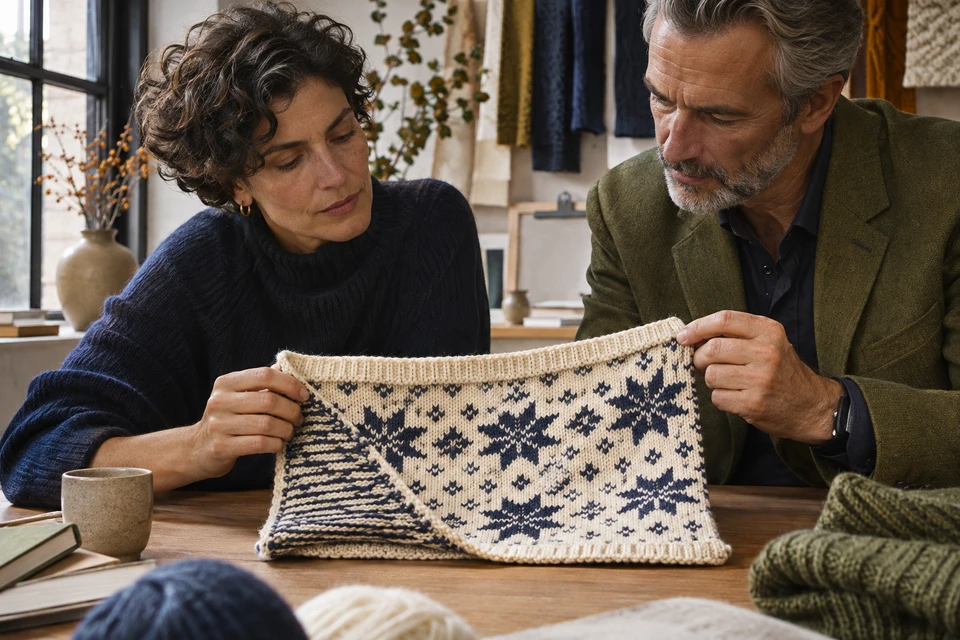
A winter star can look correct on the front of a cushion while the yarn behind it takes an unsuitable route. For stranded-knit Christmas cushions, the buyer's critical question is what happens to each colour when it is not forming the visible stitch. Approve that reverse construction before accepting the finished cover.
Identify the carried-colour construction
Do not confuse stranded knitting with colour-block joins
Lion Brand's knitting guidance describes the unused colour being carried behind the working stitches, creating floats on the reverse. This is the limited technical distinction used here. It does not identify a product's geographical origin or establish that a cushion is an authentic traditional design. Ask the maker to name the construction actually proposed, and keep any printed or embroidered imitation of a knitted motif separately described.
In an intarsia proposal, separate colour areas create a different set of joining questions. A supplier should not be allowed to replace one route with the other under the same winter-pattern description without review. Request an unassembled panel that can be turned over, together with the supplier's account of how the colours travel. A photograph of a filled cushion is not enough to establish that construction, even when every star appears in the right place.
Locate the longest unused-colour spans
Review the quiet areas between motifs
Mark the rows where a colour disappears from the face for the longest stretch. These may lie between two stars, beyond a tree outline or within a wide plain border. Ask the knitting provider to show how the non-working yarn is managed at those locations. Do not assume that a neat reverse in a densely patterned central area represents the less frequently patterned edges.
Use a sample map that connects the face motif to its corresponding reverse section. Record the supplier's proposed float handling and the accepted appearance, without inventing one universal maximum float length for every yarn and product. If the design is resized or the motifs are spaced farther apart, revisit those sections. A larger panel can create a new carried-yarn problem even when the individual star drawing has not changed at all.
Examine tension with the panel relaxed
A tight float can change the visible pattern
Place the sample on a level surface in its intended finished state, without pulling it into the required dimensions. Look for gathering across a colour span, distorted stitches or a motif that appears compressed compared with its neighbours. Turn the panel over and locate the same area. Ask the maker to explain the relationship before deciding whether the issue belongs to yarn handling, finishing or the design itself.
Also note unusually loose loops on the reverse. A buyer should not trim or tighten them during inspection, because doing so changes the sample being assessed. Retain the condition and ask for a construction correction where needed. This is an appearance and workmanship review, not a quantified snagging or strength test. If the intended retail claim requires performance evidence, define that evidence separately with a suitable technical reviewer.
Decide how the inside will be accessed
Lining is a construction choice, not a hidden correction
For a removable cover, consider how the customer inserts the inner cushion and how the carried yarns will be exposed during that operation. Ask for a completed sample with the proposed closure and any lining. Observe normal insertion and removal without deliberately abusing the textile. Record whether the reverse yarns remain accessible and whether a lining interferes with the closure, corners or ordinary handling.
An added lining should be declared in the bill of materials and the quotation. It should not silently conceal unresolved float construction or inherit the care description of the knit face. Compare the lined and unlined proposals as complete alternatives, including how the inside can be inspected before assembly. If the lining changes the feel or filled shape, the merchandising team should see that effect before approving the retail photography.
Keep yarn and finishing revisions visible
Repeat the reverse review after relevant changes
Identify every proposed yarn by its supplied material description and range reference, not just its festive colour name. A substitute yarn can alter the appearance of carried sections and the way the finished panel settles. Ask the supplier which finishing operations were applied to the approval sample and which will apply to the delivered covers. Do not presume that a softly blocked studio panel describes an untreated production piece.
Review the same marked float locations after the agreed care and preparation evaluation. Retain observations of the face and reverse together, including any lining. If a revised yarn, motif spacing or finishing route is proposed, the original front-view approval should not be treated as covering that revision automatically. The decision record should identify exactly which combination of pattern, yarns and finishing state was accepted for the order.
Quote the approved knitting route
Give the supplier a usable release reference
The enquiry should include the authorised winter design, finished dimensions, colour allocation, marked long-span areas and the intended inside construction. Ask how yarn colours, pattern complexity and minimum quantities affect the offer. Separate sampling charges from production quantities and clarify whether the quotation covers panels, unfilled covers or complete cushions. No available knitting chart is evidence of confirmed manufacturing capacity or a holiday delivery slot.
Send FY Bedding the front-and-reverse sample brief, proposed selling unit and target quantities for a project-specific review. Ask for confirmation of materials, construction and realistic milestones before making seasonal commitments. The useful release document is not simply a photograph of a star: it is a named panel reference that lets the maker, assembler and receiving team find the same carried-yarn sections and judge them consistently.
Mark the longest unused-colour spans, inspect their relaxed front and reverse condition, decide the lining and access route, and repeat the review after yarn, spacing or finishing changes.
Method references: Lion Brand: carried colours in Fair Isle knitting.