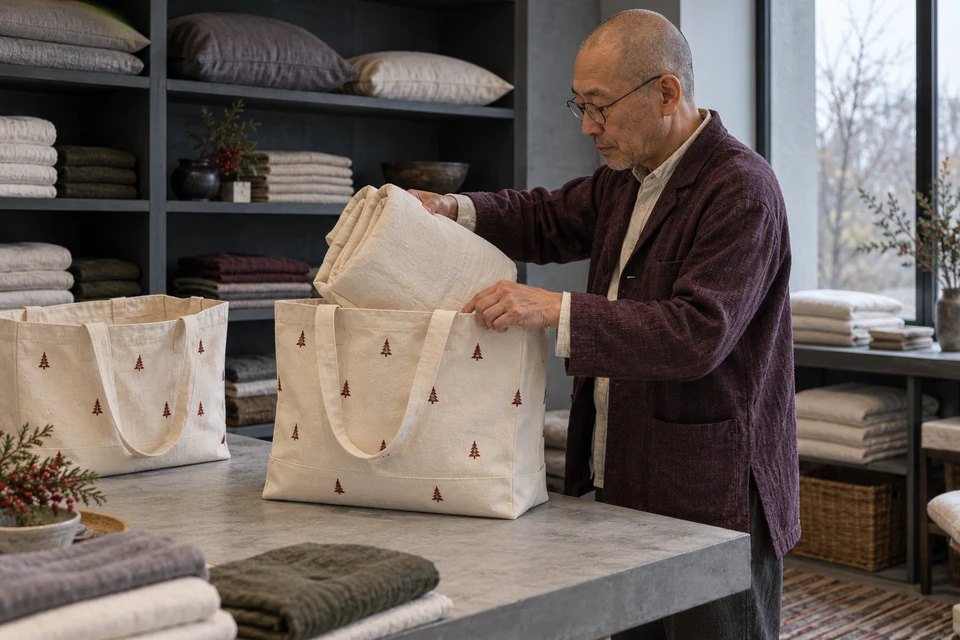
A reusable cloth shopping tote should be specified as a bag that fits the purchased bedding bundle, not as a decorative rectangle with two handles. The store needs a practical loading opening, enough usable base space and an honest description of what the bag includes. A Christmas motif is the final design layer. Start with the actual packaged product and distinguish the tote from the bedding set and its primary protective packaging.
Freeze the bundle that must fit
Use the sold pack, not a showroom substitute
Record the dimensions and mass of the bedding bundle in the form handed to a customer. Include its existing wrap, insert or board where those remain in place. If the store offers several set sizes, identify which combinations are intended to share a tote and which need another format. Do not force the largest set into the smallest bag simply because the flat bag dimensions appear generous.
Keep this scope in the product specification record. A tote supplied separately from bedding should have its own identity and quantity. State whether the bag supplements the original product pack or is proposed to replace part of it; replacement introduces additional product-protection questions that a decorative tote photograph cannot answer.
- Measure the actual sold bundle including retained packaging.
- List the product combinations covered by each tote size.
Draw usable base and opening dimensions
A gusset changes the space inside
Specify the intended finished base, side depth, height and mouth opening, with clear measurement references. Ask the supplier to show how the flat pattern becomes the occupied bag. Review the corners and seam positions where the bedding bundle sits. A broad-looking flat face does not by itself establish enough usable depth for a bulky set.
Use the sample approval framework to trial loading and removal with the real bundle. Watch whether staff have to compress it excessively, catch a seam or fold the mouth awkwardly. Adjust the geometry before approving the print area, because changes to depth and height can alter the visible design panel.
- Approve base, side depth and mouth opening as separate dimensions.
- Trial ordinary loading and removal without concealed packing tricks.
Approve the handles as part of the occupied tote
Keep fit and carrying evidence distinct
Record handle length, width, spacing, attachment and proposed reinforcement. Review how the handles lie while staff load the bag and whether they remain accessible after the bundle is inside. Decide whether the intended carrying arrangement is hand-held or another explicitly reviewed use. Do not infer a safe load rating from a visually substantial fabric or a comfortable-looking photograph.
For the controlled carrying assessment, use the existing loaded-pack handle review rather than duplicating it here. This article's primary decision is the reusable tote's usable volume and loading geometry. Keep the chosen handle construction and any evidence linked to the same occupied bag configuration so a later larger bundle does not inherit an unrelated approval.
- Keep handles reachable during the actual packing sequence.
- Review carrying evidence against the exact occupied configuration.
Place Christmas artwork on the occupied bag
A side fold can swallow a good motif
Map the decorated area on the finished tote and examine it with the accepted bundle inside. Keep important tree motifs or other design features away from areas that disappear into gussets or are covered by handles unless that placement is intentional. Decide whether the reverse is plain or decorated and show both sides in the development record.
Use the print strike-off process on the actual proposed bag cloth. Do not approve a smooth paper image as evidence of the textile result. If the tote will also be offered for later everyday use, ask the buyer to define that use honestly; the word reusable is not a substitute for agreed construction, care guidance or any requested performance evidence.
- Review print placement with the bag occupied and handles raised.
- Describe the intended repeat use without unsupported environmental claims.
Compare the bag as its own retail component
Separate bag price from bedding price
Ask for a quotation identifying fabric, finished geometry, handles, decoration, labeling and packing. Confirm minimums by bag size and artwork rather than assuming all bedding orders can share one seasonal tote without consequences. Use the commercial scope checklist to separate sample development from bulk-unit supply.
Retain the approved empty tote and the nominated bundle arrangement. Reopen fit when the bedding fold, package thickness or set contents change, even if the tote artwork does not. Keep customer photography clear about whether the tote is included with the set or sold separately. Confirm actual availability and shipment plans before presenting the Christmas collection as ready for a particular retail date.
- Quote the tote and its included parts as a separate component.
- Recheck fit after changes to bedding fold or set contents.
Bring FY Bedding the actual packed bedding bundle, preferred tote use and Christmas artwork. Request a usable-volume prototype, occupied-bag review and clearly scoped quotation before approving the seasonal accessory.