A reel described by nominal length does not automatically provide the number of complete ribbon pieces a packing team needs. A Christmas bedding program may require repeated cuts for bows or bands, and a splice or unusable section can interrupt that sequence. Buy the ribbon as a controlled component with a defined cut plan. Keep this decision separate from approval of pressure marks or the appearance of an already tied retail pack.
Define the finished cut piece
Start with the real bow or band sample
Make and approve the intended bow, band or trim using a representative ribbon. Record the required cut length and width, the preparation of cut ends and any permitted adjustment by the packing team. If several package sizes use different lengths, identify each as a separate cut requirement. Do not calculate demand from a decorative photograph without a physical assembly reference.
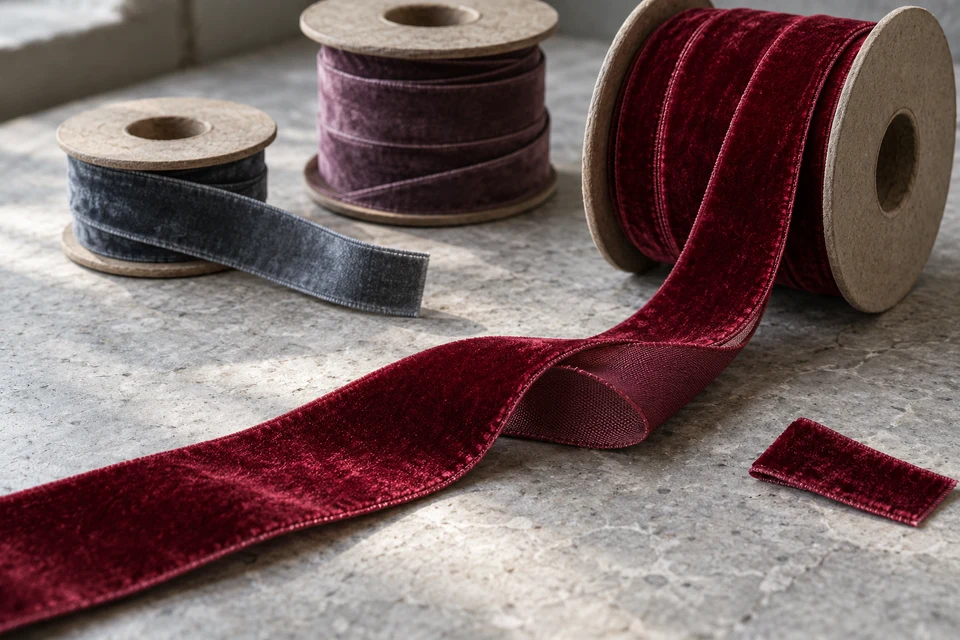
Put the component information in the technical pack. Ask the supplier to identify the actual velvet construction, composition, reverse and edge finish. A soft red surface does not establish material identity or suitability for every handling method. Retain the physical ribbon and approved assembled example so the purchasing team knows which component the calculation refers to.
- Measure the approved cut piece for each pack size.
- Record width, reverse and edge finish alongside the shade.
Separate nominal and usable reel length
Splice treatment must be explicit
Ask how reel length is stated and measured, and whether the offer permits splices, damaged sections or short end pieces. Agree how any such locations will be disclosed and how they affect accepted usable quantity. A buyer may accept a documented splice in some applications but not in a continuous decorative band. State the actual requirement rather than assuming every supplier uses the same convention.
Use the buyer's specification records to keep the reel definition and acceptance unit clear. Request a representative reel, not only a short attractive swatch. Inspect the reel identity, accessible ends and the agreed sample of unrolled material without treating a casual visual check as proof of the entire shipment's measured length.
- State whether splices are permitted and how they are identified.
- Agree how unusable sections affect the accepted length.
Calculate complete-piece yield conservatively
The remainder is not another finished band
For a simple planning example, a verified 20-metre uninterrupted usable section cut into 1.2-metre pieces yields 16 complete pieces before allowing for any additional process loss; the remaining 0.8 metre is not a seventeenth piece. This is arithmetic for an assumed example, not a supplier reel specification. If a splice divides the usable material into sections that cannot be joined, calculate complete pieces within each section separately.
Keep the cut plan with the quotation comparison. Ask the packing owner to estimate actual cutting and setup allowance from a trial rather than adding an unexplained percentage. Compare offers by the required complete-piece output as well as nominal reel price so a cheaper but less usable format does not look artificially equivalent.
- Calculate complete cuts from permitted uninterrupted sections.
- Keep planning assumptions separate from verified received quantities.
Approve shade and surface through the cut plan
One swatch cannot define every reel
Retain a physical shade and surface reference under an agreed viewing arrangement. Review the face, reverse and edge of representative material, then make the actual bow or band. Observe whether the intended face remains visible through the folds. Do not silently replace a single-face component with a different construction because both are described as velvet ribbon.
Coordinate the product image review with the actual assembled reference. If shade grouping matters across a Christmas display, define how component lots will be identified and kept together. Any claims about color transfer, care or service performance need an appropriate assessment for the offered material; a rich-looking cranberry color is not that evidence.
- Retain a ribbon reference and a completed bow or band.
- Identify component lots when display shade grouping matters.
Make receiving and replenishment traceable
Purchase orders should preserve the usable-length agreement
List ribbon reference, width, color, reel format, splice rule, accepted quantity basis and packing identification on the order. Ask which minimums apply to each shade or construction and whether the supplier can provide the proposed reel format consistently. Keep material alternatives separate until the buyer has reviewed their effect on the cut plan and assembled appearance.
Use the evidence planning framework to identify any additional checks required by the complete packaging application. Retain receiving observations and the cutting trial with the component revision. Confirm the real production and transport plan before promising seasonal pack-out dates. The purchasing objective is enough conforming complete pieces, with a traceable identity, rather than simply a visually impressive stack of reels.
- Carry the usable-length and splice rules into the purchase order.
- Recalculate yield after changing cut length or reel construction.
Share the approved bow or band, required cut lengths and splice policy with FY Bedding. Ask for a representative reel and a quotation based on the defined usable component scope before calculating the bulk order.