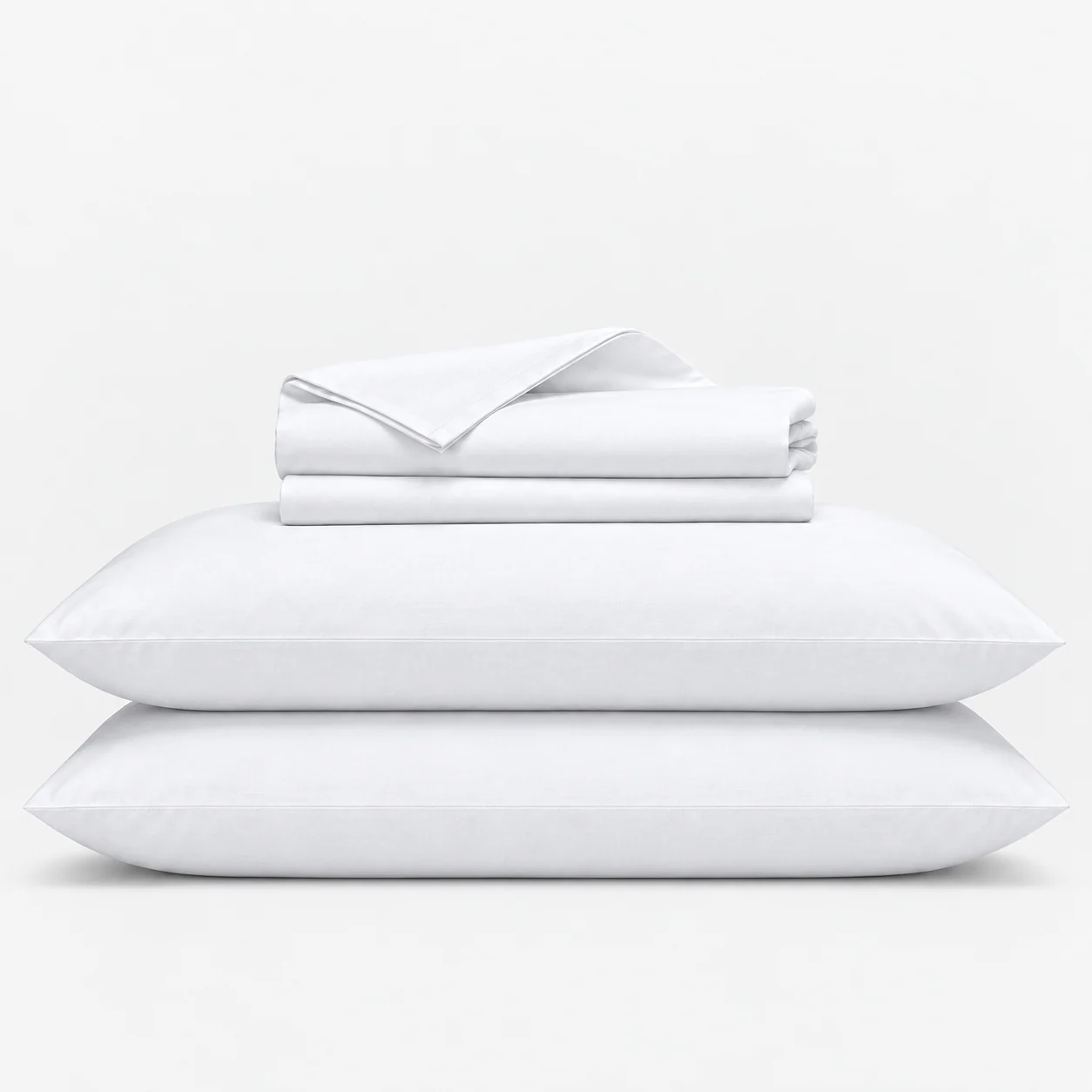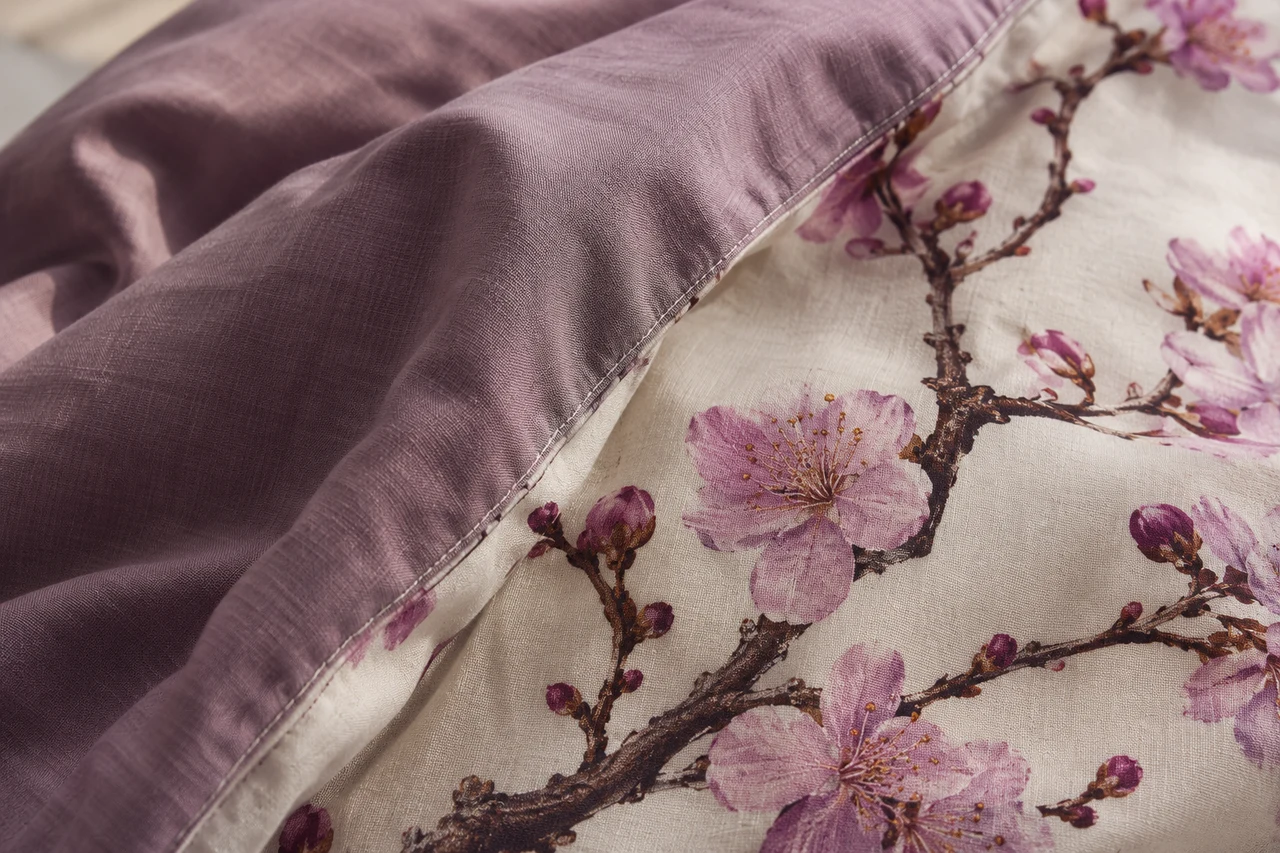
A cotton-linen sheet set can give a retailer a different material story from an all-cotton range, but the blend name does not describe the whole product. Buyers still need to decide how much texture to show, what the first touch should communicate and how the set should look after normal care. The useful purchase decision is a complete, repeatable retail proposition, not a search for one supposedly perfect cotton-to-linen percentage.
Describe the material offer before choosing a ratio
Composition and construction answer different questions
CottonWorks identifies linen as fibre from the flax plant's stem. Cotton and linen therefore identify material constituents; they do not by themselves specify weave, yarn arrangement, fabric mass or finish. Pottery Barn's own catalog includes a linen-cotton sheet set, illustrating a retail product category rather than establishing specifications for another supplier. Ask each proposed source for its actual composition and construction details instead of borrowing a familiar retailer's description.
Separate the composition declaration from the visual reference. Two offered cloths with similar stated percentages may still look or feel different, and a photograph cannot verify fibre content. Record whether the quotation covers one identified fabric across the flat sheet, fitted sheet and pillowcases. Use the fibre-content verification guide when aligning supplier documentation with proposed consumer wording. Keep origin, certification and performance claims out of the launch copy until evidence supports each one.
- Name every set component and its proposed fabric.
- Request composition, construction and finish as separate fields.
Give the blend a clear place in the assortment
A material story needs a customer-facing purpose
Decide whether the collection should present a relaxed surface, a more orderly finish or a particular balance between the two. Prepare a short merchandising statement using visible and tactile attributes that the team can actually compare. Avoid asking for linen character and a completely smooth appearance without explaining which has priority. Place candidate cloths beside the existing range so the buyer can decide whether the new program adds a meaningful choice.
Review both freshly prepared and agreed care-processed samples. A finish that makes the first swatch attractive should not silently define expectations for every later state. The hand-feel and finishing guide helps separate the approved preparation from unrecorded sample treatment. Where visible yarn irregularity is part of the direction, use the linen texture standard for appearance boundaries; it does not replace the commercial decision about the blend itself.
- Keep an identified reference for the intended touch.
- State which sample preparation the customer-facing photography represents.
Evaluate a set on the bed, not just a folded fabric stack
Treat fit and coordinated appearance as separate approvals
Request a representative finished set in a size that exposes the intended design clearly. Fit the actual mattress arrangement, place the pillowcases on their intended pillows and inspect the flat sheet in the retailer's normal styling. Check whether coordinated pieces share the approved visual direction without assuming that every piece must be cut from an identical panel position. Record any deliberately different fabric or trim before the quotation is compared.
For the fitted component, use the mattress-fit process instead of enlarging dimensions by guesswork. For other sizes, identify which sample checks must be repeated and which can be supported by a reviewed size schedule. A successful display bed is useful evidence for that assembly, not proof that every regional mattress format will fit. Keep finished dimensions and tolerance agreements linked to the approved construction revision.
Make the care trial answer the retail questions
Decide what acceptable change looks like
Write the proposed consumer care route before asking a supplier to prepare washed samples. Evaluate dimensions, surface, seams and the way the set returns to the bed after that route. If the retail concept accepts a naturally relaxed presentation, show that accepted condition rather than rejecting every crease while selling the same look in campaign images. If a more pressed presentation is required, include the preparation and its practical implications in the review.
The dimensional-stability guide supports a controlled measurement plan, but numbers alone do not approve the complete retail set. Keep before-and-after photographs, sample identification and the buyer's appearance decision together. Do not describe the material as cooler, stronger or more sustainable solely because it contains linen. Any comparative statement needs evidence matched to the offered construction and the exact claim, with wording reviewed before packaging is printed.
- Define the care route and evaluation condition.
- Record fit, feel and appearance separately after the trial.
Use the first order to prove a focused range
Separate fabric commitments from finished-set choices
Ask suppliers which minimums arise from the cloth, colour, finishing route and final packaging. A broad palette multiplied by several sizes can create commitments that are difficult to see in a single headline MOQ. Build an initial option table showing set contents, sizes, colours and expected replenishment needs. The assortment-planning guide provides the wider commercial framework; the blend decision should remain visible within it.
Before releasing the purchase order, align the approved material reference, set bill of materials, care wording and retail imagery. Specify whether replacement pillowcases or individual fitted sheets will be offered separately, because those choices affect future matching and stock planning. Send FY Bedding the intended market, retail positioning and candidate construction through a sample request. Ask for a project-specific sourcing and quotation review; fabric availability, minimums and delivery timing require confirmation rather than a promise based on the blend name.
Proceed when the material identity, chosen feel, complete-set fit, care-processed appearance and first-order assortment all refer to the same approved fabric and product revision. A blend percentage alone is not a purchase-ready specification.
Method references: CottonWorks: linen fibre definition; Pottery Barn: an example of a linen-cotton retail sheet set.