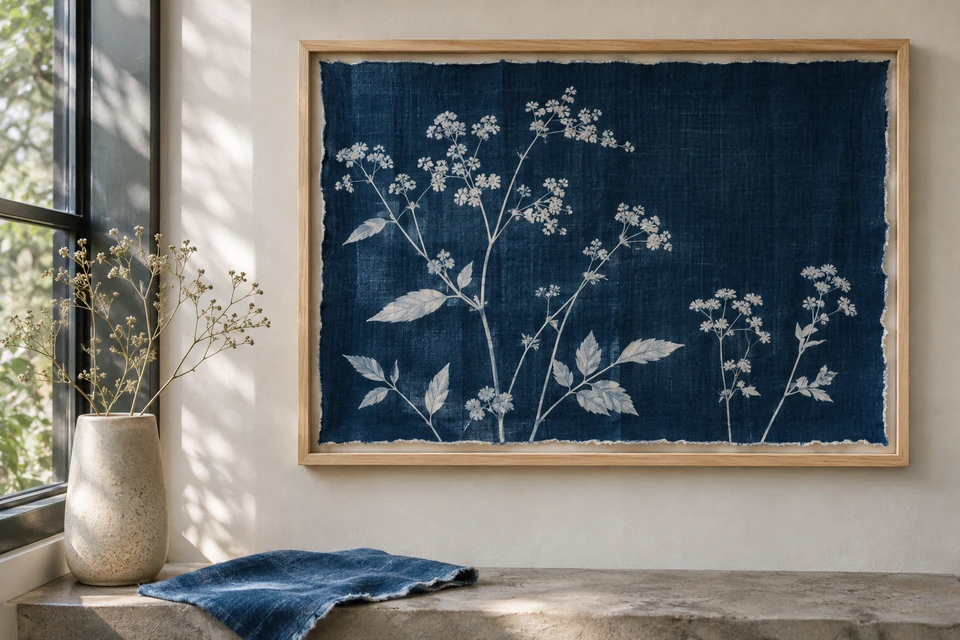
A pale botanical silhouette on deep blue cloth can describe a visual direction without identifying its process or care requirements. Buyers developing floral wall panels should decide whether they want an actual cyanotype or a printed interpretation before approving the range.
Separate the process from the appearance
Blue botanical artwork can be made by different routes
Jacquard's comparison of cyanotype and SolarFast identifies cyanotype's blue result and warns that cyanotype on fabric can fade or discolour with washing. This is a reason to clarify the process at the start of procurement, not to transfer another product system's claims to a proposed panel. Ask the maker to identify the actual image-making route and the supplied textile. A digitally printed blue botanical design may be a sensible alternative, but it should be described as that alternative rather than sold under an unverified process claim.
Keep the design brief and the material declaration separate. The buyer can request a deep blue ground, pale flowers and a soft contact-print character without asserting how those effects were produced. If authentic cyanotype is a defining part of the offer, request evidence tied to the sample and supplier's process description. Do not infer it from an irregular edge or a photographic-looking silhouette. Conversely, do not reject a clearly named printed interpretation merely because it does not reproduce the production story of the initial visual reference.
Set the intended role as a decorative wall panel
A bedding application needs a separate decision
Identify where the panel will be displayed and how it is expected to be handled. A framed decorative piece and a frequently washed pillowcase are different products, even if both use floral cloth. This guide concerns a wall-panel proposal. Do not extend its approval to bed linen, skin-contact accessories or another use without reviewing the relevant material, construction and evidence requirements. A fabric image that looks attractive in a frame does not establish suitability for a repeated laundry programme.
Ask the buyer to describe the expected display environment and any cleaning or maintenance expectations. Record those as questions for the supplier to answer, not as properties already guaranteed by the technique. If the intended setting involves conditions that the proposed product cannot support, consider a separately identified printed route or a different display arrangement. The purchasing decision should reconcile the desired visual effect with the intended use, rather than asking marketing copy to conceal a mismatch discovered after the design is approved.
Review the complete botanical image
Preserve the chosen balance of silhouette and blue ground
Show the full intended panel, including image edges and the portion that will be covered by the frame or mounting arrangement. A close view of one flower cannot approve the overall composition. Identify which stems must remain complete, where pale gaps are intentional and how much blue ground should surround the botanical forms. Ask for an actual sample at a useful scale. A small experimental swatch may demonstrate direction but leave the finished composition and mounting margins unresolved.
When comparing samples, use consistent light and distinguish the photographed appearance from the physical reference. Record which differences in tone or edge character the buyer accepts as part of the proposed process and which require revision. Do not set an unrealistic expectation of identical pieces if the supplier is proposing a route with intentional variation. Equally, do not use the phrase artistic variation to excuse any difference. Define recognisable limits with the maker and retain examples that explain the accepted visual range.
Request care evidence before writing the product description
Do not invent a home treatment to solve a claim
Ask for the supplier's supported instructions for the complete panel, including the textile, image, mounting and any protective components. Keep the evidence linked to the actual sample and intended use. Avoid improvising washing, chemical adjustment or stain-removal advice from general internet craft instructions. The buyer's role is to obtain a workable care proposition and determine whether it fits the product brief, not to create an unverified treatment for a decorative textile that is already being marketed.
If a supplier proposes a different image process to meet a care requirement, evaluate that option with its own samples and evidence. Jacquard's comparison is useful for identifying why process distinctions matter, but it is not a test report for an unrelated factory's output. Do not borrow another system's washability or permanence statements and attach them to FY products. Where support is incomplete, keep the claim unresolved or revise the product scope before release instead of turning a visual sample approval into an unsupported performance promise.
Include mounting and transport in the sample
The textile image must reach the intended display state
Clarify whether the purchase includes a frame, backing, hanging hardware or only the textile panel. Identify the visible image area and the attachment arrangement. Review the sample from the front and side, checking that the approved botanical composition is not obscured or distorted by mounting. A supplier's temporary display frame should not be mistaken for an included retail component. Keep installation and fixing suitability with the relevant product and technical owners rather than assigning a universal hanging recommendation from a photograph.
Trial the proposed packing and unpacking arrangement with the actual supplied configuration. Record creases, abrasion or presentation changes that need resolution, without promising a general transit-protection level from an informal check. If the textile is shipped separately for local framing, agree the condition in which it must arrive and the information the receiving team needs. The image-making process, mounting route and packing plan should describe one coherent product rather than three independent assumptions held by different parties.
Sell the defined panel honestly
Keep collection inspiration separate from process evidence
Prepare the retail description only after the process, material and supported care statements have been reconciled. Distinguish an actual cyanotype panel from a blue botanical print, and describe any accepted variation without inventing artisan provenance or exclusivity. Keep the approved wording with the product reference so later catalogue updates do not introduce unsupported permanence, sustainability or certification claims. A floral collection link can help a buyer explore design directions; it does not establish the process used in a specific image or item. The FR-01 floral direction can communicate a botanical mood, not a claim that the displayed textile is a cyanotype or has the proposed care properties.
For a FY Bedding development discussion, provide the intended wall-panel format, botanical mood, quantities and display or care requirements that matter to the project. Ask the team to confirm the feasible sourcing route and sample scope rather than assuming that an editorial illustration represents an available product. Review minimum quantities, packaging responsibilities and timing on the chosen route. The most useful outcome is a panel whose visual identity and practical limitations are both clear before the order is placed.
Choose and name the actual process, keep the wall-panel use explicit, and obtain supported care information for the finished assembly. A blue floral appearance is not proof of cyanotype, washability or lasting colour.
Method references: Jacquard: cyanotype and SolarFast are different processes.