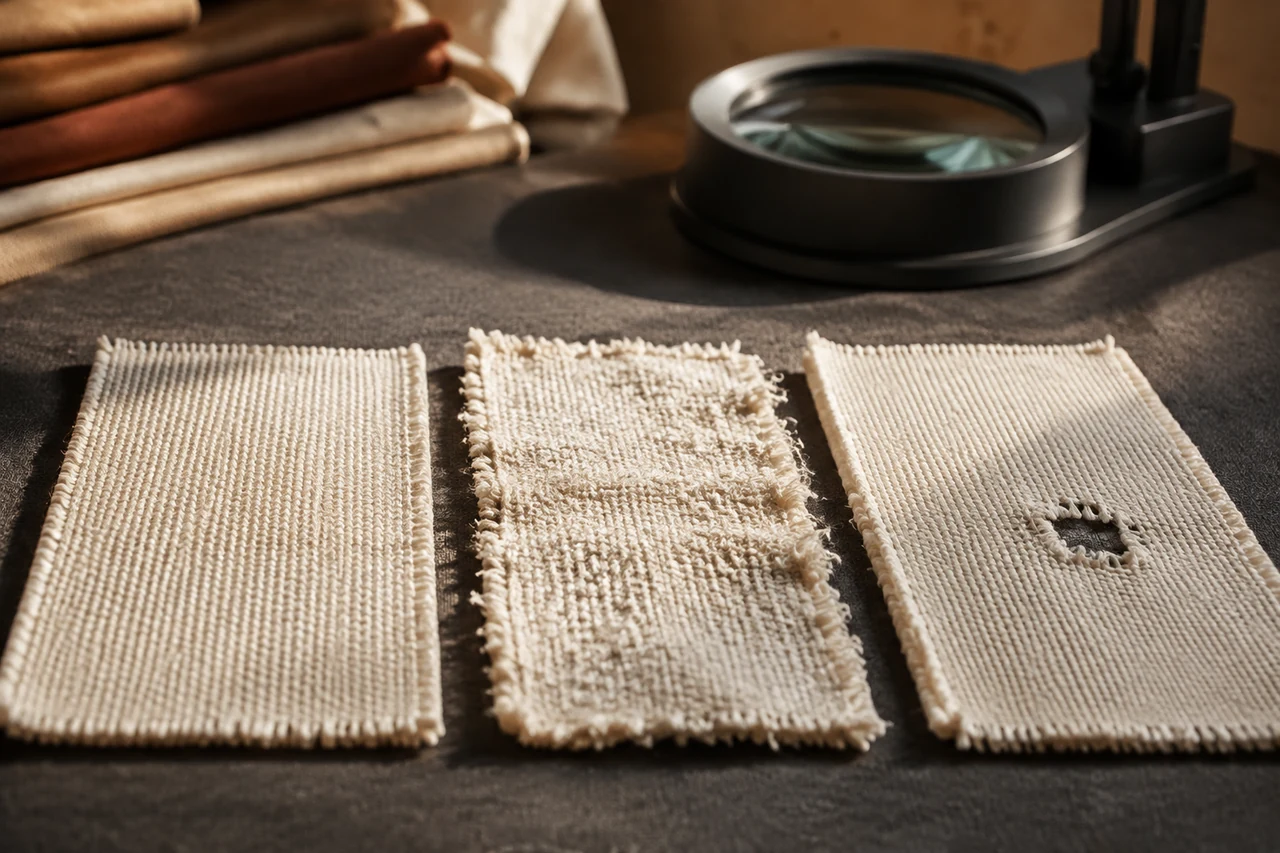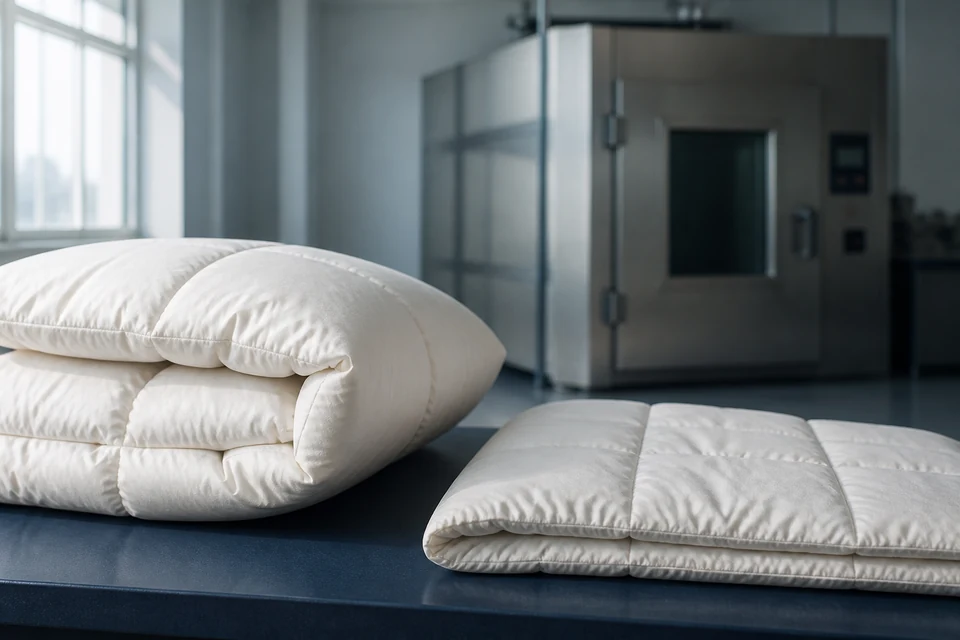
A heavier duvet is not automatically the warmer choice for a hotel or retail range. Fill mass describes how much material was put into a defined product; a warmth claim concerns the behaviour of an assembled construction under stated conditions. Buyers who compare the two as if they were interchangeable can approve the wrong seasonal assortment, publish a claim that outruns its evidence, or change a shell fabric without recognising that the earlier comparison no longer applies. This guide sets out a decision sequence for buying a warmth level, selecting evidence and checking the experience in use. It does not assign an untested temperature range or certify any FY Bedding product.
Define the warmth decision before requesting a number
Room conditions and product roles come first
Start with the intended role: a single year-round hotel insert, a lighter option for warm rooms, or clearly differentiated retail seasonal products. Record the room-management assumptions, whether another blanket is normally added, the duvet cover construction and the expected laundering route. A buyer brief that simply asks for a warm duvet leaves the supplier to choose the meaning. Use the specification toolkit to separate the desired experience from the material recipe being proposed.
Write down what would change the purchasing decision. If the concern is guest overheating, a higher fill weight is not an acceptance criterion. If the concern is preserving an established retail warmth band, the new product should be compared using a compatible method and sample configuration. The duvet insert sizing and fill-weight guide remains useful for physical dimensions and mass, but those fields should sit beside, not replace, the performance requirement.
- Name the intended room or seasonal role.
- Record the cover and additional bedding used.
- Separate fill mass from the warmth target.
- State which evidence will affect selection.
Identify the exact assembly represented by evidence
A report belongs to a sample, not a catalogue family
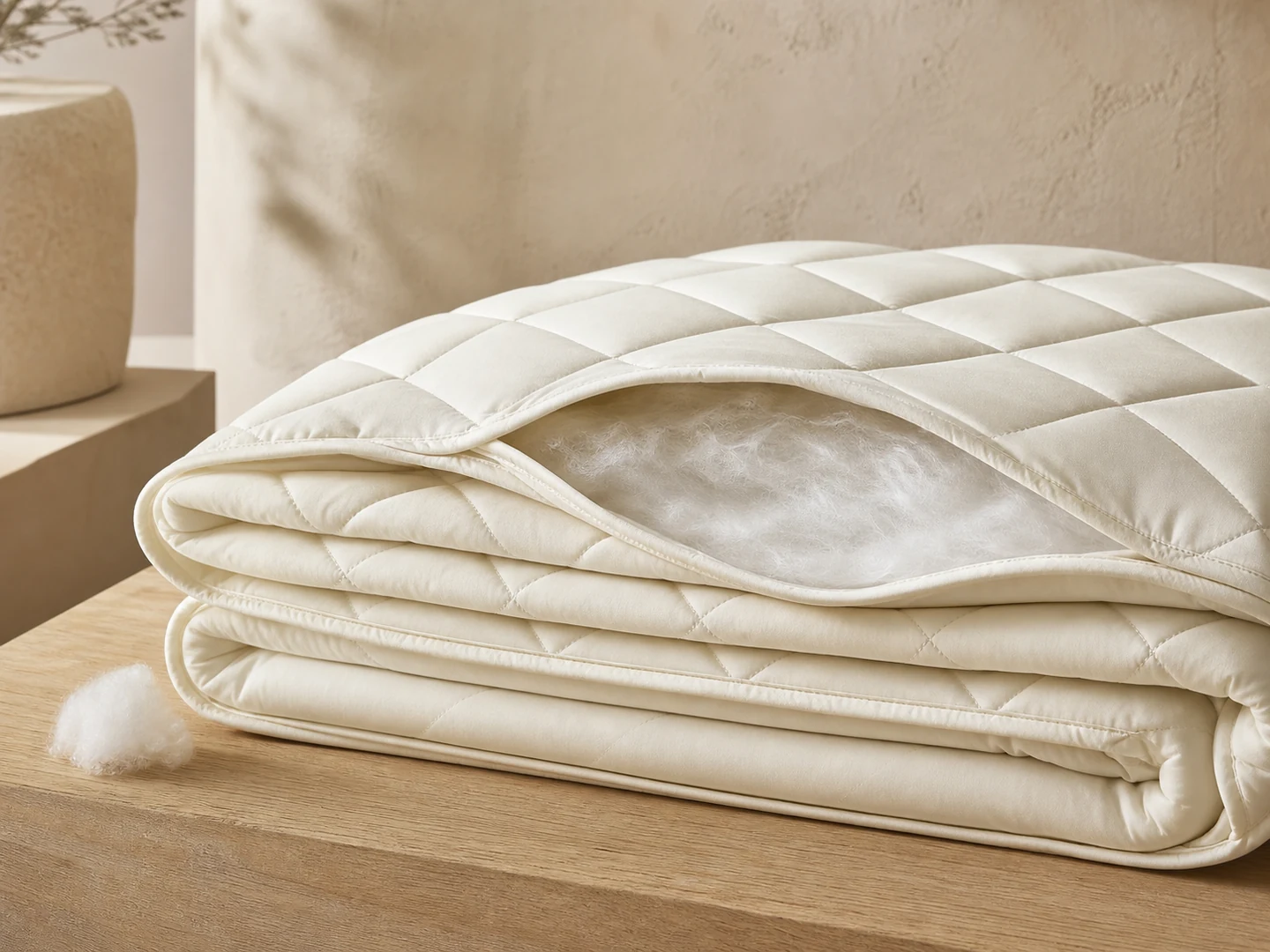
Ask for a sample identity that connects shell fabric, fill type, fill quantity, quilting layout, finished dimensions and relevant processing to the evidence. Two products can share a fibre description yet differ in how the filling is held, compressed or distributed. A report on a loose material or a small assembly should not silently become a statement about every finished size. The sample-identity review helps expose that gap before a quotation is accepted.
Keep a physical reference and photographs of the tested construction, including edges and quilting. Record whether the specimen was new, conditioned, washed or compressed before assessment. A supplier may offer earlier data as a useful starting point, but the buyer should mark it as supporting information until the relationship to the proposed order is established. Where several constructions are grouped together, request the technical reasoning for that grouping rather than assuming the heaviest or largest item represents all others.
- Link evidence to a released construction revision.
- Identify specimen preparation and condition.
- Distinguish material data from assembly data.
- Document any proposed product grouping.
Choose a suitable method and understand its boundary
A laboratory value is not a universal comfort promise
ISO 11092:2026 describes steady-state measurement of thermal and water-vapour resistance for textile materials and assemblies. Its public scope also says the test conditions do not represent particular comfort situations and that physiological-comfort performance specifications are not provided. Ask a competent laboratory whether the chosen method, equipment limits and specimen arrangement suit the actual duvet construction. Do not copy a method number into a purchase order without agreeing what will be tested and how results will be interpreted.
The laboratory request should specify the decision being supported, requested reporting units, specimen identity and any agreed comparison product. If suppliers submit results produced by different methods or different preparation routes, put them in separate columns rather than ranking the numbers directly. The bedding testing-plan guide can organise the schedule, while technical interpretation remains with the laboratory and the buyer's qualified reviewer. No universal passing value is implied by this procurement framework.
- Confirm method suitability with the laboratory.
- Request preparation and reporting details.
- Avoid direct ranking of incompatible results.
- Approve acceptance criteria before testing.
Run a controlled use trial alongside laboratory evidence
Compare complete bedding systems
A room trial should answer practical questions that the laboratory result cannot settle alone. Use the intended cover, mattress arrangement and housekeeping procedure, then record room conditions and the comparison sequence. Ask participants about perceived warmth, drape and the need for extra layers using the same questions for each candidate. Avoid inviting the first person to announce a preference before the others have recorded theirs; group discussion can otherwise turn an early opinion into an apparent consensus.
Keep subjective feedback separate from measured dimensions, mass and test results. Repeat the agreed observations after the specified care route if the product is intended for repeated laundering. The mock-up room approval record provides a place to retain the setup and decisions. An attractive trial experience may justify a shortlist, but it should not be rewritten as a guaranteed comfort temperature for every guest or climate.
- Use the actual duvet cover and room setup.
- Collect independent feedback first.
- Keep observations separate from measurements.
- Repeat relevant checks after agreed care.
Release the claim and control later changes
Marketing language must track the approved evidence
Before launch, connect each intended warmth statement to its supporting record and product revision. Retail copy, pack labels and buyer presentations should use consistent language. A change in filling, shell, quilting or finishing should trigger a review of whether the existing evidence still applies, not an automatic reuse of an old number. Use the claim-substantiation matrix to assign an owner for each public statement and its review date.
At order release, retain the agreed construction, evidence references, trial outcome and any limitations together. If the available data cannot distinguish two candidates, request targeted additional evidence rather than inventing a numerical difference from fill weight. Send FY Bedding a project brief with the target use, current reference product, sizes and evidence expectations so the initial discussion can focus on a defensible sample and comparison route instead of an unsupported warmth promise.
- Map every warmth statement to evidence.
- Recheck evidence after construction changes.
- Retain the approved comparison product.
- Request missing data before final ranking.
Can a reviewer trace the warmth statement to this exact construction and explain what the chosen test and room trial do not prove?
Method references: ISO 11092:2026 public scope.