Tensile and tear tests describe different ways a textile resists force. Useful specifications connect the selected method to product stress, fabric direction and failure consequences, then preserve the exact production identity behind the results instead of treating strength as one universal number.
Map the product failure before selecting a test
Review where the textile is pulled, gripped, tucked, washed or exposed to an existing cut or snag. Bed sheets, curtain panels, protector skirts and reusable packaging can experience different loads. Record whether the main concern is overall breaking behavior, propagation from damage or a sewn assembly.
Use field returns and the textile defect classification guide to separate fabric weakness from seam, component or handling failure. A torn product photograph is evidence of a problem, but it does not identify the correct laboratory method by itself.
Keep tensile and tear methods distinct
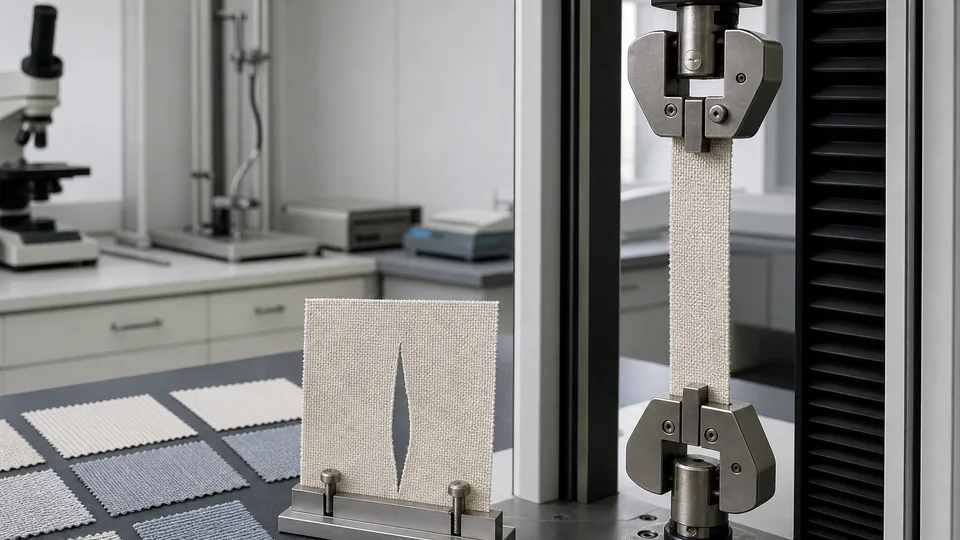
Tensile methods apply force to a specimen and report breaking or extension behavior under defined conditions. Tear methods evaluate propagation from a prepared cut or initiation. Different specimen geometries and instruments can produce values that should not be compared as though they were the same measurement.
Document the selected method through the product testing plan. Include specimen size, gauge, speed, direction, conditioning, number of tests, reporting unit and failure observations so supplier and buyer laboratories follow the same route.
Control specimen identity and direction
Test the relevant warp and weft directions and record any special product orientation. Identify fiber content, yarn, weave or knit construction, finished weight, color, finish and production lot. Washing, coating, calendaring or chemical finish may change the result and must be part of the sample description.
Condition specimens as required by the agreed method and protect them from damage during cutting and transport. When testing cared-for fabric, define the cycle count and process precisely so the result is not mixed with uncontrolled laundry variation.
Set acceptance from product risk and evidence
Develop acceptance using applicable destination requirements, buyer standards, product construction, benchmark data and risk. Avoid copying a value from an unrelated fabric weight or use. Specify how individual results, averages and abnormal failure modes are treated, including retest rules.
Use the supplier qualification checklist to confirm testing capability and traceability. A passing report should identify the tested sample clearly enough that purchasing can connect it to the approved bill of materials.
Use results in bulk and change control
Confirm bulk fabric construction, weight, finish, shade family and supplier against the tested reference. Incoming inspection can identify obvious differences but does not reproduce every laboratory property. Define when periodic or lot-based testing is appropriate for the program risk.
Apply the supplier change-control process when yarn, construction, finishing route or source changes. Reassess both strength evidence and finished-product behavior before an apparently equivalent fabric enters production.
Select tensile or tear testing from the real failure risk, then freeze method, direction, conditioning and sample identity. Keep results tied to the approved fabric and reassess them after material or finishing changes.