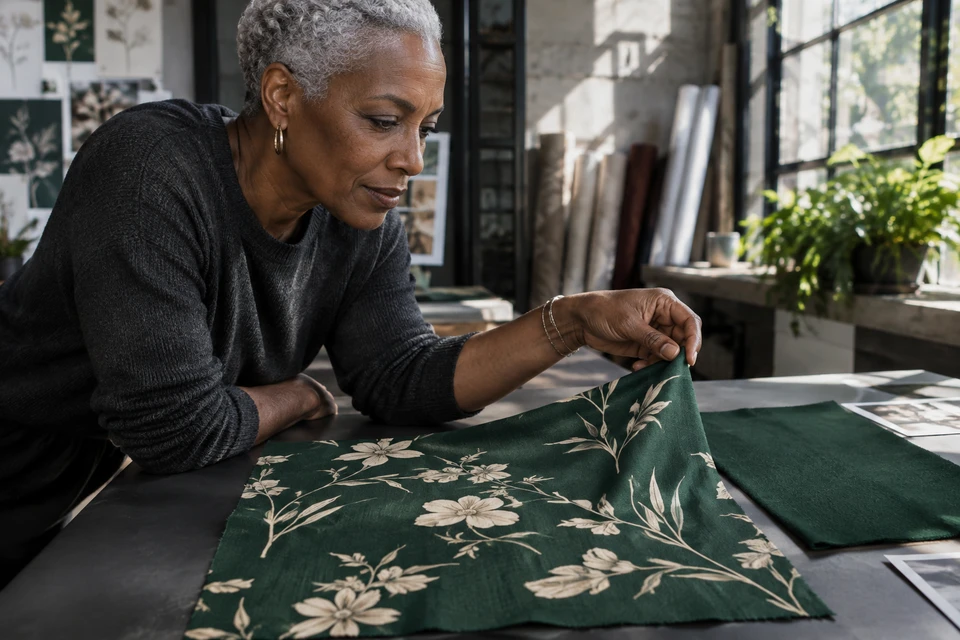
A pale flower on a dark fabric can be produced by more than one printing route. For a proposed floral discharge print, the buyer needs to approve the changed motif area and the remaining dyed ground together. A light-petal reference on white paper is not enough. Tie the development sample to the actual fabric, ground shade and proposed process before deciding whether that route delivers the collection's intended appearance.
- 1. Confirm that the offer really is discharge printing
- 2. Start with the actual ground fabric
- 3. Separate the light petal target from the surrounding colour
- 4. Challenge fine botanical details before enlarging the order
- 5. Obtain evidence for the finished textile
- 6. Build a quote brief around the approved combination
Confirm that the offer really is discharge printing
Colour removal is not fibre removal
CottonWorks defines discharge printing around a previously dyed fabric whose colour is removed in selected areas, leaving a light design or allowing another colour effect. This is different from devore, where the decorative result involves removing part of a fibre structure. Ask the supplier to identify the proposed route in writing. A photograph of pale flowers cannot establish whether the image was discharged, printed over the ground or produced in another way.
Avoid turning this process name into a purchasing shortcut. It does not by itself confirm the fibre content, the substances used, the finished hand or the suitability of the item for the target market. Obtain those details through the relevant project specification and evidence. The technical supplier should determine whether the selected dyed fabric is appropriate for the proposed route. Do not prescribe a chemical recipe or accept a general assurance that any dark base will behave the same way.
Start with the actual ground fabric
A matching colour name is not the same substrate
Identify the proposed fabric and the dyed-ground reference before the first meaningful approval sample. Include the supplier's fabric code, ground-shade code and sample status. If early development uses a substitute cloth, label it as a concept sample and state what remains unconfirmed. This allows a buyer to explore the floral direction without accidentally treating an attractive early strike-off as approval of a different production base.
Keep an unprinted portion of the proposed dyed ground with the printed sample wherever practical. It helps reviewers understand the starting appearance and discuss the motif in context. A dark green, navy or charcoal ground can make small differences in the light petals highly noticeable, but the project should not rely on a screen image to settle those differences. Review the physical ground and finished motif under consistent conditions with the people responsible for colour approval.
Separate the light petal target from the surrounding colour
Neither should be accepted in isolation
Choose a representative flower that contains a broad petal, a fine edge and a small internal gap. Examine the light area for the intended appearance and the surrounding ground for the desired continuity. Record what the buyer is accepting at each location. A reference described only as white flowers on green leaves too much open: the approved flower may actually be a soft ivory, and the ground may be intended to remain visibly distinct from it.
When comparing alternatives, keep the same motif scale, ground and viewing condition. Ask for an explanation if one sample is offered on a different base or with another finishing route. Do not infer that a brighter light area is automatically the better result. The right decision may be a quieter tonal flower, an adjusted design or a different printing route. Record that choice as a new approved combination instead of borrowing approval from an earlier sample with different inputs.
Challenge fine botanical details before enlarging the order
Stems and petal gaps reveal different problems
Select the narrowest stems, the smallest spaces between petals and any fine veins that the design needs to retain. View them at finished-product scale as well as close up. A dramatic large blossom can look convincing while the delicate parts of the same artwork lose their intended separation. Mark the details that control the collection's character and ask the print specialist whether the proposed artwork needs a revision for this particular fabric and process.
Keep revisions intentional and traceable. If a narrow gap is widened or a tiny leaf is removed, update the artwork reference rather than leaving an undocumented change in a production file. Compare the revised sample with the original design brief. This article's decision is about the light motif's relationship to its dyed ground; broader matters such as repeat placement, panel cutting and set coordination still need their own approvals and should not be assumed to follow from one successful flower.
Obtain evidence for the finished textile
Appearance does not establish a compliance claim
Ask what finishing steps are included before the sample is submitted and whether the proposed production article will follow the same agreed route. Review hand and appearance on that finished sample. Any intended laundering, rubbing or other performance assessment should be specified with the responsible testing party for the actual use. Record the tested sample identity and the result when available; do not convert an untested development swatch into a promise about durability.
Process descriptions also cannot support claims such as chemical-free, non-toxic, sustainable or certified without appropriate evidence and clearly defined scope. Request the documents relevant to the destination, materials and claims the buyer plans to make. The supplier's process explanation and a finished-article test report answer different questions. Keep both linked to the project, and hold unsupported marketing language even when the colour effect has been approved. No generic printing reference certifies an FY product.
Build a quote brief around the approved combination
Collection photographs are design references
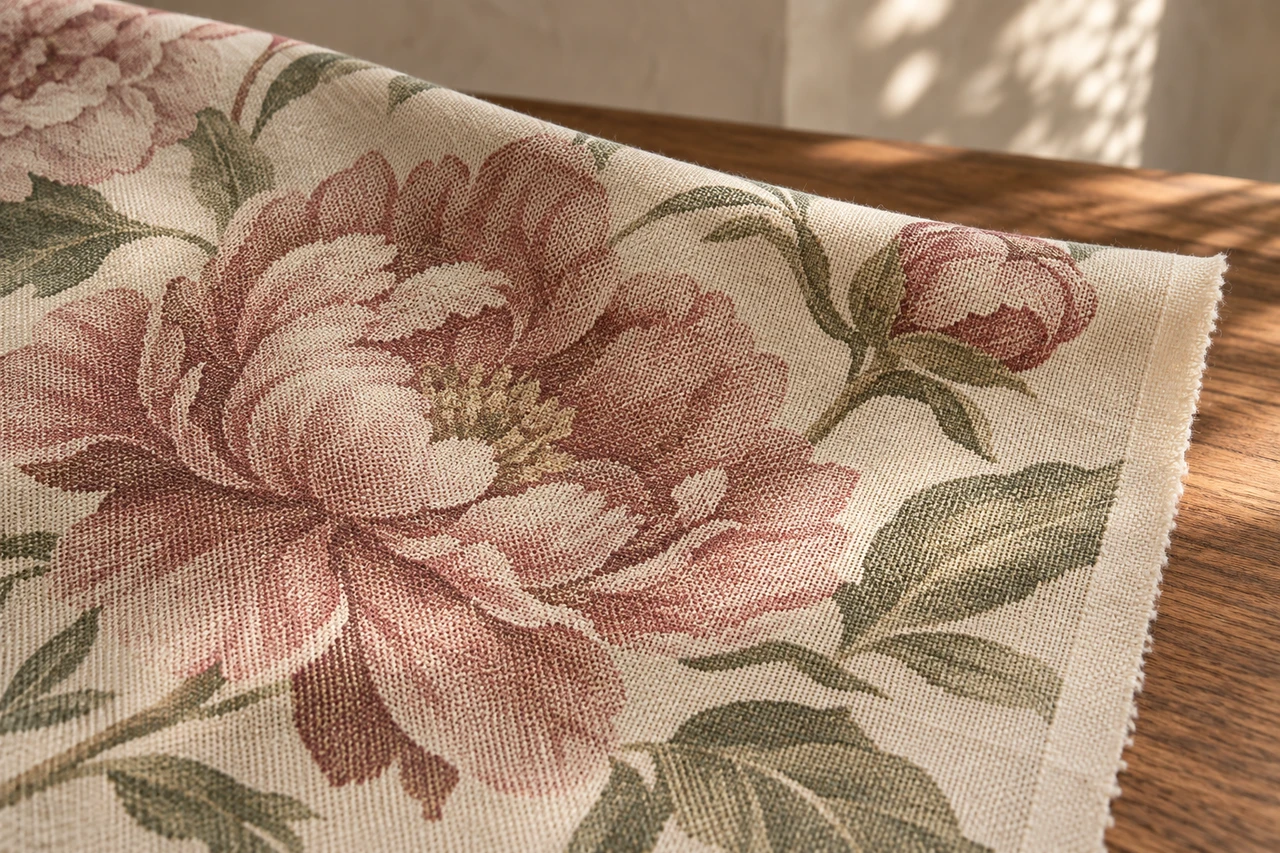
Use FY's floral collection to discuss the botanical mood, scale and intended product family, then provide the authorised artwork and proposed dyed-ground reference for sampling. A collection image is not evidence that the depicted style uses discharge printing. For a new project, specify the article type, dimensions, quantities, target market, care expectations and required review samples. Ask the supplier to confirm process availability, sampling conditions and timing for those particulars. The FR-01 floral reference can communicate a botanical direction; its photograph does not confirm the proposed production process or materials.
Release the development decision only when the printed motif, remaining ground, finished feel and supporting sample record all refer to the same proposal. Retain the approved physical reference and a clear change history for later orders. If the fabric or dyed base changes, request a fresh evaluation rather than treating the old light-petal approval as transferable. FY Bedding can review that defined brief with you and help clarify what must be established before a production commitment.
Keep the actual dyed-ground reference beside the finished floral sample. Confirm the process identity, petal tone, fine-detail separation and evidence scope before accepting the route; re-review any change to the base or dyeing proposal.
Method references: CottonWorks: discharge-printing definition.