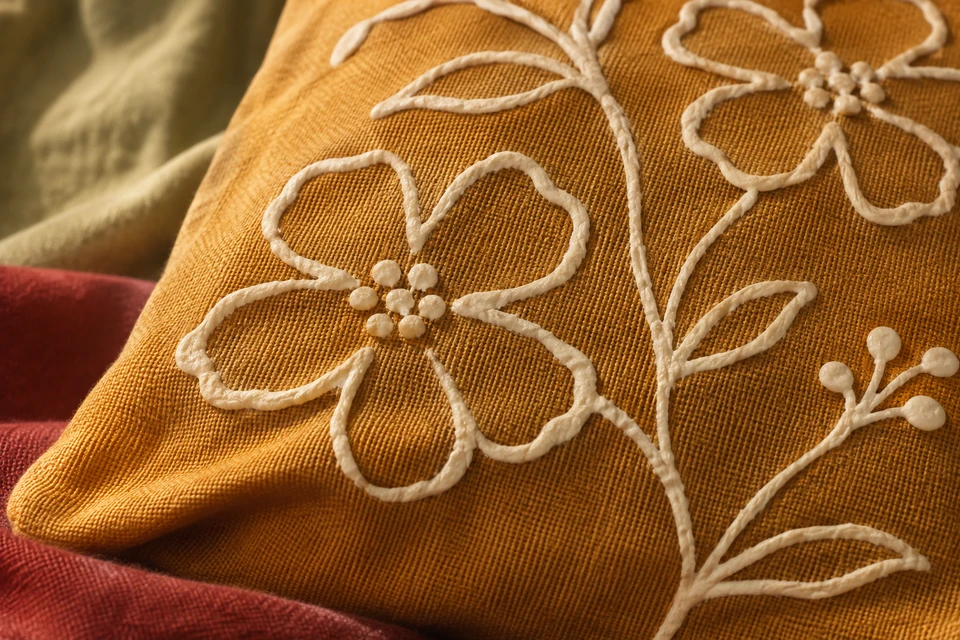
A floral paint design can look neatly separated before expansion and much more crowded afterwards. For a raised finish, the buying decision belongs to the completed surface, not just the drawn outline or an unprocessed colour sample. Ask to see how the offered paint develops relief on the proposed textile, and whether the resulting petals still read as the intended design when the panel is sewn and packed.
Name the raised process in the enquiry
Similar-looking textures can be made in different ways
Ask the supplier to identify the offered material and process. Marabu's published Pluster Pen information describes an effect colour that expands after drying and heating to produce a raised surface. That is an example of an expanding paint system, not evidence that all raised textile decoration uses the same chemistry or processing conditions. Do not describe an offered sample as puff paint solely because it has a soft-looking three-dimensional appearance.
Separate this route from embroidery, padded quilting, flocking or an ordinary thick flat coating. Each may produce a different edge, handle and production requirement even when a distant photograph looks similar. Request the actual maker's instructions and applicable product information through the supplier, and have the appropriate technical staff determine suitability for the proposed textile. A craft-product example can explain the principle; it does not establish commercial feasibility for an FY Bedding order.
Approve the floral gaps after expansion
Negative space is part of the design
Prepare a sample showing the narrowest gaps between petals, the junctions of small stems and any closely placed leaves. Compare the completed relief with the intended artwork. Look for places where two separate shapes meet visually or physically after processing. Decide whether the resulting joined area is acceptable as a deliberate design feature or whether the artwork or process needs revision. Avoid approving only a large isolated flower that omits the difficult parts of the pattern.
Review the motif from a normal product-viewing distance as well as close up. A gap that remains technically open can still disappear visually in a densely decorated cluster. Conversely, a minor difference visible under extreme magnification may not define the buyer's intended appearance requirement. Keep those views separate in the approval record. The useful reference is a physical sample with a clear explanation of which floral features must remain distinct in the finished product.
Use side light to describe the relief
A face-on colour photograph hides the height profile
Photograph the panel with a consistent low side light and include a broader product view. Note the apparent continuity of the raised lines, the shape of the petal edges and any local areas that differ from the agreed reference. If measured height or another quantitative criterion is required, agree an appropriate method and locations with the technical team. Do not invent a tolerance from the depth suggested by an image or a fingertip impression.
Include the actual textile colour and structure in the sample review. The same decorative proposal may read differently against a smooth pale ground and a textured darker fabric. Ask the supplier to explain any material or application changes needed for the submitted combination. Keep colour approval and relief approval as related but separate decisions: matching a shade does not establish the expanded shape, and an attractive raised contour does not establish an approved colour.
Inspect the panel in its finished assembly
Placement affects what is folded or handled
Position the expanded motif in the proposed cushion cover, sham or decorative panel and review the edges, closures and intended folds. A relief feature close to a seam may be partly concealed or affected by the assembly arrangement. Identify which areas are intended to remain visible and which will be covered. If a revised layout moves the flower away from a construction detail, retain that revision rather than asking production staff to improvise its position.
Show the ordinary handling and packaging sequence using a representative completed sample. Record where the decorated face touches another surface and where the product is folded. This is a design and assembly review, not proof that the relief will tolerate every transport or care condition. If compression, rubbing or care performance is important, define the relevant assessment and evidence separately. A careful sample discussion should make those unanswered questions visible before the buyer commits to a decorated order.
Define the assessment for the offered paint and textile
Do not transfer another product's care instructions
Request the applicable information for the specific decoration system, substrate and finished assembly. Processing temperatures, times and care limits should come from the relevant material guidance and qualified technical confirmation, not from a generic article or a different brand's example. Keep the sample's processing record available to the responsible team. A raised floral photograph cannot show whether the supplier followed the appropriate preparation or processing requirements.
Agree how any proposed care or handling claim will be supported and what sample will be assessed. Retain before-and-after appearance records where they are part of that plan. Do not treat a supplier's statement that the paint is suitable for fabric as evidence for every bedding use, skin-contact condition or destination requirement. Any such claim needs the correct scope. This article's appearance checks help specify the sample; they do not certify the decorated textile or substitute for its technical review.
Quote the approved expanded design
Artwork changes may alter the proposed scope
Send the supplier the finished relief reference, artwork revision, panel dimensions and intended assembly. Ask it to state the proposed sampling steps and any minimums associated with the offered materials or decoration. If simplifying closely spaced petals is proposed, compare the revised design before considering the quotations equivalent. A lower-cost offer that changes the raised area or floral reading should be identified as an alternative, not silently treated as the same approved product. A visual reference such as FR-01 cannot establish that its product uses puff paint, so keep the requested surface effect explicit in the new development brief.
An FY Bedding enquiry can use the floral collection to communicate a botanical direction while separately describing the desired raised effect. Do not infer that a displayed collection item already uses an expanding paint process. Request a specific feasibility review and sample proposal for the intended order. The final decision should name the actual completed surface, including its open spaces and assembly position, rather than approving a promise that the paint will look attractive once it has expanded.
Review the completed expansion on the proposed ground. Preserve petal gaps, inspect the relief in side light, and assess the finished assembly without borrowing another paint system's processing or care claims.
Method references: Marabu: a paint system that expands to form raised relief.