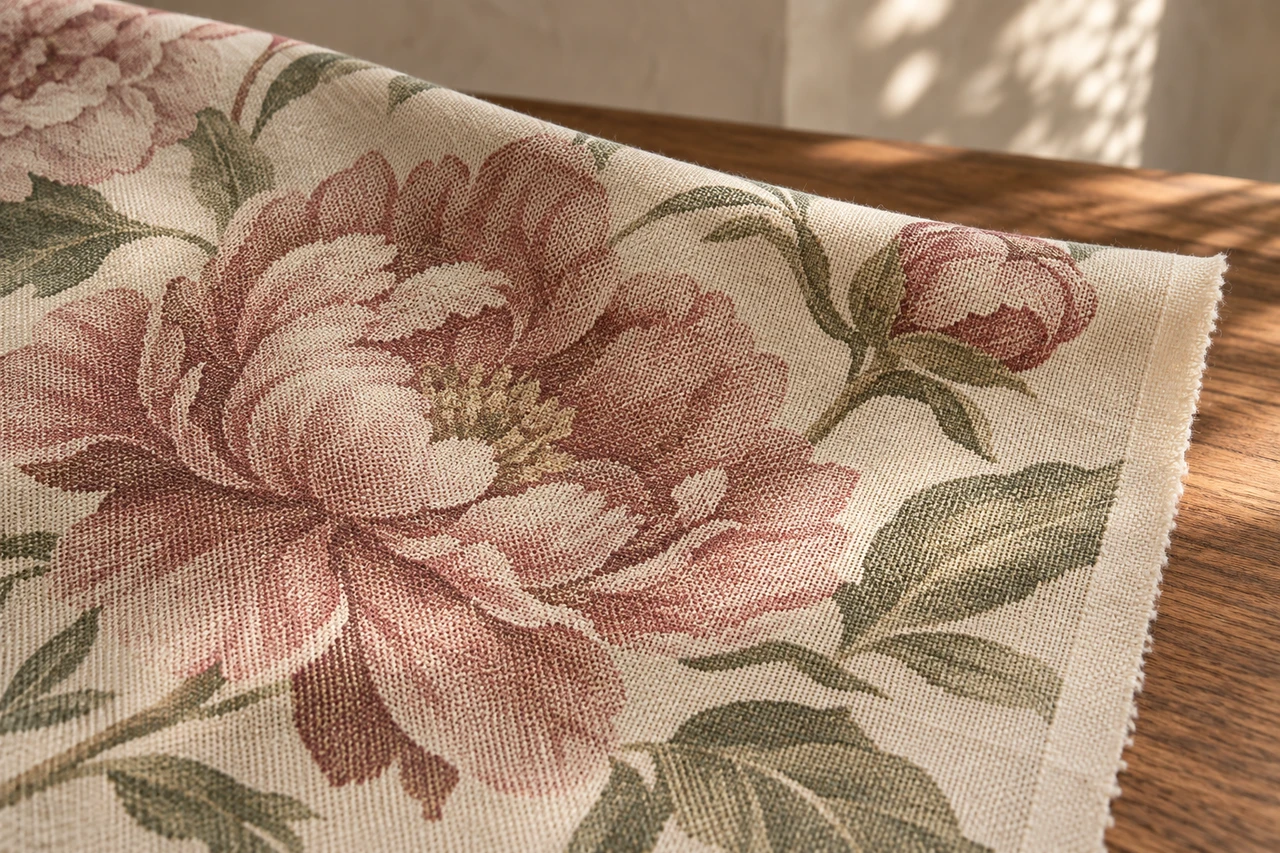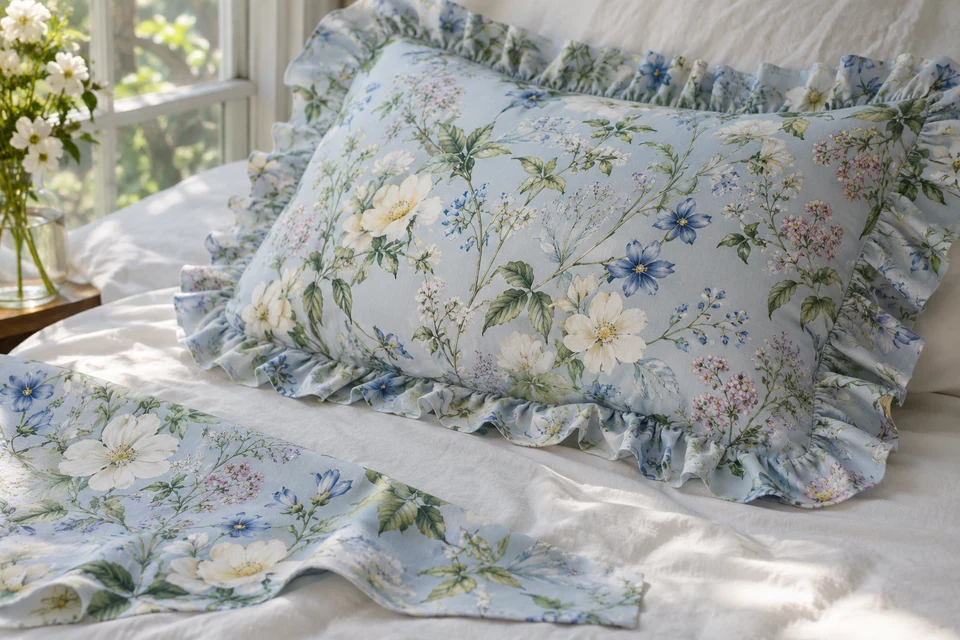
A floral strip that looks delicate when flat can become a dense band of colour after it is gathered into a ruffle. Flowers may disappear inside folds, fragments may collect along the outer edge and a directional stem may become difficult to read. For a ruffled pillowcase programme, approve the printed strip in its gathered state rather than treating it as a miniature copy of the main panel. The buying decision combines the floral repeat with the chosen ruffle construction, but the print and the gathering should remain separately identifiable variables.
Define the ruffle's visual role
A floral border can frame or compete
Decide whether the ruffle should echo the main panel quietly, create a contrasting frame or continue a deliberate floral story. Prepare a full-size comparison with the visible width of the ruffle stated. A narrow border offers less uninterrupted area than a broad one, so the same flower can appear as a recognisable motif in one version and as scattered colour in another. Neither result should be assumed from the flat fabric alone.
Browse the FY floral collection and FR-01 to establish a visual direction, without assuming those references include a ruffled version or a confirmed material. Develop the proposed component using authorised artwork and a separately agreed specification. The reference is a conversation aid, not evidence of construction, stock or a ready-made matching accessory that can be ordered without confirmation.
Sample the gathered strip before the full cover
Keep the gathering condition recorded
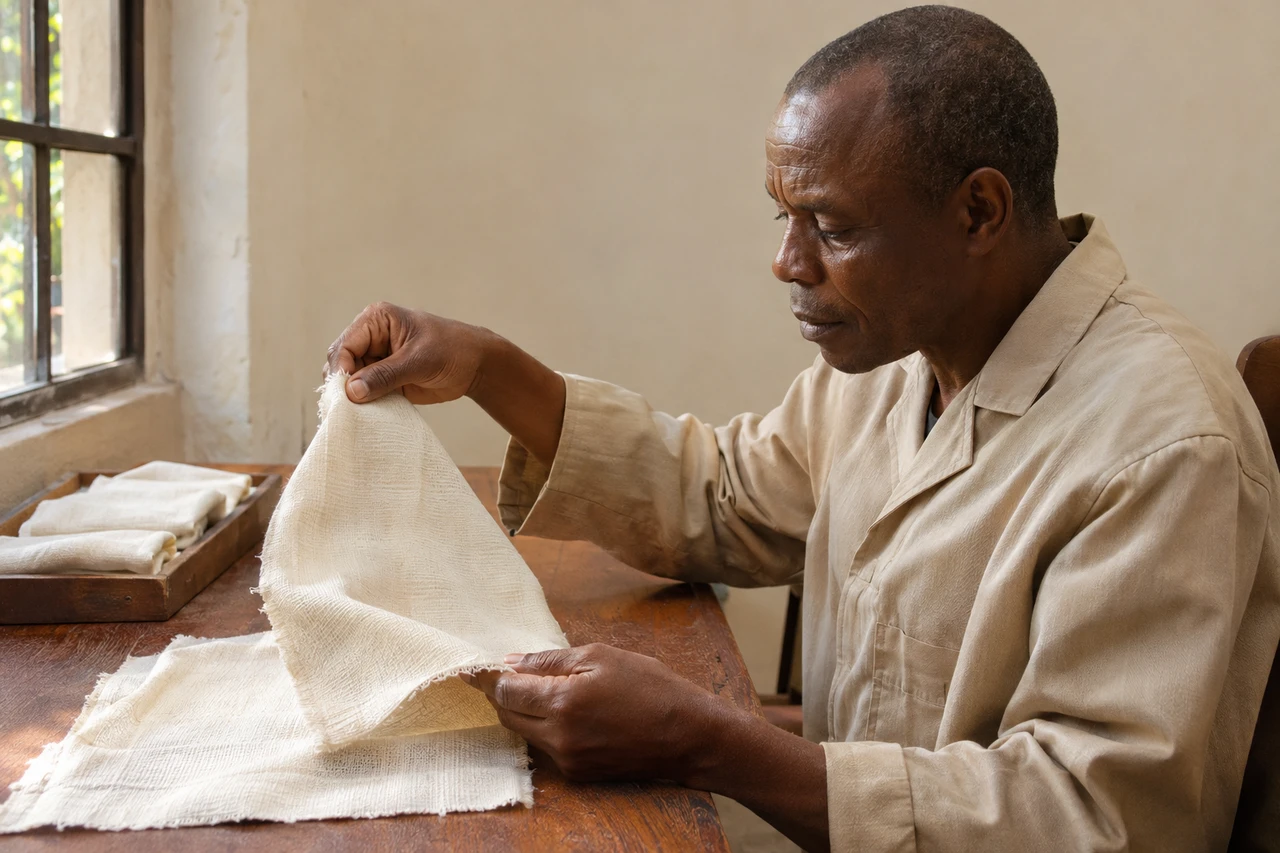
Ask for a representative strip using the proposed fabric, visible width, edge finish and gathering arrangement. Record the starting strip and the length of finished edge it occupies so the sample can be reproduced. Do not compare a loosely gathered sample with a tightly gathered alternative and attribute every difference to the flower spacing. First hold the construction steady while reviewing the print; then change construction deliberately if needed.
View the strip without stretching it flat. Inspect the visible peaks and the folds between them, noting which parts of the motif disappear. A print can still work as a colour-and-texture effect even if individual flowers are fragmented, but that should be the approved objective. If recognisable blooms are essential, request a layout or scale revision and review it in the same gathered state. Do not resolve the issue only through a digitally smoothed photograph.
Locate joins and directional changes
The strip is not always one uninterrupted piece
Ask how the proposed ruffle is assembled around the pillowcase and where any strip joins fall. Check the floral appearance at those joins and whether a directional motif changes orientation unexpectedly. Identify the intended top, sides and lower edge in the technical record. An all-over print may tolerate different orientations, while a strongly directional botanical line may make them conspicuous. The approved sample should answer the question for the chosen artwork.
Review corners as part of the complete perimeter. The local fullness and turning can make a flower cluster look heavier than it does along a straight edge. Decide whether that concentration is an accepted feature or whether the layout and construction need adjustment. Avoid judging one isolated corner without returning to the overall pillowcase view. A locally tidy corner can still create a visibly uneven frame when compared with the other three.
Compare the ruffle with the filled main panel
Flat colour agreement is not the complete effect
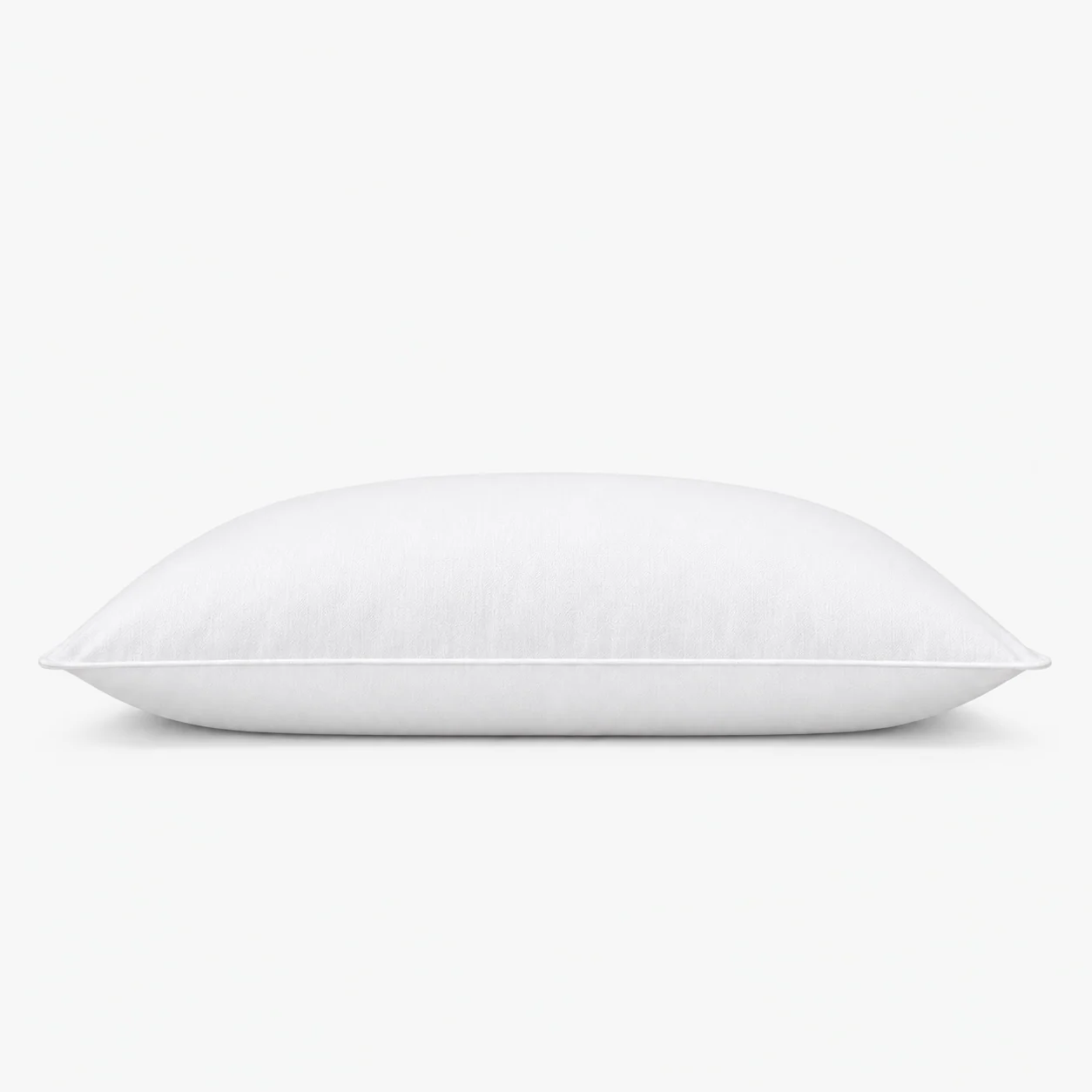
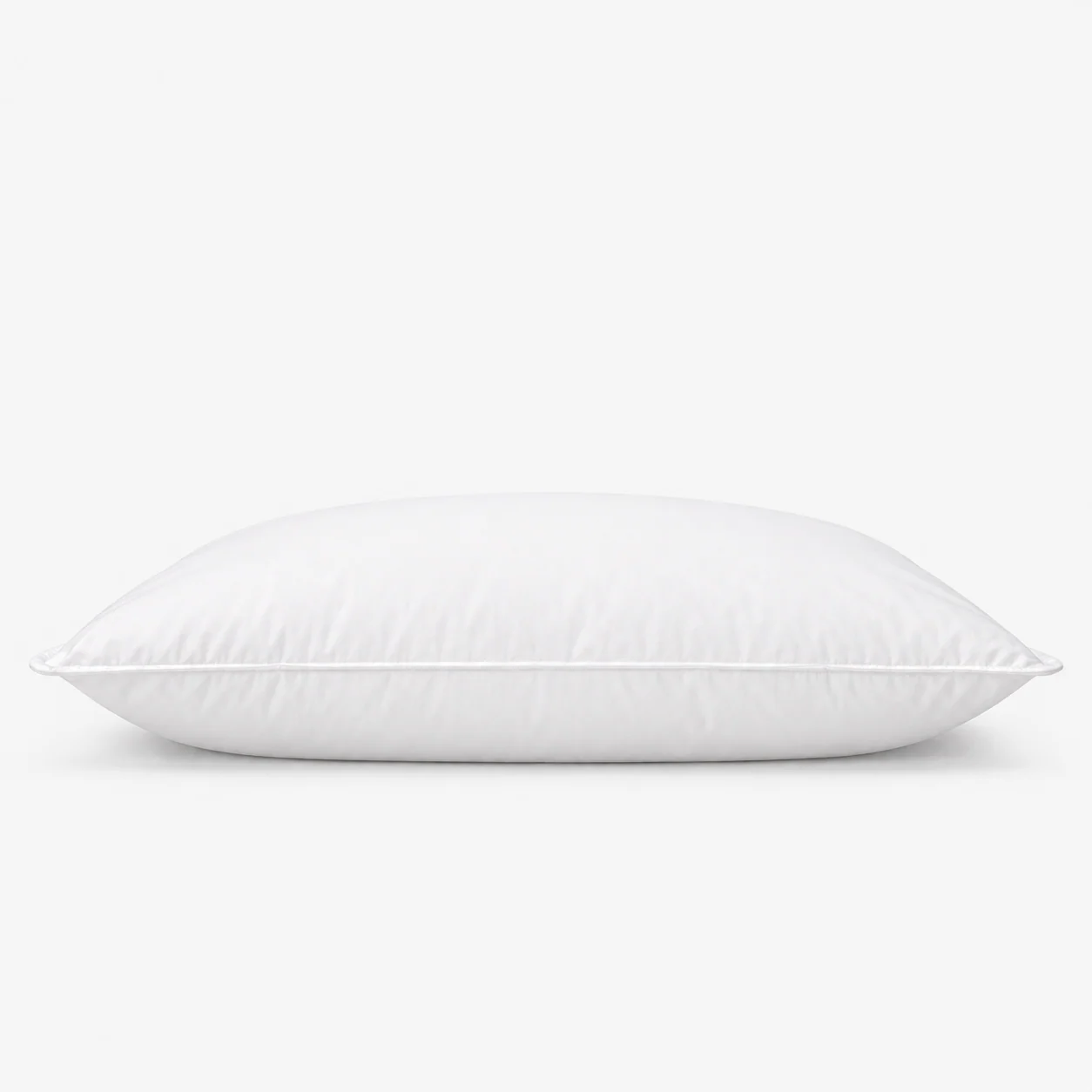
Fit the intended pillow or agreed development insert and arrange the pillowcase naturally. Compare the main panel and border from normal bed-viewing distance. The ruffle's folds introduce shadows, so the same printed cloth can appear darker at the edge than on the central face. Record whether this contrast is desirable rather than trying to correct it automatically as a dye or print mismatch.
Use more than one ordinary arrangement, including the pillowcase resting against the headboard and lying flatter on the bed. Check whether the outer edge conceals the floral detail or whether the border overwhelms the central composition. Keep styling accessories away from the review areas. A carefully posed selling image can be retained later, but the development decision should not depend on hidden supports or a uniquely manipulated set of folds.
Recheck after care and packing
Preserve the accepted print-and-gather combination
Process the complete pillowcase through the agreed care and finishing trial, then compare the ruffle width, fold character, edge and visible floral rhythm. Record whether pressing or another preparation step forms part of the accepted presentation. Review the actual retail fold too: a ruffle trapped underneath the packed pillowcase may open differently from a loose development sample. Note the permitted recovery routine instead of assuming every crease disappears immediately.
For a FY Bedding request, include the main-panel artwork, ruffle strip reference, finished dimensions and quantity by design. Ask the supplier to confirm the proposed construction, component minimums and sample scope. If artwork, fabric or gathering changes, revisit the combined sample before release. The final record should let a new reviewer see both the flat source cloth and the accepted gathered result, with no need to guess how the floral border was meant to look.
Approve the print on the actual gathered strip and the complete filled pillowcase, including joins, corners, care state and packing recovery.