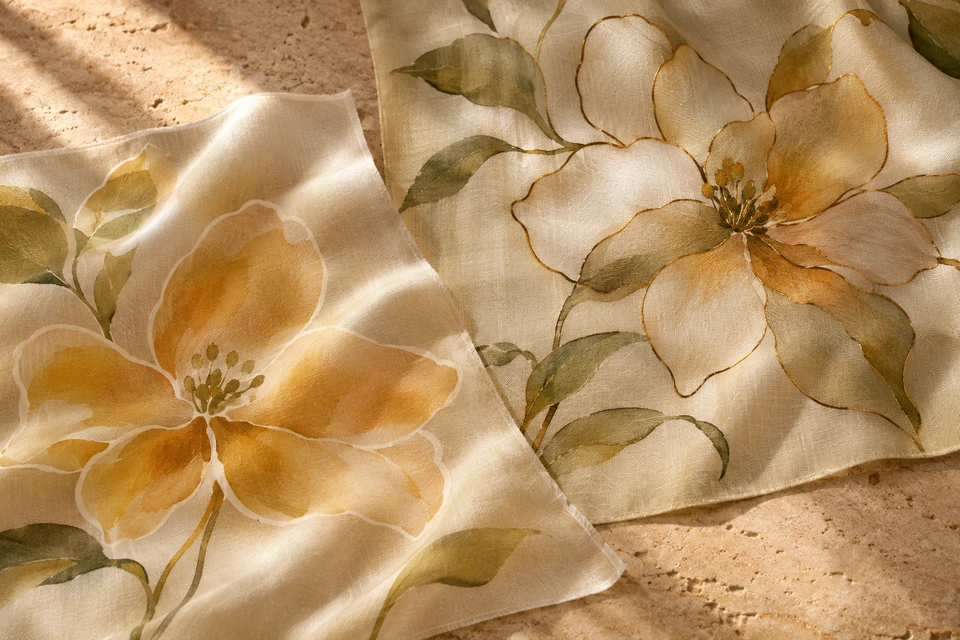
The line around a painted flower may be a pale space left after a resist is removed, or a visible material deliberately retained in the finished textile. Those outcomes should not share one vague approval called outlined floral. Decide which line belongs in the final silk panel before comparing samples or prices.
Name the intended final boundary
Separate a reserved area from a retained line
Jacquard's product descriptions distinguish a removable water-based resist from a permanent metallic resist. These are manufacturer-specific examples of two different finishing intentions, not evidence that either product is used in an FY Bedding collection. The purchasing question is whether the proposed boundary material is removed or remains as part of the finished decoration. Ask the supplier to identify its actual materials and process.
Do not infer the answer from a photograph taken during painting. An intermediate line may look different after the required preparation, setting and removal stages. Request the supplier's explanation of the sample state and a finished reference. A pale outline, coloured outline and metallic outline can each be deliberate designs, but the team needs to know which effect it is buying and which intermediate marks are not meant to remain.
Mark the botanical lines that matter
Avoid approving the flower as one undifferentiated image
Identify petal boundaries, leaf edges, stems and any internal details that use the resist. Note where a line should remain continuous and where the artwork deliberately leaves an opening. The working drawing should also show the intended width and visual role of the boundary at actual scale. A fine stem line may matter more to the design than a broad outer petal edge, even if both use the same material.
Ask for a sample containing the most demanding intersections and small enclosed areas. A large simple blossom may not reveal how the proposed route handles a crowded centre. Compare the final outlines with the authorised drawing, while allowing only the variation explicitly agreed for that process. Do not assume that a hand-applied description authorizes every gap, overlap or thickened junction without a separate visual decision.
Inspect after the complete finishing sequence
Do not approve a removable line while it is still present
For a removable-resist proposal, review the textile only after the supplier has completed its specified removal and finishing steps. Ask the maker to identify any area that still needs work. Look at the reserved line and surrounding cloth, noting unexpected deposits, stiffness or colour movement as observations for technical review. Do not attempt an improvised cleaning treatment on the approval sample to make an unresolved area disappear.
For a retained-line proposal, request the completed setting and finishing state intended for delivery. Review line continuity, thickness, feel and appearance when the fabric bends naturally. Manufacturer instructions for one named material should not be generalized into a universal temperature, timing or washing promise. The supplier must define the appropriate process for its exact material combination, and the buyer should approve the resulting finished article rather than the process label alone.
Evaluate the outline in the assembled product
A line that works flat may dominate a fold
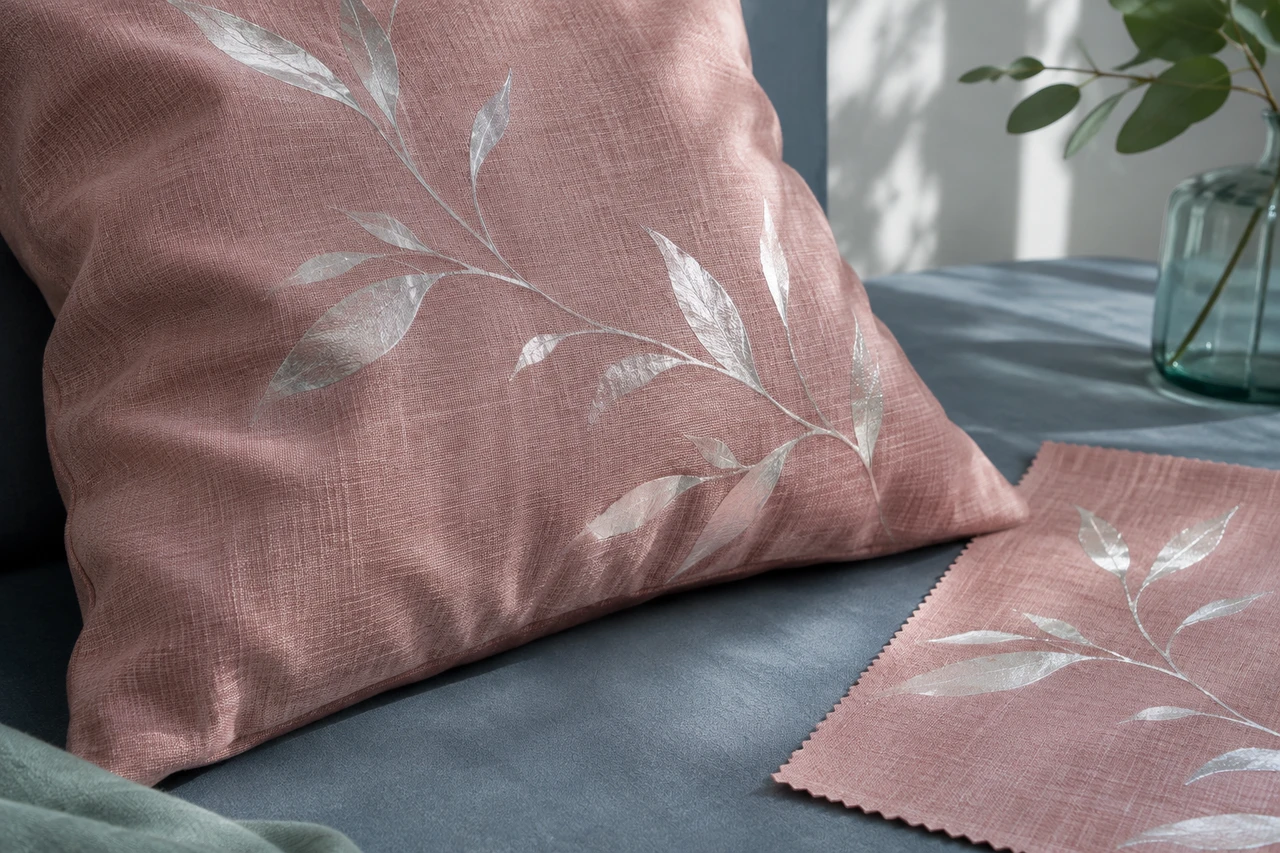
Place the finished panel in its intended product arrangement, whether a decorative cushion face, framed textile or another agreed application. Observe the outline across folds, seams and curved areas. A metallic or strongly coloured boundary may become more prominent in one lighting condition than another. Use ordinary display views as well as close photography so the accepted effect is not determined solely by a dramatic studio highlight.
Identify which parts of the painted field are cut away or included in seam allowances. A line near the edge may disappear into assembly or emerge unevenly around the finished panel. Resolve that placement with the actual cut plan. If the design is resized, compare the smallest line details again rather than assuming that enlarging or shrinking the digital image preserves the same final balance between outlined areas and open silk.
Keep care evidence tied to the whole combination
The word permanent is not a complete product promise
Request the declared ground fabric and the actual colourant and resist references, including any additional finish. Ask what evidence supports the proposed care instructions for that combination. A supplier's description of a retained line does not establish how every silk construction, painted area or assembled component will respond. Review the finished sample after the agreed evaluation and keep the observations linked to that exact material set.
Where the retail copy makes a specific performance claim, the responsible reviewer should identify suitable supporting evidence. Do not transfer a material manufacturer's general statements to all completed panels. Record any change in line appearance, feel or surrounding colour separately from changes in the base cloth. This helps the team decide whether a revision concerns the outline material, application, finishing or the chosen textile, rather than treating all visible differences as a single colour problem.
Order the approved finished state
Make retained materials and additional work visible
The quotation should name the final outline effect, proposed materials, sample stage and delivered preparation. Ask whether removal, setting, washing or other finishing work is included as applicable to the actual route. Keep alternative proposals separate so a lower price is not achieved by omitting a step that the buyer assumed was part of the finished product. Confirm minimum quantities and development timing for the selected design rather than a generic painted-silk item. Use FR-01 as a floral visual reference only; silk, painting and resist construction require separate confirmation.
For an FY Bedding enquiry, provide the authorised floral artwork, intended application and a clear statement of whether the boundary should be removed or retained. Use collection references to discuss the visual direction without assigning unverified processes to those products. Request a finished sample that resolves the line-state decision. The approval file should allow the receiving team to recognize an intentional decorative outline and distinguish it from an unfinished processing residue.
State whether each boundary is removed or retained, inspect the fully finished sample, review lines in the assembled product and connect care evidence to the exact material combination.
Method references: Jacquard: removable water-based resist for silk painting; Jacquard: permanent water-based resist as a retained line.