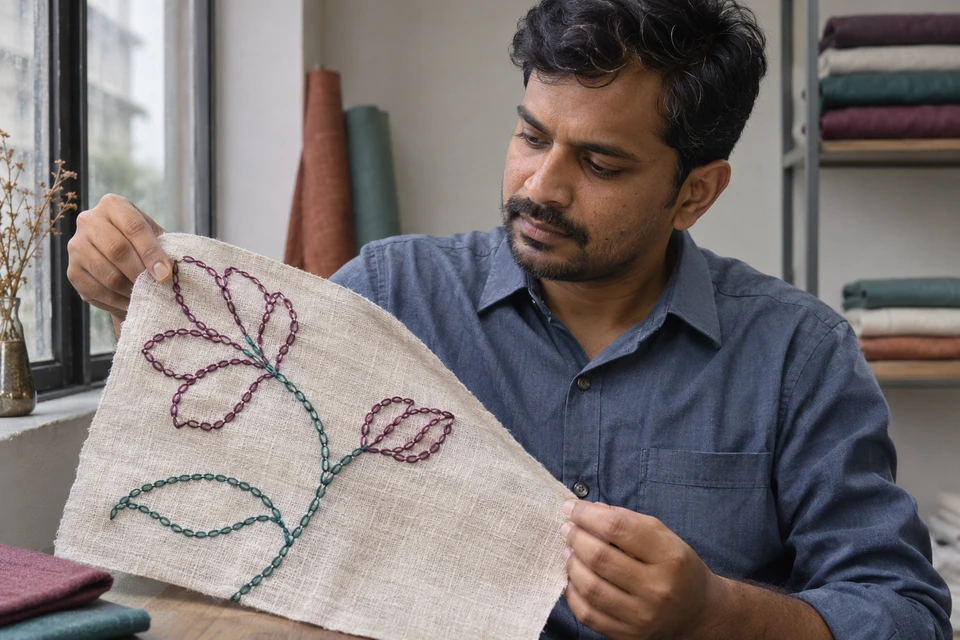
The beauty of a chain-stitched flower often depends on a very small turn at a leaf tip or petal junction. For a tambour-embroidery development, buyers need to approve that path on the intended cloth, not only the colour and overall botanical silhouette.
Confirm the proposed technique
A chain-like line does not identify its production route
The Textile Research Centre describes tambour embroidery as hook-worked embroidery, commonly producing chain stitches on fabric held in a frame. A chain appearance alone does not prove that this is the process used for a submitted sample. Ask the supplier to identify the proposed method and distinguish it from a machine-made interpretation or another hand-embroidery route. Approve any alternative on its own merits rather than carrying the original technique name into the final specification without confirmation.
Keep the thread, ground fabric and design revision identified together. A fine floral outline on a firm development cloth is not automatically representative of the same outline on a softer final cushion panel. If the sample uses a substitute ground, make that limitation visible in the approval record. Do not infer fibre composition, hand production or a particular regional embroidery tradition from the photograph. Those descriptions need support for the actual proposed product, separate from a buyer's preference for its visual effect.
Choose the turns that define the flower
Review a route, not an isolated stitch
Select a few demanding features from the authorised floral design: an acute leaf tip, a rounded petal and a place where two lines approach or meet. Ask for those features in the same sample, at the intended scale. A straight chain line can look regular while a tight return distorts the leaf. Compare how the worked path interprets the artwork and decide where a controlled adaptation is acceptable. The maker should not have to guess whether exact geometry or a flowing embroidered line takes priority.
View the route at a normal distance before examining individual loops. The flower must still read as intended when it becomes part of a cushion or decorative panel. Then look closely enough to identify the cause of a visibly awkward turn. Record the location and the observed effect rather than prescribing an unverified hook size or machine adjustment. A useful revision request describes a crowded tip or an interrupted curve and asks the maker for a technically suitable proposal on the same identified materials.
Separate junctions from accidental breaks
Agree how one line ends and another begins
At a flower centre or branching stem, several chain routes may converge. Decide which should appear continuous and whether the junction should be visually dense or open. An intentional stop can be part of the design; an unintended interruption can make a stem look broken. Include a close reference of the accepted junction in the sample record. This is more useful to later inspection than a broad instruction that the embroidery should be even and attractive everywhere.
Ask the maker to show start and finish treatments on both faces where they affect the completed product. Do not assume that every tambour process is worked from the same side or follows one universal finishing method. The purchasing requirement is that the actual chosen construction is declared and that its result is acceptable for the intended use. If a backing, lining or later assembly hides the reverse, examine the relevant stage before it becomes inaccessible and retain the appropriate record with the final sample.
Compare the chain with the ground around it
Flatness and shape need the final textile context
Lay the embroidered panel naturally without pulling its edges to make the flower appear balanced. Look at the ground between nearby lines and around dense junctions. If a petal outline seems distorted, establish whether the issue lies in the stitched route, the surrounding ground, or how the sample has been presented. A photograph under tension can conceal a problem that returns when the panel is released. Keep the agreed viewing condition consistent across revisions so the comparison remains meaningful.
Next review the panel in its intended assembly. A cushion front may bend around its filling, while a framed decorative panel remains comparatively flat. These uses change the viewing conditions and should not share an approval automatically. If the same design is proposed for several products, identify which construction and presentation each sample covers. Avoid attaching untested claims about snag resistance, washability or durability to the technique name. Establish the required evidence with the supplier for the finished product and intended market.
Use collection imagery to set direction
Do not turn a botanical reference into a process claim
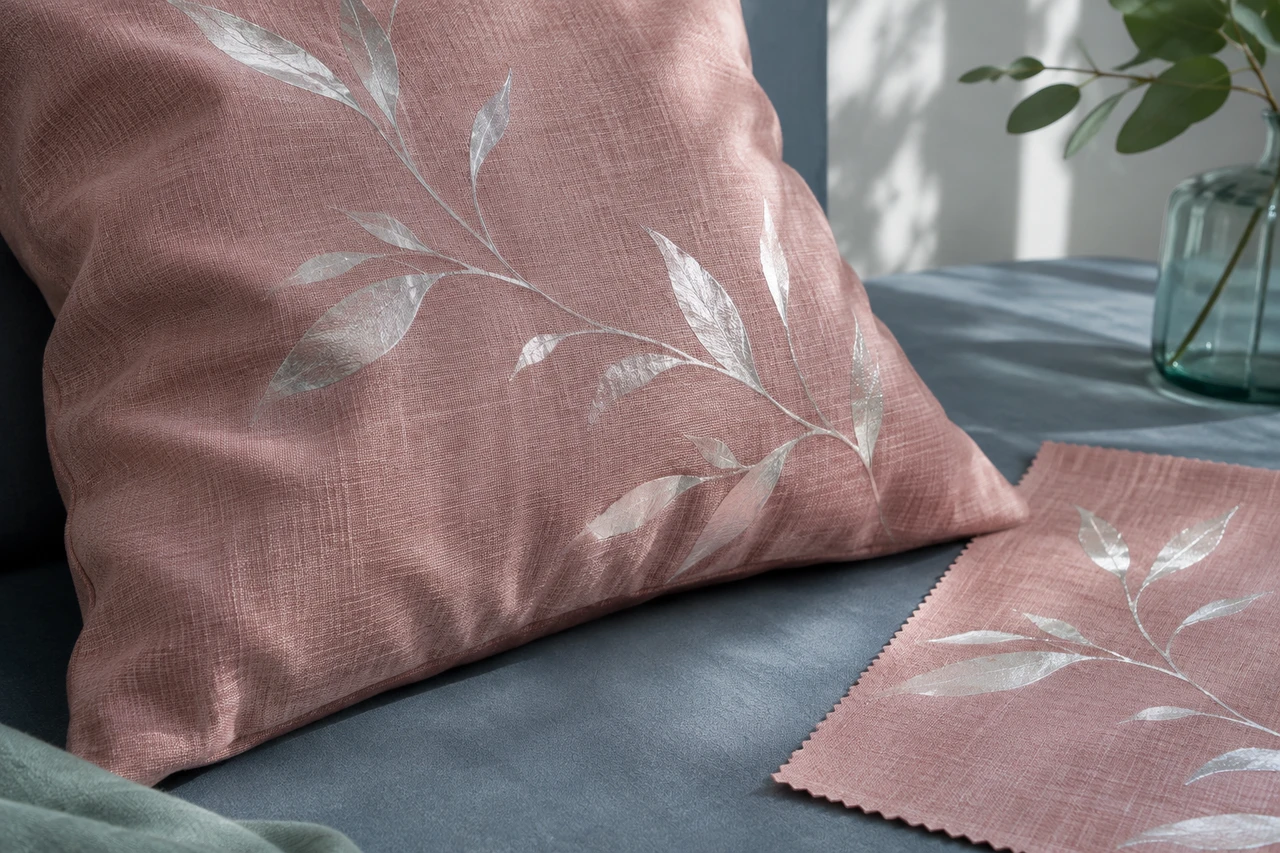
An existing floral collection is useful for discussing the character of leaves, petal density and the balance of colour. It should not be treated as proof that a displayed product uses tambour embroidery. In the development brief, separate the visual reference from the construction proposal. A buyer might request the mood of a large botanical print interpreted as a much simpler chain outline. That interpretation needs its own artwork, materials and physical approval rather than an assumption of one-to-one equivalence.
Confirm the rights to any artwork the parties intend to reproduce and keep the approved interpretation identifiable. Do not imply a relationship with a third-party designer simply because a reference image influenced the discussion. When comparing sample options, use the same botanical area where possible. Otherwise, a quieter design may appear more controlled simply because it has fewer difficult turns. Make the procurement choice explicit: the selected route should serve the intended product and costed specification, not win a comparison between unrelated motifs.
Freeze the chain-path approval before quantity commitments
Make revisions traceable through sourcing and receiving
Keep a complete sample plus close images of the agreed turns, junctions and finishing points. Record the declared process, ground and thread references, artwork revision and assembly condition. Ask the supplier which changes would require a new sample, including a different ground, thread construction or substantial scale reduction. A quotation should state the basis on which it was prepared. Minimum quantities, sample fees and delivery timing are matters to confirm for the actual proposal rather than facts implied by a successful trial. The FR-01 floral direction is a visual starting point only; request separate evidence for the proposed embroidery route.
During receiving, use the retained reference to separate acceptable variation from a changed route or visibly distorted motif. Define the inspection scope and escalation arrangement with the supplier rather than creating an arbitrary universal tolerance for every floral design. FY Bedding can discuss a brief containing the intended product, botanical direction, quantities and evidence requirements. That starts a project-specific conversation; it does not establish that any displayed floral style already has the proposed technique, composition or production availability.
Approve the tight leaf turn, rounded petal, junction and start/end treatment on the intended ground and final assembly. Keep the visual collection reference separate from the declared embroidery process and its physical sample evidence.
Method references: Textile Research Centre: hook-worked tambour embroidery.