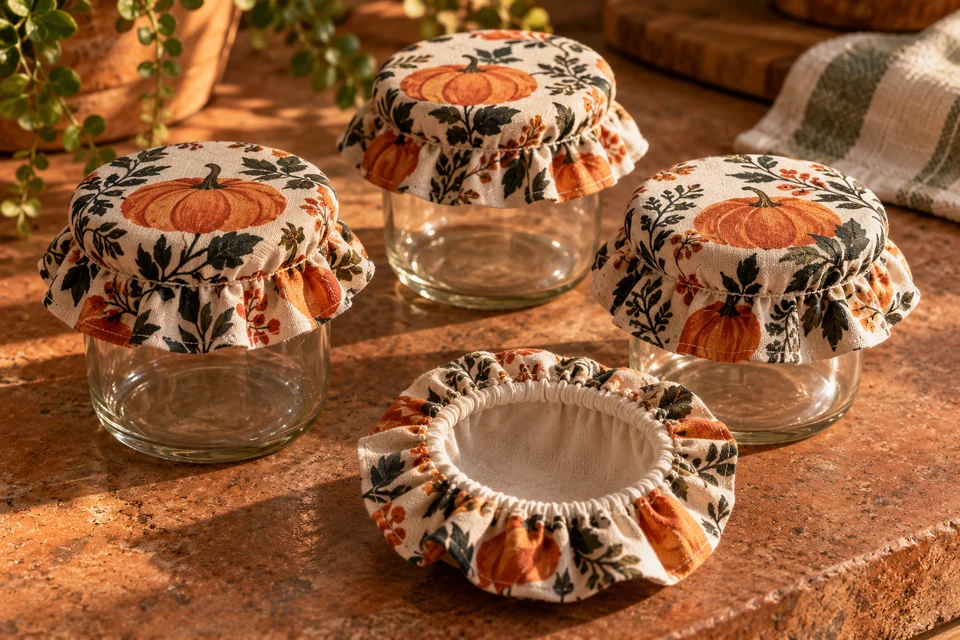
A decorative fabric topper should be specified around an already closed jar, not treated as the closure itself. The pumpkin may look centered from above while the elastic sits poorly below a wide lid or leaves uneven gathers around a narrow one. For a seasonal gifting program, approve the lid interface and the visible decoration together. Keep the jar, its original seal and any contents outside the textile claim unless they are explicitly part of the contracted supply.
Start with the closed lid profile
Diameter alone leaves important fit questions unanswered
Ask for a physical reference jar or a dimensioned lid drawing showing the top, side depth and lower edge. A shallow disc and a deep screw lid with the same diameter need not present the fabric identically. State where the elastic is expected to rest and how much decorative skirt should remain below it. Include the original closure during every fitting review.
The technical specification pack should identify the reference container and the textile-only scope. Do not replace a missing sample with a guess based on a lifestyle photograph. If the buyer intends one topper to fit several jars, list the actual range and request trials across it rather than adding an unsupported universal-fit description.
- Record lid depth and lower-edge shape as well as diameter.
- Keep the real closure under the topper during approval.
Review the opening through fitting and removal
Relaxed circumference is only one part of the brief
Measure the opening in the agreed relaxed state, then observe how the sample is fitted over the widest part of the lid. The reviewer should be able to describe the action without pulling on a loose decorative edge. Look for an elastic join that creates a hard lump, uneven gathers or an opening that does not return to the intended position after removal.
Use the principles in the elastic specification guide to ask about the actual component, attachment and evaluation method, not to borrow fitted-sheet dimensions. This decorative item has a different interface. Agree any repeated handling trial and its acceptance criteria for the proposed use; a single successful fitting does not establish a service lifetime.
- Define the relaxed measurement and the fitting method.
- Review the elastic join and the gathered fabric around it.
Locate the picture after gathering
A centered cut circle can produce an off-center display
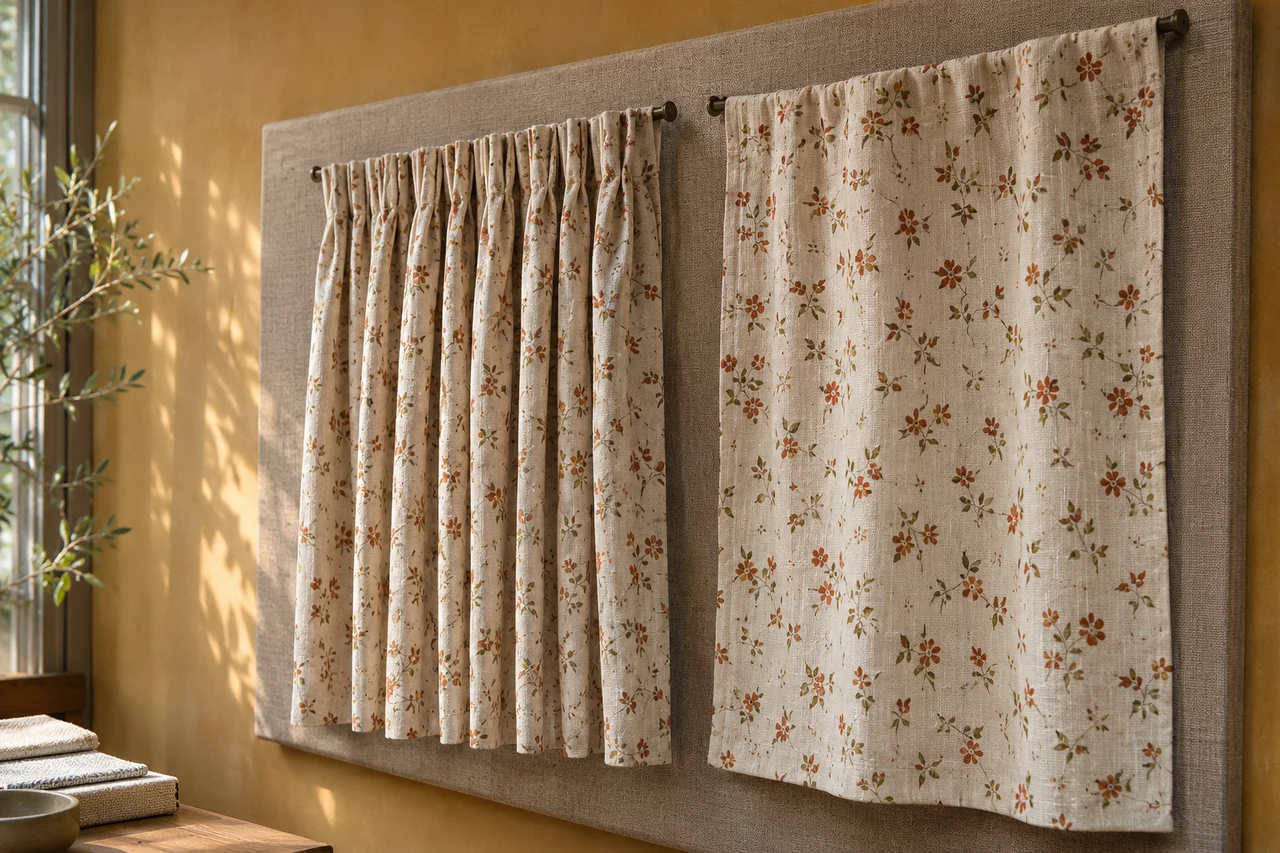
Mark the area expected to lie flat on top of the lid and the area that will gather around the edge. Place the main pumpkin within the flat area if complete visibility is important. Decide whether border motifs may disappear into folds. An all-over repeat and a deliberately centered picture require different cutting instructions, so name the chosen approach before ordering decorated fabric.
The motif placement framework helps keep print and cut references connected. Compare mounted samples from directly above and from an ordinary shelf angle. If one size uses a different lid profile, approve its visible picture separately. Do not hide an asymmetrical gathered edge by showing only the top-down view in a sales asset.
- Separate the flat top zone from the gathered skirt.
- Approve a shelf view as well as the overhead image.
Keep decoration separate from containment
Avoid promises the textile cannot establish
Specify whether the topper is supplied as a removable outer decoration only. Do not describe it as an airtight lid, a hygienic barrier, a preservation device or evidence of suitability for direct food contact. If the commercial project introduces a different use, ask the responsible parties to establish the applicable requirements and evidence before changing the offer.
Use the claim evidence matrix to distinguish a visual feature from a verified performance statement. Review the intended care information for the actual textile and trim construction. If a ribbon, bow or other additional trim is proposed, add it to the component list instead of assuming it is covered by the plain elastic topper approval.
- Describe the original jar closure and decorative topper separately.
- Do not infer food-contact or sealing performance from appearance.
Control the assortment and packing count
A small component can create a large packout error
Prepare a size-and-design list that identifies the compatible lid reference, fabric artwork, elastic construction and quantity per retail unit. Ask whether custom print minimums apply by design and how mixed packs are assembled. Require the quotation to say whether jars, bows and printed cards are included. A topper-only price should not be compared with a finished gift-set price without correcting the scope.
The mixed-assortment verification guide can support a practical count check. Open a trial pack and fit its toppers to the corresponding jars. Confirm sampling and production timing before making any seasonal delivery commitment; approved decoration and an agreed shipment plan are separate decisions.
- Link each topper size to an identified jar-lid reference.
- Verify the contents of mixed packs before bulk packing.
Send FY Bedding the closed-jar references, intended decorative skirt and artwork. Request a topper-only or explicitly itemized set proposal, then approve fitting, removal and mounted appearance before releasing a Halloween gift-presentation order.