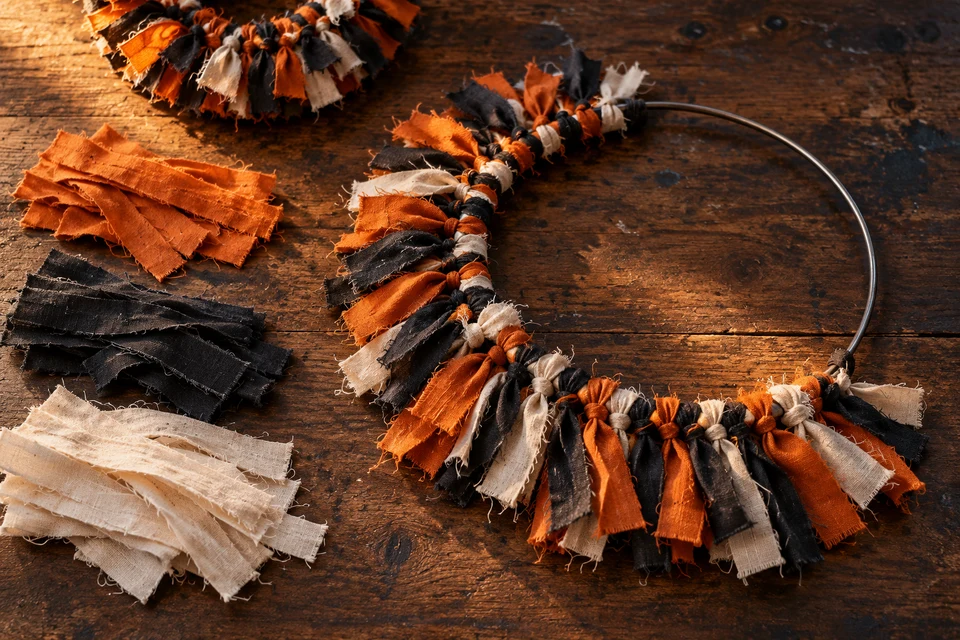
Rag-strip wreath kits offer a tactile seasonal product whose final appearance is assembled by the customer or display team. That makes the bill of materials unusually dependent on the assembly method. A photograph of one full wreath cannot establish how many strips a different ring needs, whether every color is sufficiently represented or how much fabric disappears into the knots. A purchasing brief should therefore define one reproducible assembly and verify that the supplied components can complete it before quantities are scaled up.
List what the kit supplies and what the assembler provides
A ring specification cannot be replaced by a wreath photograph
State whether the ring is included, its construction and the part to which the strips are tied. A single hoop and a frame with several concentric wires do not offer the same tying path. If the customer supplies the ring, provide a clearly bounded reference rather than implying compatibility with every frame. Separate a display-only decorative kit from any proposed toy or child activity; those intended uses require their own assessment.
Build the component list with the bill-of-materials method. Include strip groups, ring if supplied, hanging component if included and assembly information. Do not let a styled bow or hanger in the marketing image become an accidental promise of pack contents. Show optional extras separately in the quotation and sample inventory.
- Identify the exact ring and tying path used for the reference.
- Separate supplied components, optional extras and styling props.
Approve one strip and one knot before counting the whole ring
The knot consumes fabric as well as creating volume
Specify cut length, width, fabric construction and edge treatment for each strip group. Tie representative strips using the proposed method and examine the exposed tails. A thicker cloth or narrower strip can produce a different knot and apparent fullness even at the same cut length. Do not use the visual result of one cloth to estimate another without repeating the assembly.
Refer to the technical-pack checklist to record the knot sequence through photographs or clear diagrams. State whether the decorative raw edge is intentional and how loose cutting debris will be handled. A frayed look is a design choice, not permission for unbounded variation or a claim that all shedding is acceptable in every intended setting.
- Record finished visible tail length alongside cut dimensions.
- Confirm the knot method and intended raw-edge appearance.
Build a complete ring to establish the usable count
A small attractive section may not predict the finished wreath
Assemble the whole nominated ring with counted strip groups. Spread the knots to the approved density without hiding empty sections behind a large bow. Record how the tails fall at the top, sides and bottom. If the display is deliberately sparse, approve the visible ring as part of the design. If it is dense, confirm that the count achieves that result without excessive pulling or an improvised second knot style.
Use the reference-sample workflow to retain the completed wreath and its actual component count. Record any unused allowance separately from the count incorporated in the sample. A reserve may be useful, but it should be a defined quantity and not conceal an uncertain assembly calculation. Repeat the exercise for a different ring size.
- Count the strips actually incorporated into a full sample.
- Declare any spare allowance separately from the assembly requirement.
Choose between a random mix and a repeatable color rhythm
An equal total does not guarantee the same visual balance
Decide whether orange, black and accent strips follow a sequence, occur in planned clusters or are intentionally mixed. A repeated sequence needs a count that suits the whole circumference; otherwise its closure can create an unintended double band of one color. A random mix needs a clear statement about allowable variation so a photographed arrangement is not mistaken for an exact reconstruction promise.
For a retail kit, connect the mix to quantity planning by variant. Allocate each strip group per kit before calculating bulk material needs. Request separate identification for visually similar dark fabrics if their construction differs. Keep an approved allocation table so a shortage of one color cannot be silently replaced by another while preserving only the overall piece count.
- Approve sequence or randomness explicitly.
- Reconcile each color group, not just the total strip count.
Check the delivered kit by actually assembling it
The assembly record should start with an unopened pack
Give a packed sample and its intended instructions to a reviewer who did not make the original wreath. Ask the reviewer to inventory the pieces and follow the documented method. Note missing assumptions: ring orientation, where the first knot goes, which tail faces outward or how the final section closes. Revise the information or pack rather than requiring customers to infer the sample maker's technique.
Use the packaging approval checklist for the kit's identity and included contents. Confirm the actual material minimums and assembly scope with the supplier before release. The generated photograph illustrates one design direction, not a verified kit count, safety assessment or stock offer. Seasonal dispatch timing needs separate confirmation after the complete specification is agreed.
- Test the instructions with an unopened, counted sample pack.
- Keep approved kit contents consistent with retail photography.
Send FY Bedding the nominated ring, strip palette and preferred knot appearance. Request a complete counted assembly and a trial kit pack, then agree the color allocation, spare allowance and instruction scope before placing the seasonal order.