Hemstitch can be an important decorative detail in a napkin collection, yet the word alone leaves several buying decisions open. The maker's method, the visible openwork, the border proportions and the final table presentation all need to be understood. Start by identifying the offered construction and the effect the buyer wants to preserve. That creates a fair basis for comparing samples without assuming that every napkin described as hemstitched is made in the same way.
Ask how the hemstitch effect is made
Keep method descriptions factual and product-specific
SFERRA's Classico napkin information specifies hand-thread-drawn hemstitch, while its Roma napkin page identifies machine hemstitch. These are examples of how one brand distinguishes methods on particular products; they do not establish the construction of an unrelated supplier's napkin. Ask the proposed maker to describe its own border method and show a representative sample with the relevant thread and cloth identified.
If the buying brief requires a particular method, put that requirement in the specification before requesting quotations. If the main objective is a certain visible border effect, say so and compare the offered routes openly. Avoid selling a machine-made detail as handwork or treating a handwork description as evidence of a guaranteed service life. The table-linen procurement guide supplies the wider program context; this decision concerns the decorative border itself.
Specify the border as a proportioned design
Measure the visible detail on the finished napkin
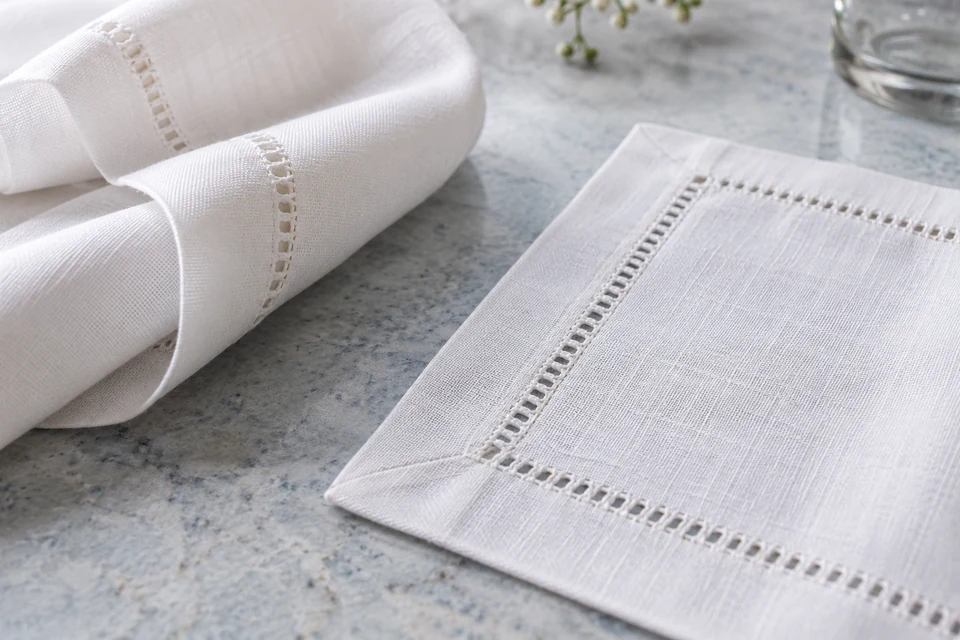
Record the finished napkin dimensions, the border's position relative to the edge and the width of the visible openwork area. Show whether the detail continues around every side and how it is intended to meet at the corners. A close-up can identify workmanship, but it cannot tell a supplier how prominent the border should feel across the whole place setting. Keep an overall sample beside the detail image.
Review any contrasting thread or coloured ground in the actual combination proposed for purchase. Decide whether the border should read as a subtle line or a clearly visible frame when folded. Do not solve an unclear proportion by expanding the hem without checking the finished napkin. The corner and square-fold inspection guide addresses geometry; the openwork's decorative scale remains a separate buyer decision.
Use a contrasting background to make the openings easy to see during the technical discussion, then return the napkin to the actual table setting for the design decision. Keep both views. The inspection background reveals the construction; it should not replace the setting that determines whether the decoration feels appropriately restrained or prominent.
- Show the complete napkin and a border close-up.
- Locate the openwork from a stable finished-edge reference.
Choose the border in the intended table presentation
The fold determines which part of the design is visible
Place the candidate napkin with the intended plate, table covering and ordinary fold. Check how much of the border remains visible and whether it supports the intended dining style. A design that looks balanced when laid flat may disappear inside the planned fold. If the napkin will be sold for several settings, decide which presentation is the primary retail reference rather than asking one photograph to represent every use.
Where a service uses a cutlery pocket, assess that arrangement through the cutlery-fold trial. Where rings are proposed, refer to the ring-contact review. Keep decorative exposure, folding practicality and contact observations separately recorded. A border should not be approved merely because the photographer found one position that avoids the operational handling used by the restaurant or customer.
Follow the openwork through the agreed care route
Inspect the detail again after the napkin returns to service
Agree a care and finishing trial that matches the proposed use, then inspect the border, corner junctions and surrounding cloth in the defined evaluation condition. Look for changes in the openwork's appearance and in how the napkin lies or folds. Keep the sample identities and observations rather than relying on a general statement that the fabric is washable. The complete decorated article is the object being approved.
For hospitality processing, review the equipment and handling route with the laundry team. The flatwork finishing guide provides a way to organize a compatibility discussion, not a blanket approval for delicate borders. Do not assume a retail brand's care instruction applies to the offered construction. If the trial reveals a problem, require a revised sample and repeat the affected observations rather than compensating with unrecorded finishing changes.
- Keep pre-care and post-care border references.
- Separate visual approval from any required strength or durability evidence.
Compare quotations against the same decorated napkin
Carry the accepted detail into packaging and replenishment
List material, colour, finished size, hemstitch method and border layout as distinct quotation fields. Ask which choices affect setup, minimums and repeat-order availability. A cheaper offer may reflect a different decorative method or a simplified border rather than a like-for-like commercial improvement. Decide whether that alternative is acceptable through sampling, and update the product description before comparing the revised offer with the original.
Confirm piece count, fold and pack presentation against the accepted napkin, including any coordinated table items sold separately. Use the packaging checklist to keep descriptions and contents aligned. For repeat orders, retain the full napkin and construction record, not only an image of the corner. Send FY Bedding the proposed market, table setting and border reference through a sample request; the appropriate sourcing route and commercial terms can then be reviewed against a specific, verifiable design.
Buy against an identified hemstitch method, a measured border layout, a representative table presentation and an accepted care-processed sample. Keep any handwork description specific to the evidence for the actual ordered napkin.
Method references: SFERRA Classico: product-specific hand-thread-drawn hemstitch description; SFERRA Roma: product-specific machine hemstitch description.