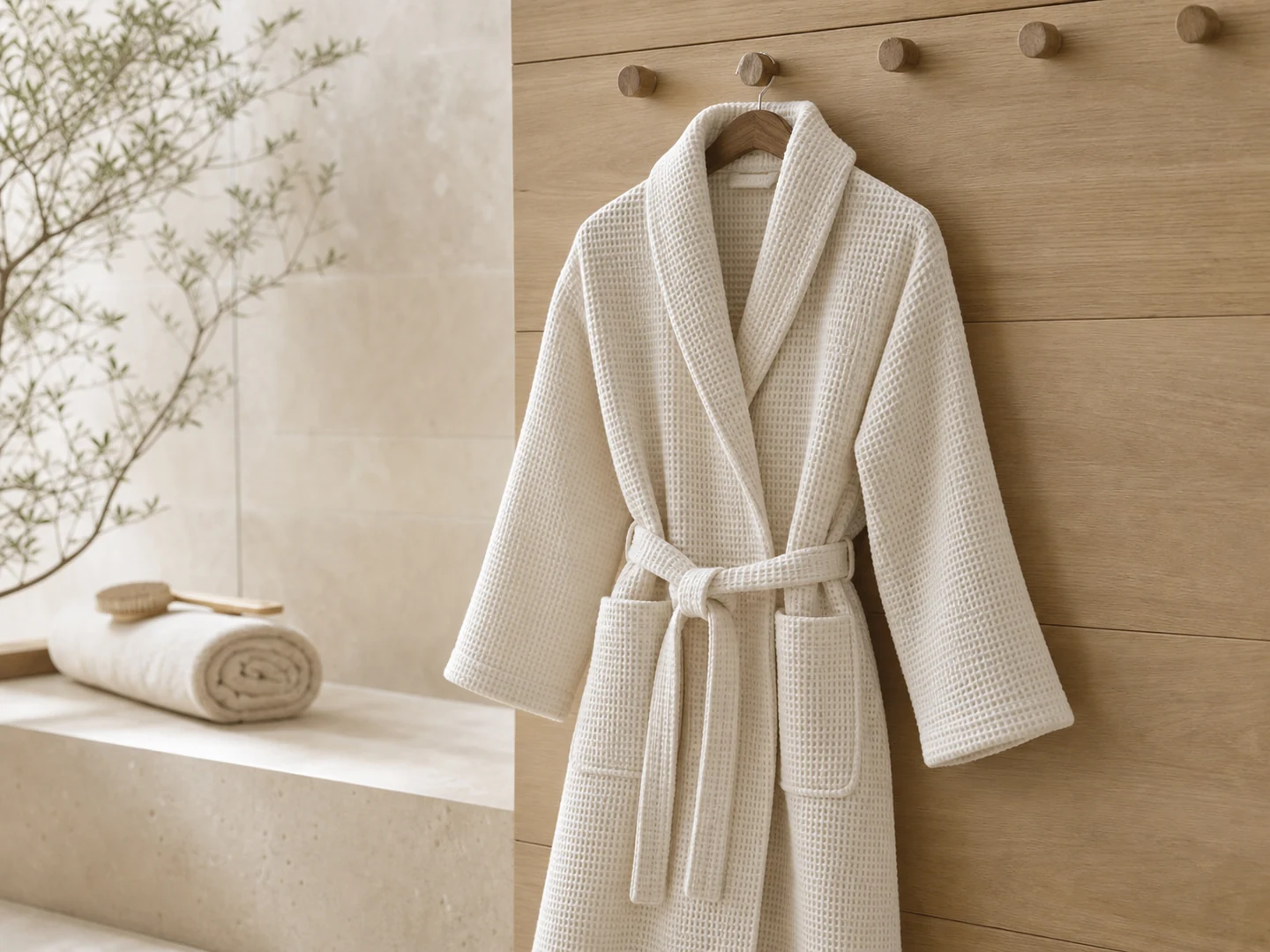
Bathrobe approval often concentrates on fabric weight, overall size and logo placement, while the collar and cuffs receive only a quick visual check. Yet these are the areas a guest repeatedly notices when turning the head, reaching for an object or folding back a sleeve. A bulky seam, unstable collar roll or cuff that becomes awkward after care can undermine an otherwise well-made robe. This guide treats neck and wrist-area construction as a distinct fit decision. It complements, rather than replaces, whole-garment sizing and the separate checks for belts, loops and pockets. No universal comfort score or laundering life is assumed.
Define the intended wearer and use range
A single model cannot represent every guest
Record the size range, intended ease, robe length and likely use situations before choosing a collar or cuff construction. Identify whether the robe is mainly worn in rooms, after bathing or while moving between spa areas. Review the bathrobe procurement guide for the whole-product brief, then state the local questions this trial must answer: neck contact, collar stability, wrist clearance and the ability to turn back a sleeve without excessive bulk.
Select trial participants or fitting forms that represent the proposed size range under an appropriate professional fitting procedure. Keep participation voluntary and feedback focused on the garment rather than personal body judgements. Record which size and construction each person tried. A robe that looks elegant on one display form may sit differently when worn, so the final record should distinguish visual styling approval from observed comfort and movement in the actual trial.
- State the size range and intended ease.
- Identify the main wearing situations.
- Record the size used in each trial.
- Separate styling from wear observations.
Inspect collar roll, joins and neck-contact areas
Assess the assembled layers rather than fabric softness alone
Review the collar shape, seam position, layer arrangement and transition into the front opening. Turn the collar as it would normally be worn and note whether it stays in an acceptable position without repeated adjustment. A soft face fabric can still produce an uncomfortable join when several layers meet. The seam and stitch specification guide helps record the actual construction instead of relying on a photograph that hides the inside.
Ask the wearer to make ordinary movements within the agreed fitting procedure and record specific observations: a seam presses at one point, an edge curls outward, or the collar repeatedly falls into an unwanted position. Avoid vague comments such as premium or poor quality without a location and reason. If a revised seam allowance or facing is proposed, identify the new prototype and compare it with the original under the same conditions rather than accepting the change solely from a sketch.
- Review inside and outside collar construction.
- Check joins where layers accumulate.
- Locate feedback on the garment drawing.
- Re-identify altered prototypes.
Evaluate sleeve opening and cuff behaviour
Consider reaching, turning back and repeated handling
Observe whether the sleeve opening permits the intended movement without excessive dragging or restriction. If the design is intended to be turned back, assess the folded cuff thickness and stability in that state. Record the sleeve length and opening dimensions alongside the feedback so a pattern change can be targeted. The dimensional-tolerance guide supports the measurement record, but the buyer must define the acceptable robe fit rather than borrowing bedding tolerances blindly.
Inspect the cuff seam, edge finish and any decorative detail that could create an objectionable contact point. Check both sleeves and compare sizes; proportional grading can alter the relationship between opening, length and folded thickness. Do not solve a single trial complaint by shortening every size without reviewing the rest of the range. The size-set approval process provides a disciplined route for confirming which construction and grading changes actually work.
- Assess the cuff in normal and turned-back use.
- Record length and opening dimensions.
- Compare both sleeves and relevant sizes.
- Confirm grading changes with samples.
Repeat the fitting after the agreed care route
The approved feel must not depend on a new sample
Process identified robes through the care route intended for the property and record the conditions with the laundry team. Reassess collar shape, cuff bulk, seam appearance and measured dimensions after the agreed evaluation interval. The hotel wash-trial guide can organise the record. Do not add an unapproved finishing treatment just to restore the showroom feel, because that would test a different product-to-process combination.
Where the result changes, describe whether the concern is size, shape, surface feel or construction stability. Different observations may require different corrective actions. Keep an unwashed reference and retain the post-care sample that supported the decision. A short trial can identify a problem or support an approval within its scope, but it does not establish a guaranteed service life or prove that every laundry provider will produce the same result.
- Use the property’s intended care route.
- Compare the same fit and construction points.
- Keep unwashed and post-care references.
- Limit conclusions to the trial scope.
Release fit evidence with the pattern revision
Make subjective feedback usable in production
Summarise the accepted collar and cuff design with drawings, dimensions, photographs and the relevant sample identity. State which observations led to a revision and who approved the result. The golden-sample workflow helps convert a successful fitting into a controlled production reference. Without that connection, production may reproduce the original pattern while the buying team remembers a later, more comfortable prototype.
Keep the whole-robe review active, including the belt, loop and pocket checks, because improving one area does not approve the others. Send FY Bedding a bathrobe development brief with the size range, intended fabric, care route and specific fit concerns. The next step should be a defined prototype and review plan, with any comfort or durability language tied to the evidence actually collected.
- Release the exact accepted pattern revision.
- Connect comments to dimensions and locations.
- Retain the post-care approval sample.
- Complete the separate whole-robe checks.
Can the accepted collar and cuff construction be identified, reproduced and judged after care across the sizes actually included in the trial?