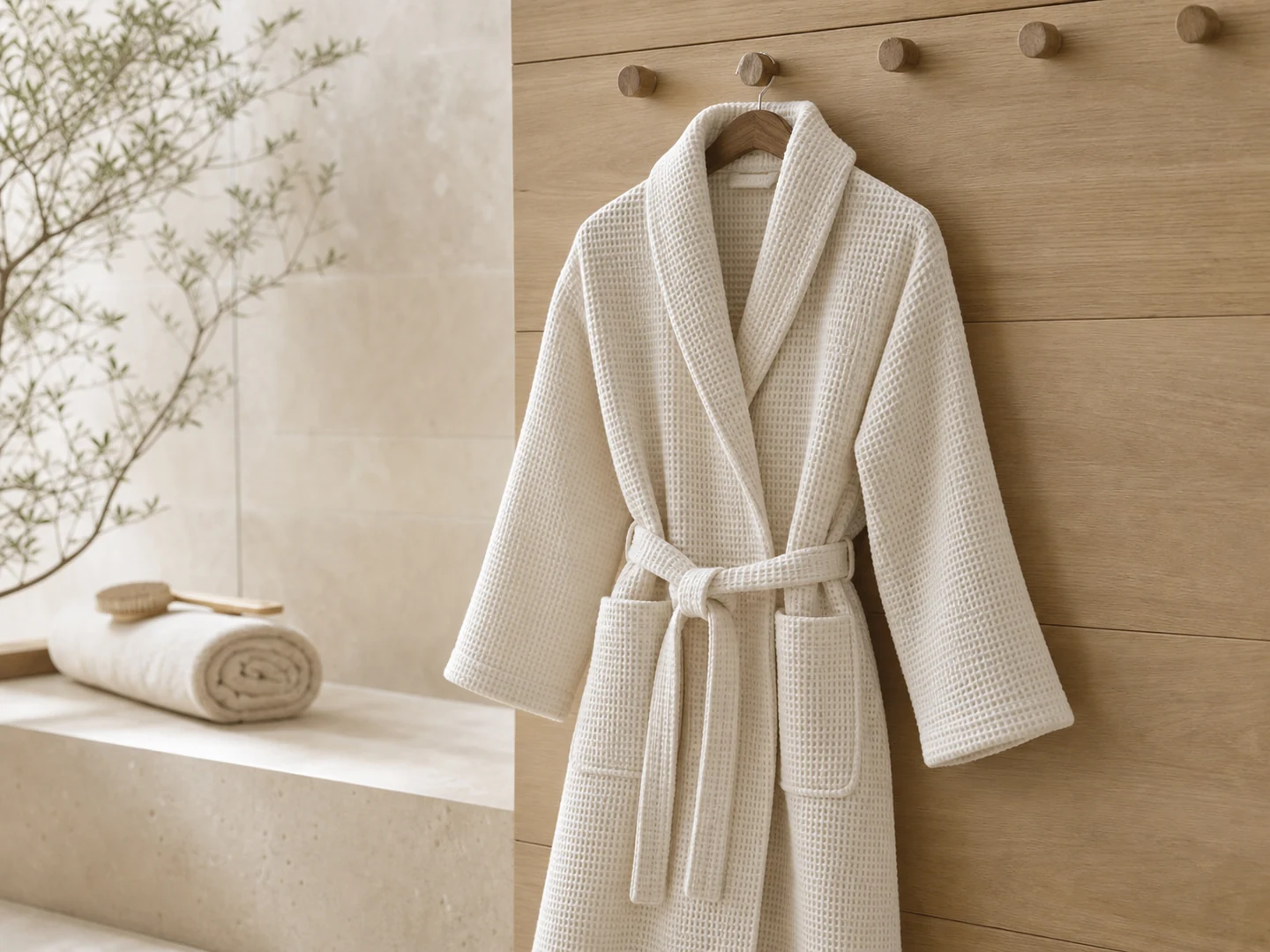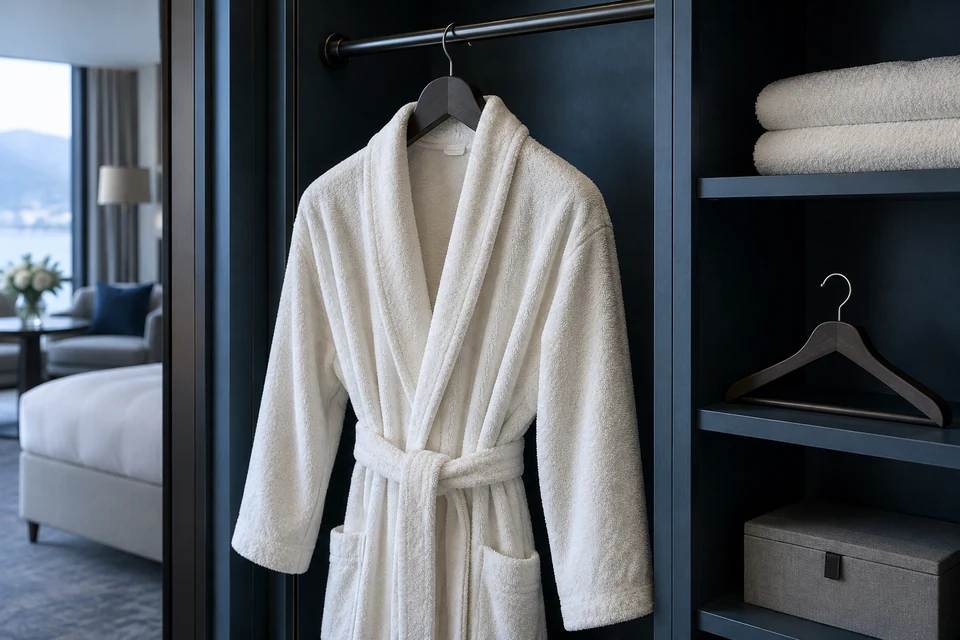
The hanger selected for a hotel bathrobe can change the way the shoulders sit, how the collar falls and how easily the garment is presented in the closet. A robe approved on a person or folded on a table has not yet been approved on the property's hanger. Purchasing should review the garment, hanger and closet position together, using a repeatable presentation routine. This is a fit-and-appearance decision rather than a claim that any particular hanger extends garment life.
Document the closet interface
Use the actual presentation space
Record the rail height, available clearance, intended robe position and neighboring items. Include the proposed hanger reference and how the robe is meant to face the guest. A generous showroom rail may conceal contact or crowding that occurs in the installed closet. Use the hotel mock-up record to identify the actual arrangement so later reviewers do not approve a photograph taken in a different room configuration.
Ask housekeeping to demonstrate the normal hanging sequence, including the belt and any permitted closure arrangement. Keep access and appearance observations distinct. The belt-loop and pocket specification controls product features, while this review checks how the complete robe is placed on the hanger. If a display depends on an unusual tuck or hidden fastening, record it rather than presenting the result as the garment's ordinary hanging condition.
- Identify the hanger and installed closet arrangement.
- Record the guest-facing direction of the robe.
- Include belt handling in the demonstration.
- Separate access concerns from visual preferences.
Select representative robes
Size and care condition matter
Use samples of the intended construction and relevant sizes, with their condition recorded. A lightweight development robe can behave differently on the same hanger from the full proposed product, so mark any material substitution as a limitation. Do not approve a whole size range solely because one middle size looks tidy. Identify which combinations were reviewed and leave the unexamined combinations open until the buyer decides what additional evidence is needed.
Include the property's intended care state where that is part of the project review. A newly unpacked sample and a sample prepared through an authorized laundry trial should not be mixed without identification. The collar and cuff trial provides related care observations, but it does not establish hanger compatibility. Keep the garment identity and preparation record attached to each hanging photograph so comparisons remain interpretable.
- Identify robe construction and sample size.
- Mark development substitutions explicitly.
- Distinguish new and care-trial samples.
- State which size combinations remain unreviewed.
Observe shoulder and collar presentation
Compare under consistent conditions
Hang the robe using the agreed routine and observe its shoulder contour, sleeve position, collar fall and visible balance. Record any localized projection or fold without immediately diagnosing permanent damage. The relevant question is what the property considers acceptable in the closet and after retrieval. Use a consistent viewing position and lighting for alternatives, and retain both a wider closet view and a detail image where a specific area needs discussion.
If the team wants to observe a period of hanging, agree that period and the subsequent observation conditions in advance. Do not state a generic recovery time or infer long-term effects from one short display trial. Relate the acceptance decision to the bathrobe buying specification so the preferred presentation is tied to an identifiable product rather than an unqualified promise that the garment will never develop hanger marks.
- Record shoulder contour and collar position separately.
- Keep lighting and viewpoint consistent between alternatives.
- Agree any observation period before the trial.
- Avoid inferring permanent effects from appearance alone.
Compare feasible hanger options
Keep changes traceable
Where the result is unsatisfactory, compare identified hanger alternatives approved for the property's use. Record differences in their relevant geometry, contact surfaces and installation rather than relying only on a visual style description. Change one feature at a time where feasible. If the robe, hanger and folding routine all change together, the team may select an attractive result without understanding which part of the combination needs to be reproduced on the order.
Include routine removal and rehanging in the comparison, using the site's normal handling approach. The hanger should not be approved solely because a specialist can arrange the robe for a photograph. The housekeeping-oriented design review can help structure feedback, adapted to robe presentation rather than copied as a bedding result. Record difficulties and unresolved preferences without inventing productivity savings or a universal best hanger shape.
- Assign a reference to every hanger alternative.
- Record the physical differences being compared.
- Include ordinary removal and rehanging.
- Keep workflow observations separate from claims of efficiency.
Issue a combined presentation approval
Carry it into replenishment
The final record should identify the robe variants, hanger, closet position, care condition and presentation routine covered by the decision. Include any restrictions or unresolved combinations. If a later replenishment uses a different hanger or robe construction, review the affected assumptions instead of treating the old photograph as sufficient evidence. Keep the reference accessible to both purchasing and housekeeping so the approved combination survives a change of staff.
Share the closet photographs, robe specification and hanger options with FY through the hospitality project enquiry. Ask for a scoped sample discussion that distinguishes garment construction, care behavior and closet presentation. The outcome should state which combination was accepted and which questions require further review. That gives the buyer a usable purchasing reference without turning a visual preference into an unsupported claim about durability, comfort or every possible hotel installation.
- Identify the complete approved robe-and-hanger combination.
- Save both closet and shoulder-detail references.
- Record limits for sizes and care conditions.
- Reassess relevant changes during replenishment.
Approve the bathrobe on the actual proposed hanger in the intended closet arrangement, with identified garment sizes and a presentation routine that housekeeping can reproduce.