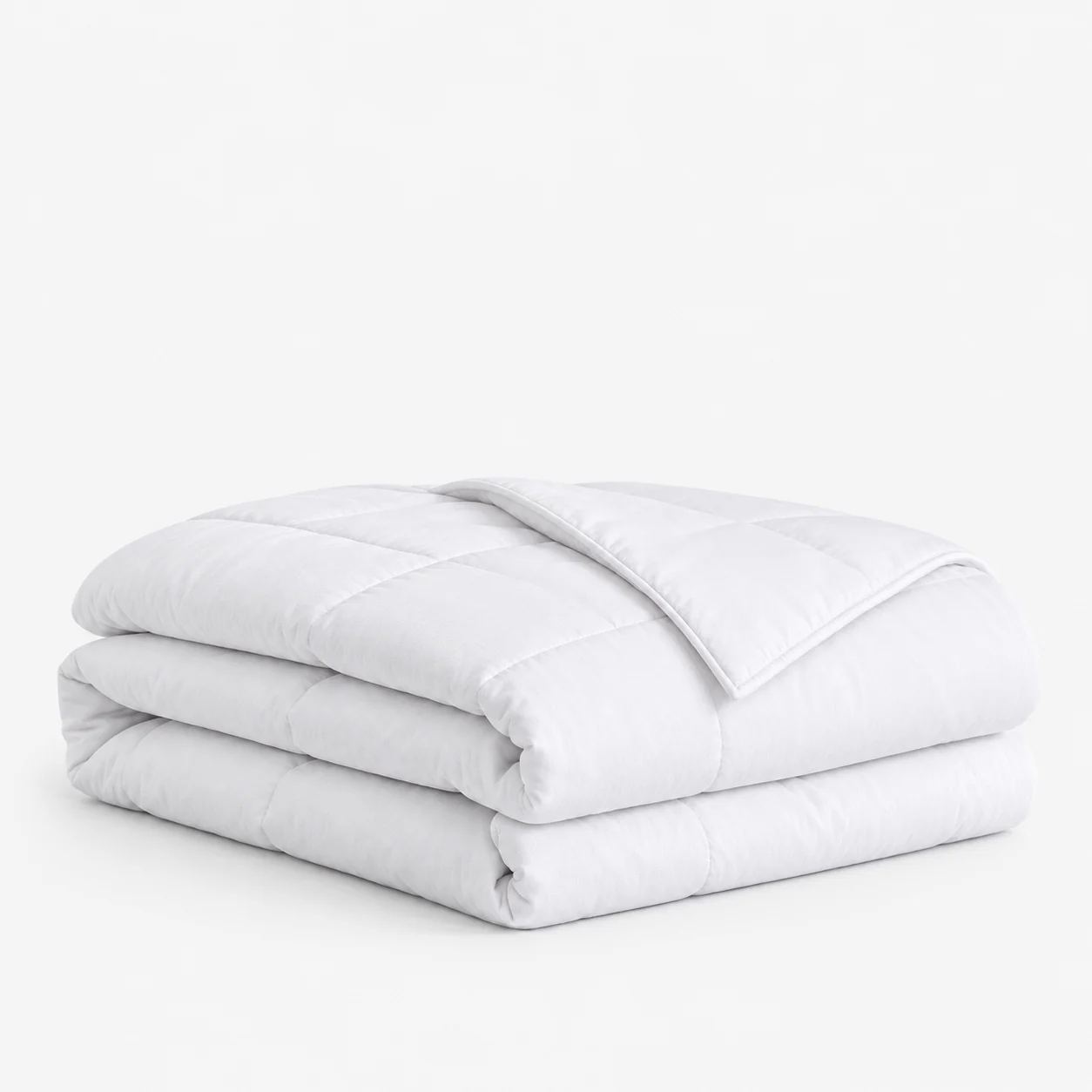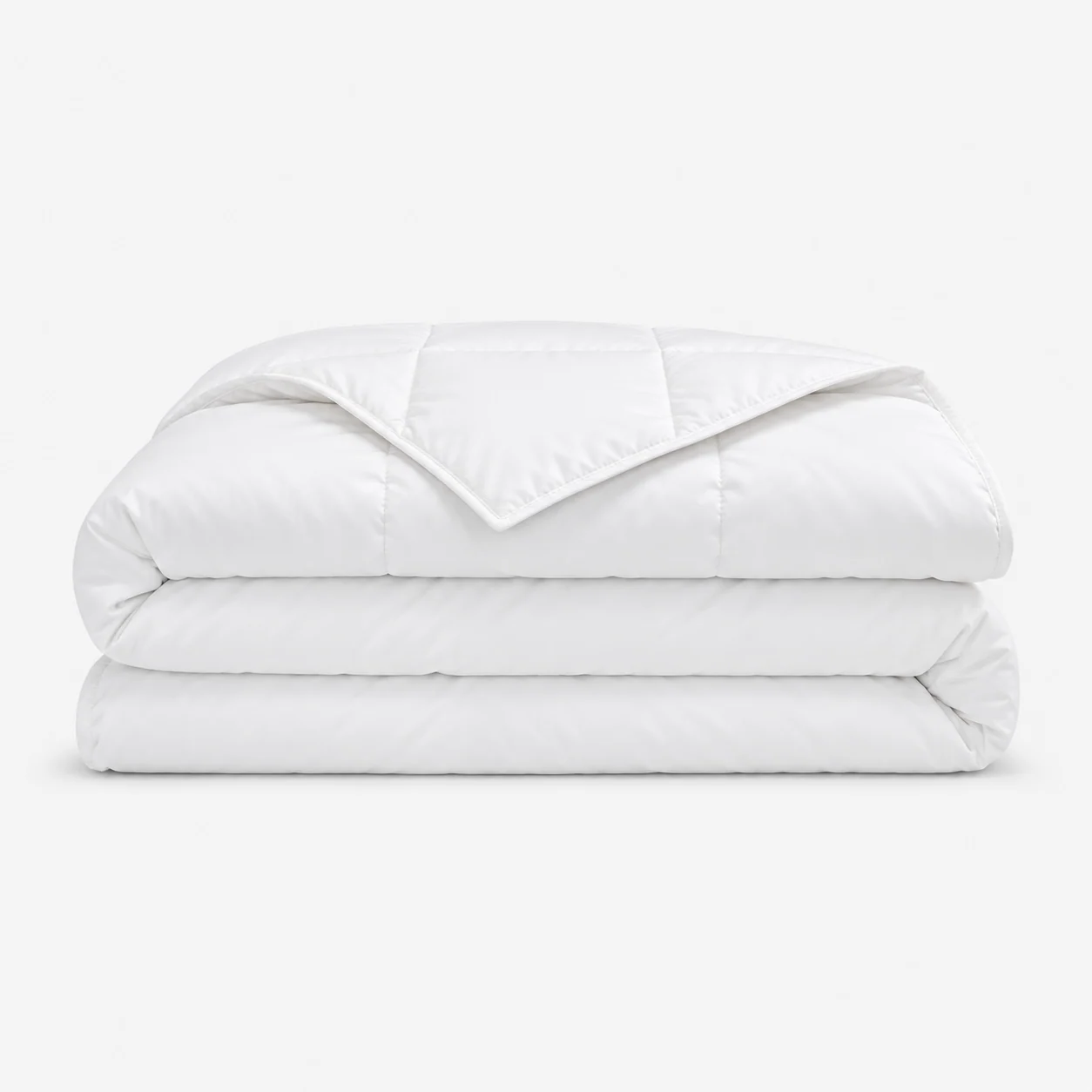
A discreet orientation tab can help a room attendant identify the intended end of a duvet cover before inserting the duvet. Its value depends on where it is seen during the actual handling sequence, not on the tab looking clear in an isolated close-up. Procurement should distinguish this aid from a laundry size marker, a mandatory product label or a decorative brand label. This guide addresses an internal head-to-foot cue and its usability on an identified cover; it does not promise a universal time saving or authorize changes to required labeling.
Define the orientation decision
Identify what the attendant needs to recognize
Map the cover's intended head, foot, face and opening against the duvet and bed arrangement. Ask the property team which orientation decision causes uncertainty during its normal preparation routine. The room mock-up record should show the relevant cover and insert combination, not merely the nominal bed size. If the product has no meaningful head-to-foot distinction, establish whether another cue is genuinely needed before adding a component that staff must learn and suppliers must control.
Record exactly what the tab means and what it does not mean. A cue identifying the opening end should not also be assumed to identify size or care route unless that combined system has been deliberately approved. Keep the laundry size-marker scheme separate in the brief. Conflicting meanings are especially problematic when visually similar white covers circulate between several room types and staff encounter the tab at different stages of sorting, folding and dressing the bed.
- Identify the actual orientation problem.
- Map cover, insert and bed references.
- Give the tab one clear meaning.
- Separate orientation from size and care codes.
Place the tab within the handling sequence
Test visibility at the useful moment
Observe how the room team normally unfolds and opens the cover before insertion. Identify the point at which an orientation cue would be useful and whether the proposed location is exposed then. Use the actual fold delivered to housekeeping for the trial. The specification record should name the location relative to a defined seam or opening, rather than rely on a photograph whose left and right positions change when the cover is turned inside out or viewed from another side.
Compare proposed locations without simultaneously changing the folding routine, tab appearance and cover construction. Record whether the attendant notices the cue naturally or only after being told exactly where to search. A tab that becomes visible after the orientation decision has already been made offers limited support for that decision. Avoid presenting an assisted demonstration as ordinary usability. Keep the observations tied to the specific room team and trial conditions instead of extrapolating a single successful attempt into a claim about all properties or staff.
- Observe the normal unfolding sequence.
- Define location from fixed construction references.
- Change one proposed cue feature at a time.
- Record prompting required during the trial.
Review the physical attachment
Keep the cue compatible with the cover
Request a production-intent tab and attachment on the offered cover material. Identify the tab material, finished dimensions, seam capture and exposed edges through the technical owner. The technical pack should show how the component is integrated rather than allow it to be sewn wherever space remains. Review its relationship with closures and any internal retention features, keeping those components' functions distinct from the orientation cue being added for staff recognition.
Observe the completed cover during normal handling for visible interference, catching or unwanted exposure in the made-bed arrangement. Do not use a visual trial to claim attachment strength or laundering durability. Where those are project requirements, obtain suitable evidence under the agreed technical plan. If the tab is revised after the first trial, identify the new sample and repeat the affected observations. A softer-looking replacement or smaller tab can change recognition and attachment behavior even if the supplier describes it as equivalent to the earlier version.
- Specify the tab and attachment construction.
- Check clearance from other components.
- Separate visual observations from performance evidence.
- Reassess revised tab versions.
Repeat the recognition trial in the intended state
Include the operator's care route where required
Agree which sample state is relevant to approval: delivered, prepared for room use or processed through the property's agreed care trial. The laundry trial record can establish that context without assuming the tab remains unchanged under every possible process. Review whether the cue is still recognizable and in its intended location. Keep the care procedure and sample identity with the observations so a later comparison does not mix unlike conditions or an undocumented treatment history.
Ask the operator to include the staff roles that actually use the cue, while keeping the trial proportionate to the project. Record errors, hesitation and the explanation needed, not only the quickest successful demonstration. If the property wants to measure time or compare alternatives formally, agree the method and scope before collecting results. Do not invent a percentage saving from an informal trial. A practical acceptance decision may simply state that the chosen cue was recognized consistently within the defined routine and still requires staff introduction.
- Identify the sample's care state.
- Review recognition after the agreed preparation.
- Include relevant users and record difficulties.
- Avoid unsupported productivity claims.
Release meaning and construction together
Prevent later substitutions from changing the cue
The final approval should connect the tab's meaning, physical specification, placement, sample identity and staff-facing instruction. Link it to the pre-production approval record. Preserve a useful overall view and a close location view, since either one alone can omit important context. Keep unresolved attachment or care questions conditional rather than allowing a recognition signoff to imply that every technical requirement has been completed and the component can be released without further review.
For bulk work and repeat orders, confirm that the offered cover and tab still match the accepted combination. If the property changes its folding method or a supplier changes the opening construction, identify whether the cue remains visible at the needed moment. Share that operational context when discussing sourcing options. A good request explains the orientation decision and current handling sequence, allowing proposed solutions to be compared on usefulness instead of selecting a tab purely by color or assuming that an extra label automatically improves housekeeping.
- Release meaning and placement in one record.
- Preserve overall and close location views.
- Keep outstanding technical requirements conditional.
- Recheck changes to folding or opening construction.
Approve an orientation tab only when its meaning, location and construction support the actual cover-handling routine; retain separate evidence for attachment, care performance and required product labeling.