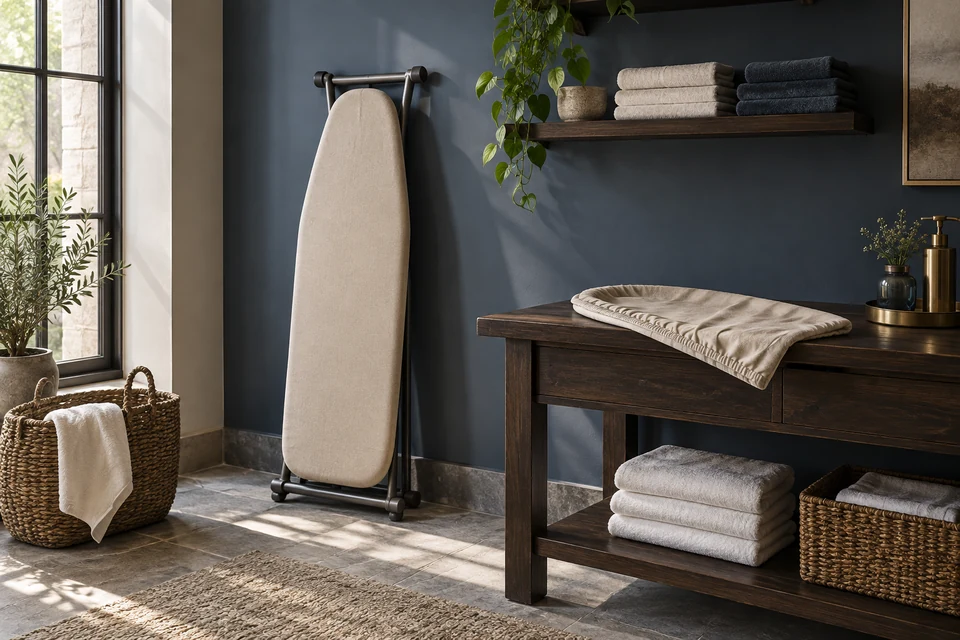
A replacement ironing-board cover is not just a shaped piece of fabric. The board model, permitted cover assembly and manufacturer's instructions determine what procurement should request and what the responsible operator must approve. Buyers should avoid treating a similar outline as evidence of compatibility. This guide establishes an identity and fit record for hotel replacement purchasing. It does not prescribe ironing temperatures, padding substitutions, electrical work or a performance test, and it does not claim that any textile cover is suitable for every board.
Establish the permitted replacement
Start with model-specific information
Identify the board and obtain the manufacturer's current replacement-cover information through the property's responsible equipment team. Record the model reference and any restrictions on cover or padding combinations. If the information is unavailable, keep compatibility unresolved rather than selecting a product from nominal length alone. The equipment-linked buying brief should make that missing input visible to purchasing and suppliers, especially where several board models have accumulated across rooms or service areas.
Distinguish a cover-only purchase from a replacement assembly that includes other specified layers. Do not assume that an existing layer should remain or be removed based on its appearance. That decision belongs to the relevant manufacturer instructions and competent property review. Connect each requested component to the component record without presenting a textile supplier's proposal as equipment authorization. The buyer should know exactly which identified assembly is being offered before comparing quantities or commercial terms.
- Identify each board model.
- Obtain permitted replacement information.
- Distinguish cover-only and assembly purchases.
- Keep unconfirmed compatibility visibly open.
Record the fitting geometry
Use a defined reference without altering equipment
Under the property's approved non-operating inspection procedure, record the relevant shape and measurement points needed to identify the replacement. Include the nose profile and any attachment arrangement specified by the manufacturer. Do not disassemble or modify the board to make a sample fit. The technical record can hold photographs and dimensions, but those details supplement rather than replace the model-specific compatibility decision and the manufacturer's instructions.
Label whether measurements describe the board surface, the loose cover or the assembled reference. Keep the measurement state consistent across samples. A cover with a similar maximum length may still differ at the narrow end or at its fastening arrangement. Where the supplier proposes one cover for several models, ask for the basis of that proposal and the responsible party's confirmation. Do not turn a convenient assortment consolidation into an unsupported statement that all the property's boards are equivalent.
- Define the measurement state and points.
- Record the actual nose and attachment shape.
- Do not modify equipment for sample fitting.
- Review multi-model proposals explicitly.
Review the supplied assembly
Confirm identity before any operational assessment
Compare the submitted replacement with its declared reference, component list and approved compatibility information. Record visible discrepancies in construction, attachment or the supplied layers. The inspection record can organize those observations without making an equipment-safety conclusion. If the packaging reference and physical contents disagree, place the sample under review rather than using the apparent fit to decide which identification was probably intended by the supplier.
Have the responsible property team assess installation according to the applicable instructions. Procurement can document the result, the sample and the reviewer; it should not invent installation steps or permit improvised fasteners. Preserve any unresolved issue, including a sample that can only be fitted by departing from the specified arrangement. A tidy photograph is not enough when the method used to obtain it cannot be repeated within the manufacturer's and property's requirements for that identified equipment.
- Match the physical assembly to its reference.
- Record visible construction discrepancies.
- Use authorized installation procedures only.
- Reject undocumented fitting workarounds as approval evidence.
Separate fit from performance release
Keep specialist decisions with their evidence
An acceptable non-operating fit does not establish thermal performance or authorize use with all equipment settings. Ask the responsible technical parties which evidence and review are required for the proposed assembly. Record those requirements in the project evidence plan without assigning generic pass values. Supplier statements should identify their exact product and scope; a report concerning a different cover or layer combination does not automatically support the proposed replacement.
Keep the property's operational release separate from purchasing's receipt and appearance checks. If an alternative material is proposed because of availability or MOQ, route it through the same compatibility and evidence review rather than treating it as a minor fabric substitution. Where requirements remain unanswered, record the purchasing hold and the decision owner. This makes the next action clear without encouraging staff to conduct an improvised heat trial or infer safety from the sample's thickness, coating appearance or marketing description.
- Separate non-operating fit and use authorization.
- Identify evidence for the exact assembly.
- Review alternate materials through the same route.
- Keep unresolved technical questions on hold.
Control replacement ordering
Preserve the model-to-reference mapping
Release a purchasing schedule that maps each confirmed board model to the accepted replacement reference and any required assembly information. Retain the manufacturer information and the property's approval with the order record. Receiving staff should be able to check the supplied identity without recreating the development discussion. Do not let a distributor's new catalog photograph silently replace the previously approved reference; a changed identifier or component needs reconciliation before the item enters routine service stock.
When discussing a hotel textile replacement requirement, provide the model list, confirmed replacement specifications and outstanding technical questions. Ask the supplier to state what it can supply against that scope, without assuming that FY Bedding provides or approves every equipment accessory. Plan quantities from the property's actual inventory and authorized replacement policy. Keeping this boundary clear produces a useful sourcing conversation while ensuring that equipment compatibility and operational decisions remain with the parties qualified to make them.
- Map each model to an accepted reference.
- Keep compatibility evidence with the order.
- Reconcile changed supplier identifiers.
- Base quantities on verified property requirements.
Purchase against confirmed equipment-specific replacement information; appearance and physical fit alone are not authorization to use an ironing-board cover assembly.