A repaired hotel sheet may remain unsuitable for its intended guest-facing use even when the patch looks neatly attached on an inspection table. The buyer or property needs a defined appearance decision that considers location, visibility and service requirements. This guide concerns review and authorization of a proposed repair appearance. It does not prescribe a repair method, establish hygiene suitability or claim that patching restores the original performance of the linen.
Confirm whether repair is permitted
Appearance is only one gate
Start with the property's existing linen policy and the product's intended use. Some applications may not permit repaired pieces, while others may allow an authorized reassignment after review. Do not assume that a purchasing preference overrides hygiene, operational or other applicable requirements. The repair and retirement criteria should identify who decides whether a piece is eligible for further evaluation before anyone spends time preparing an appearance sample.
Keep the reason for removal from service attached to the sample record. A patch appearance review cannot establish that an unknown contamination, damaged substrate or other unresolved condition has been addressed. Refer such questions to the property's responsible specialists. Record exclusions clearly so the final visual approval is not later quoted as a broad statement that all damaged sheets can be repaired and returned to guest rooms. Where acceptance depends on a concealed position, show that position in the instruction and record how staff will distinguish those restricted items from ordinary unrestricted guest-room stock.
- Confirm that the intended use permits review of repairs.
- Identify the authorized property decision owner.
- Preserve the reason the item left service.
- Keep hygiene and performance questions outside visual approval.
Build an identifiable appearance sample
Record the proposed combination
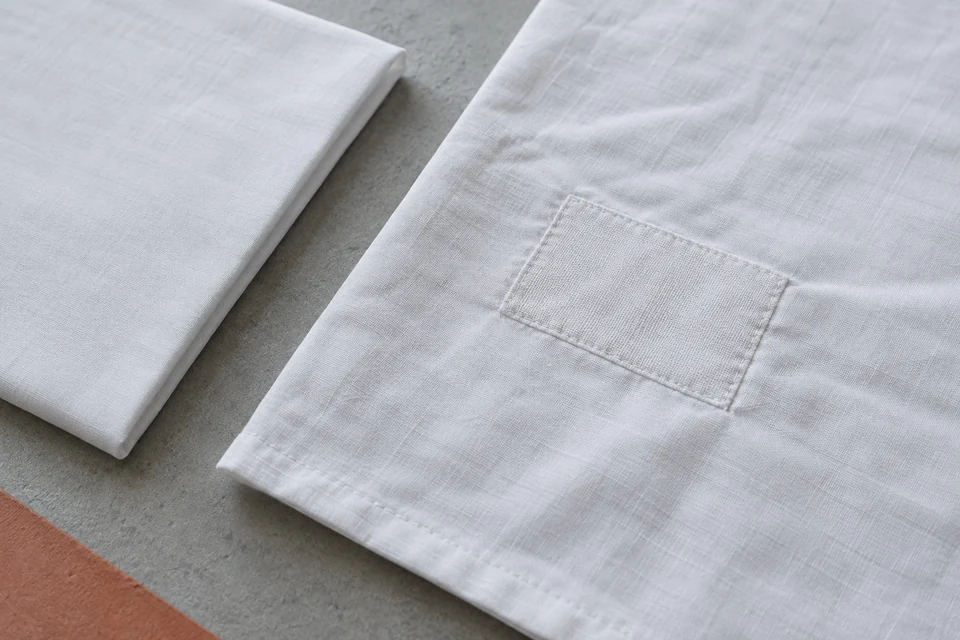
Use a sample that represents the proposed base fabric, patch material, location and finished appearance. Record whether the base item is new, previously used or prepared through an agreed care process. A patch on a pristine swatch may not represent the contrast against the actual service linen. Keep an unpatched comparison area where practical so reviewers can describe the visible difference without depending on memory or an unrelated product photograph.
Link the sample to the relevant linen specification and record any material information that is known. Do not infer fiber composition or performance from color similarity. The party responsible for the repair method should identify its own authorized procedure and any supporting evidence needed. Procurement's sample record should make the proposed combination traceable while leaving technical suitability decisions with the appropriate competent owner.
- Identify the base item and patch material reference.
- Record the sample's service and care history.
- Preserve an unpatched comparison where practical.
- Keep procedure authorization separate from visual preference.
Review the made-bed position
Location changes what the guest sees
Place the sample in the intended bedding arrangement and observe it from the normal guest-view positions. Record whether the proposed patch lies in an exposed area, a fold, a tuck or a contact zone relevant to the property's requirements. Do not hide the patch for the approval photograph and then apply that approval to unrestricted locations. If acceptance depends on placement, the permitted area must be described clearly enough for the linen team to recognize.
Use the room mock-up record to capture both a wider view and a close detail. Lighting, viewing distance and the way the bed is dressed should be consistent across alternatives. The purpose is to decide the property's presentation requirement, not to prove that a patch is invisible under every condition. Any claim of invisibility would need a scope that this practical observation does not establish.
- Inspect the intended arrangement rather than a flat swatch alone.
- Record exposed and concealed placement limits.
- Keep wide and close photographs together.
- Avoid unrestricted claims based on a hidden location.
Examine the relevant care state
Do not equate neatness with durability
Where an authorized care trial is part of the review, record the process and condition before comparing the appearance again. Observe visible edge lift, distortion, shade contrast and the way the surrounding fabric lies. These observations do not establish attachment strength or long-term durability. If those properties matter to the decision, request an appropriate technical assessment rather than treating a tidy post-care photograph as a substitute for performance evidence.
The property laundry trial approach can help organize the operational record, while the seam evidence guide addresses separate technical questions. Keep the sources and scopes distinct. If the visual result becomes unacceptable under the assessed conditions, record the observed limit and route the item for the property's authorized disposition instead of proposing an unverified repair adjustment during the appearance review.
- Record the care process used for the sample.
- Describe visible changes without inferring strength.
- Request separate technical evidence where required.
- Escalate unacceptable results through the property policy.
Issue a restricted decision
Prevent visual approval from expanding
The decision should identify the exact sample, permitted use, placement limitations and conditions assessed. It may accept a defined appearance, reject it or request more evidence; none of these outcomes should silently resolve unrelated hygiene or performance questions. Keep the decision accessible to the linen team and remove rejected examples from active reference use. Where repaired items are reassigned rather than returned to the original use, record that destination explicitly.
If a replacement or alternative linen specification is needed, share the property's requirements with FY through the hospitality project enquiry. Describe the observed issue and desired procurement decision without asking for unsupported promises about repair life. The useful outcome is a controlled reference and a clear disposition path. That prevents a single attractive sample from becoming accidental permission to return every patched item to guest-facing service.
- State the exact scope of visual acceptance.
- Record use and placement restrictions.
- Keep unresolved specialist questions open.
- Identify reassignment or replacement decisions separately.
Treat patch appearance approval as a restricted property decision, never as proof of restored strength, hygiene suitability or unrestricted return to service.