A removable textile cover can be considered when a hotel wants an upholstered headboard's visible finish to be maintained or refreshed separately from its furniture. It is not automatically a substitute for reupholstery, and it is not suitable for every headboard. The buying decision starts with the actual shape, fixing arrangement and access available in the room. A cover that fits an isolated display board may be impossible to remove behind a fitted bed. This guide addresses the non-structural textile cover and its procurement record; it does not approve a furniture alteration, promise stain protection or establish fire-performance compliance.
Survey the headboard, not the bed label
Separate furniture variants before requesting a pattern
Record the furniture reference, visible width and height, padded depth, corner shape and any curved or stepped profile. Note where the bed, wall, bedside fittings and mounting points restrict access. A queen-room label does not identify a headboard pattern. Two rooms using the same mattress size may have different furniture depths or rear clearances. Build photographs and measured views into the room textile mock-up record, including areas that will be hidden once the bed is returned to its normal position.
Identify whether the proposed cover encloses the whole board, covers only its face or uses an agreed removable attachment at the rear. The furniture owner should confirm that the arrangement is permitted and accessible; the textile supplier should not infer permission to drill, staple or change the mounting. Count each genuine furniture variant and the rooms assigned to it. Retain an unresolved status for boards that cannot be surveyed, rather than treating the easiest measured room as evidence that every unit will accept the same cover.
- Record the padded depth and corner geometry.
- Identify rear access and fixed obstructions.
- Obtain the furniture owner's approval for the proposed arrangement.
- Count covers by verified furniture variant.
Choose fabric with the cover in place
Judge direction, opacity and seam visibility together
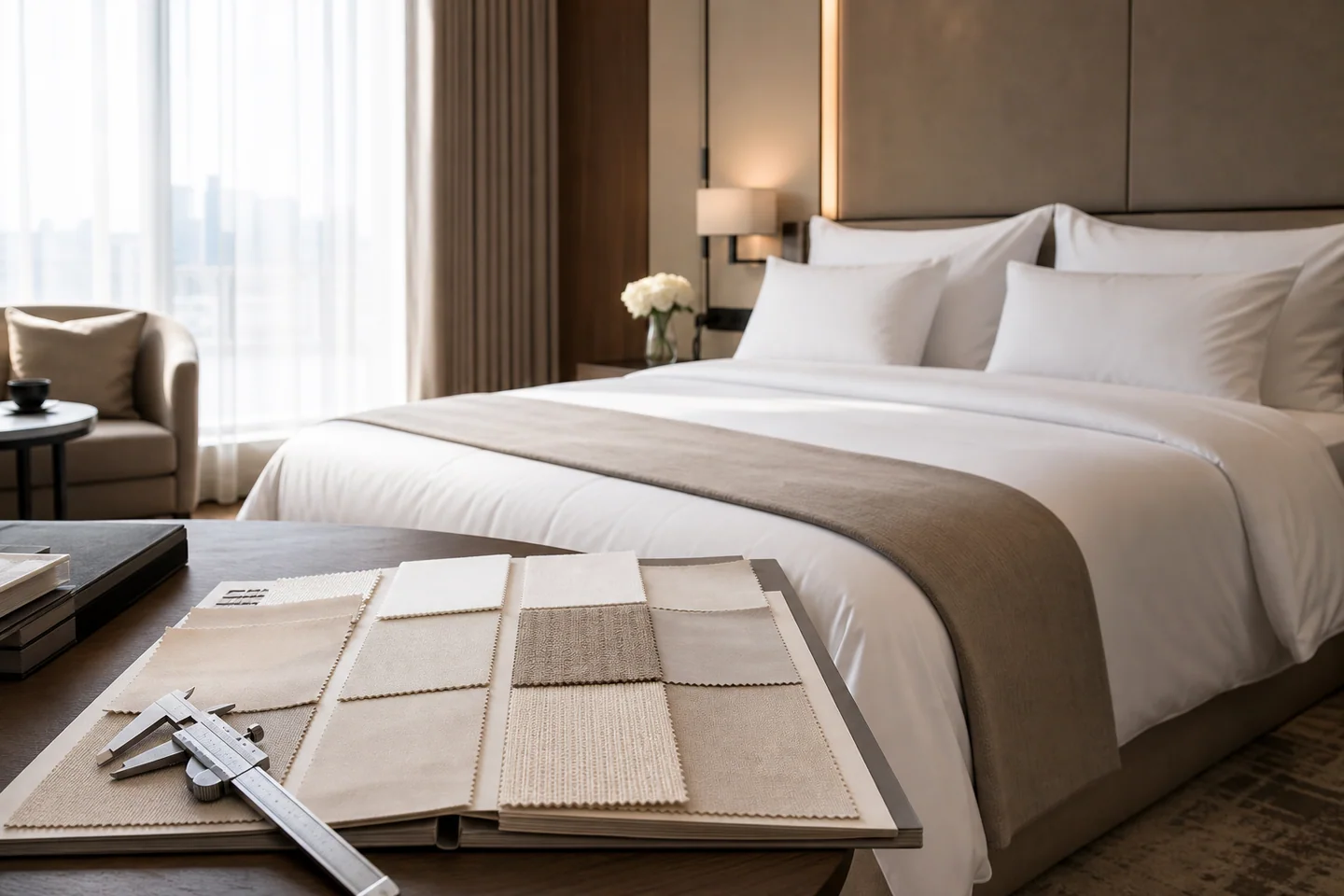
Review the offered textile on the actual upholstered surface, not only against a white sample card. Record which side faces the guest, the intended vertical direction, any pile or patterned orientation, and how the underlying finish affects appearance. The multi-light appearance review is relevant where bedside lamps and daylight show a different result. A material described as upholstery fabric still needs project-specific evidence for the proposed use; the label is not proof that a removable sewn cover will behave acceptably.
Ask for a panel map showing where seams, joins, darts or piping will appear. Keep conspicuous joins away from the intended focal area when that is an agreed design requirement, but do not assume every large board can be covered in one piece. The usable-width and cutting guide helps explain the material implications. Compare full-cover constructions before accepting a cheaper fabric: a small saving on material can require extra joins, pattern matching or separate furniture variants that change the finished program.
- Approve appearance over the actual upholstery.
- Mark the face and direction on the pattern.
- Review all proposed visible joins.
- Compare finished-cover proposals, not swatch prices alone.
Trial removal and refitting in the room
Make maintenance access part of the purchase decision
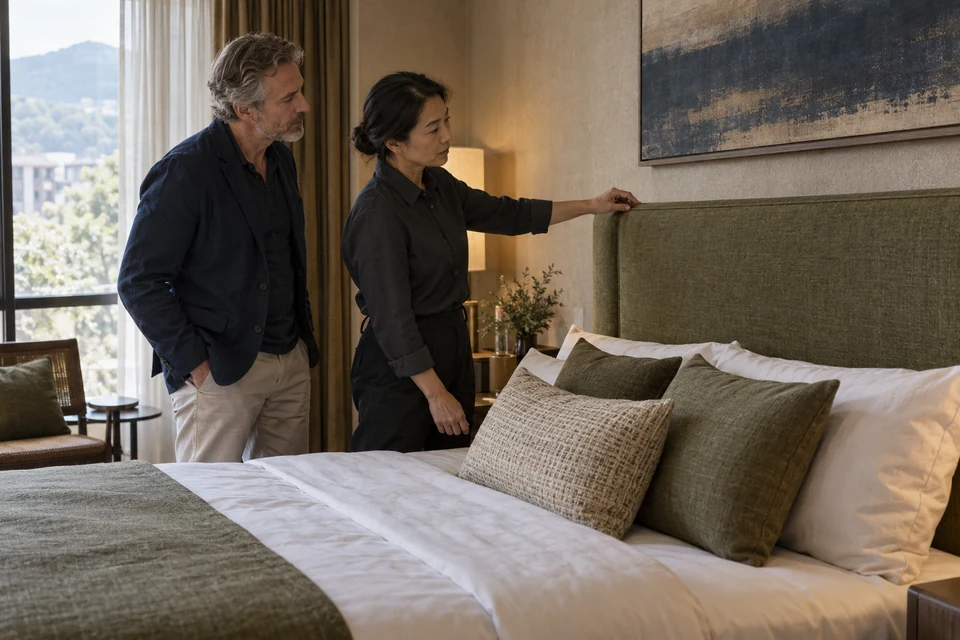
Have the responsible property team demonstrate the proposed removal and refitting method under normal room-access conditions. Observe whether the bed must be moved, whether more than one staff role is required, and whether closures can be reached without improvisation. Record the method and any furniture handling that the property permits. Do not introduce an unsafe movement or dismantling procedure merely to prove the sample can be removed. A supplier's demonstration in an open studio cannot replace this property-specific check.
After refitting, inspect the top corners, lower edge and visible face for unwanted tension, puckering, slipping or exposed base upholstery. Distinguish a fitting adjustment from a material or pattern change, and identify exactly what was revised. Include the closure, seam and allowance details in the technical pack. If housekeeping cannot repeat the accepted appearance using the intended method, reconsider the construction or whether a removable cover is a workable purchasing route for that furniture.
- Trial only the property-approved handling method.
- Observe access to closures and rear edges.
- Record refitted corner and face appearance.
- Reopen the pattern if acceptable fit depends on improvisation.
Keep care and performance evidence separate
A good fit does not complete the technical release
Agree the cleaning route before selecting a bulk material or setting cover dimensions. Where a wash trial is intended, use the identified completed cover, record its preparation and care conditions, and repeat fitting afterward. The hotel laundry trial guide supports the record, but the property should not copy its bed-linen process onto a headboard cover without review. Changes in dimension, surface, seam appearance or closure access can affect the whole maintenance proposal even when a flat sample still looks attractive.
Ask the qualified project owner what abrasion, color transfer, restricted-substance or fire-related evidence is relevant to the actual installation. Connect requests to the offered material, cover construction and destination through the certificate scope matrix. Do not represent a fabric document as certification of the hotel, the furniture or every finished cover. If an assembly-level assessment is needed, keep that approval outstanding until the appropriate specialist has reviewed the applicable evidence and complete proposed arrangement.
- Confirm the actual cleaning route before bulk sizing.
- Repeat fitting after the agreed care trial.
- Connect technical evidence to the offered version.
- Do not infer assembly compliance from a fabric certificate.
Cost the maintenance program, not just one cover
Include variant control, spares and installation ownership
Request quotations against the released furniture matrix, fabric reference, pattern, closures and quantity per variant. Identify sampling charges, pattern-development responsibility, spare quantities and any site fitting excluded from the textile offer. Small differences in corner shape can prevent interchangeable replacement stock, so count meaningful variants honestly. Discuss minimum quantities by material and pattern rather than assume a single order-wide minimum covers every room. Keep the material and pattern references with the accepted price basis.
Retain the fitted approval sample and distinguish it from saleable spare stock. The reorder specification record should identify the furniture revision as well as the textile. If the hotel replaces or modifies a headboard, review compatibility before ordering a repeat under the old room code. Buyers can submit a furniture-cover brief with measured views, permitted access, care route and variant counts for a scoped discussion; availability and the appropriate supply route must still be confirmed for the specific project.
- Quote each released furniture variant.
- Identify development, spare and fitting exclusions.
- Keep furniture and textile revision references together.
- Review a furniture change before reusing the old pattern.
Buy a removable headboard cover only after furniture identity, accessible maintenance, refitted appearance and the relevant evidence are aligned. A successful studio fit is not a release for unmeasured rooms.