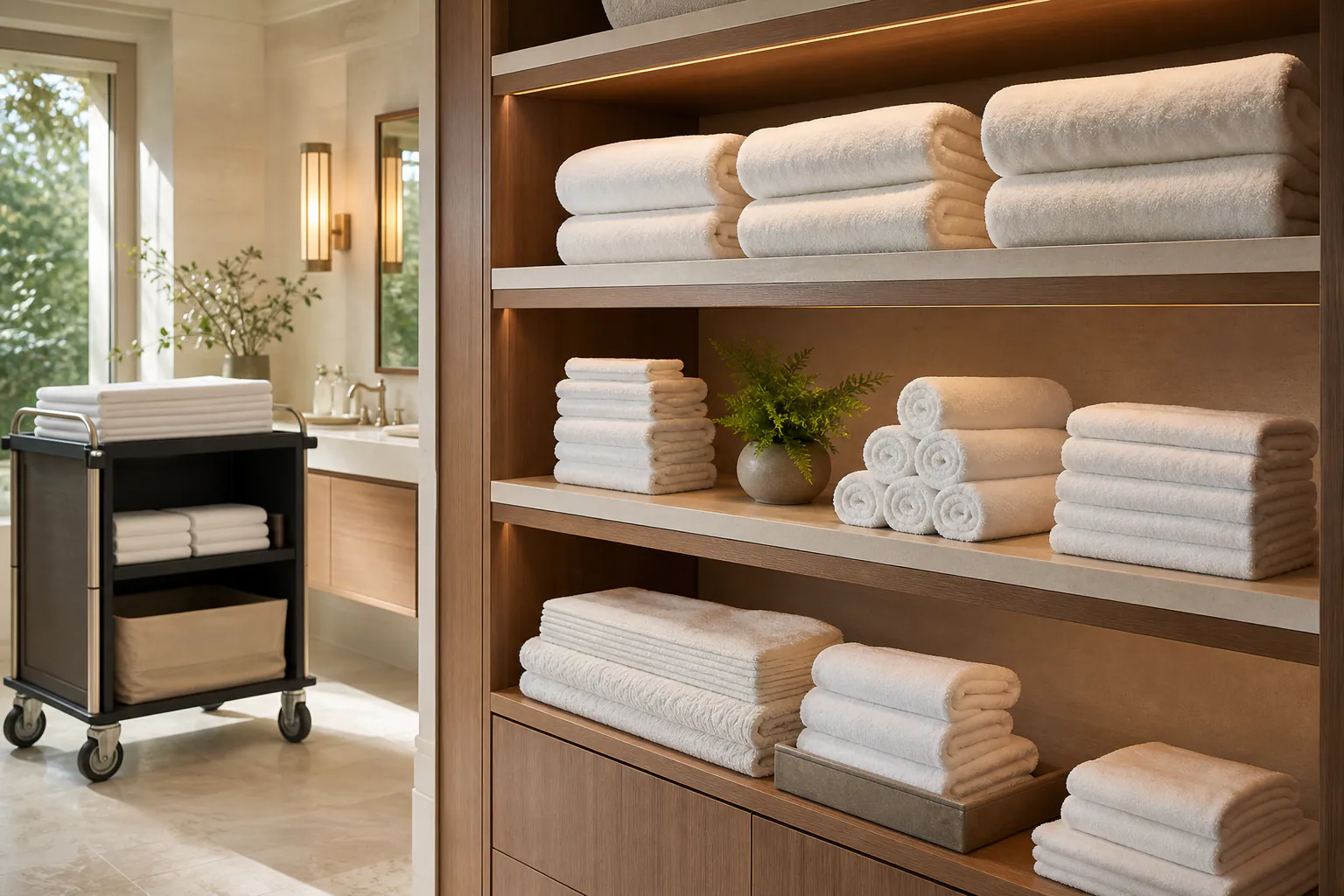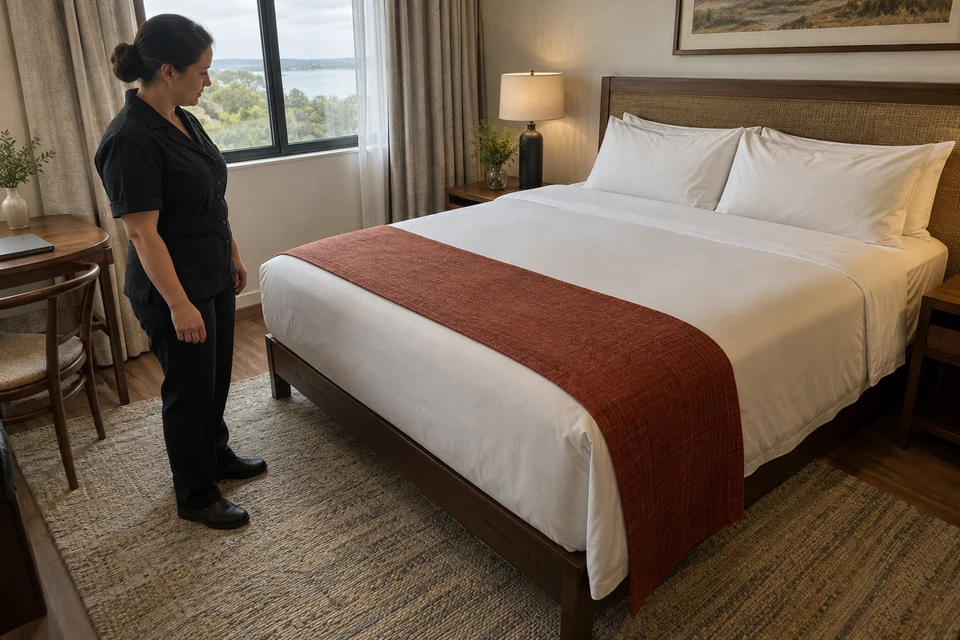
A seasonal room scheme is temporary, but it still needs the discipline of a room standard. The buying challenge is to know which decorative textiles go into each room, what happens when a piece is missing and how the property returns to its normal presentation afterward. This guide covers allocation and changeback for a seasonal textile kit. It does not replace the individual specification or testing of a runner, cushion or other component, and it does not assume that every room should receive the same kit.
Define a seasonal kit by room type
Room count and kit count are not always identical
Start with the room inventory and identify the groups that actually share a decorative scheme. Separate bed configurations, suite layouts and any rooms excluded from the campaign. For each group, list the seasonal components and their quantities per room. Keep the ordinary linen standard visible beside that list so the temporary additions do not accidentally replace required core items. A campaign photograph should represent a defined room type rather than become an instruction for every room in the property.
Use the mock-up room record to approve the complete seasonal composition. Retain individual product specifications separately; for example, the bed runner guide covers the runner's own fit and construction. The kit record should reference that approved version, not repeat or override it. Give the kit an identity that includes the room group and campaign revision, so a receiving team can distinguish a complete room allocation from a carton containing unrelated decorative stock.
- List quantities per room group.
- Reference, rather than replace, component approvals.
Set a rule for incomplete kits
Decide the acceptable room appearance before shortages occur
Ask the room-design owner to define what happens if one component is unavailable. Options might include holding the entire kit or using a specifically approved reduced arrangement; neither should be improvised by the delivery team. Show the acceptable alternatives in room photographs and mark which substitutions remain prohibited. A similar color from another campaign may not provide the intended composition, even when the item is technically usable.
Calculate the initial requirement from eligible rooms, approved quantities per room and a separately justified replacement allowance. Do not add an unexplained universal spare percentage. Use the property's own handling and replacement expectations to discuss reserve stock. The replacement-stock plan can hold that rationale. Keep reserve pieces identifiable by kit version so a damaged component is not replaced with an older motif whose dimensions or appearance differ. The objective is a controlled room standard, not simply the highest possible count of decorated rooms.
- Approve reduced arrangements explicitly.
- Keep reserve pieces tied to the kit revision.
Schedule installation around room operations
The campaign start is not one universal changeover moment
Agree which rooms can be changed while vacant, how occupied rooms are handled and who authorizes the installation sequence. Give housekeeping a room-level checklist that identifies the old arrangement, the new kit and the destination for any removed decorative pieces. A seasonal campaign should not cause core linen to disappear into temporary storage because the two categories were not separated. Coordinate the plan with the property team responsible for service and guest communication.
The floor-by-floor handover provides a useful structure for assigning quantities, but this campaign needs its own installation status. Track not only delivered but also installed, held and incomplete. If the rollout changes, reconcile unused kits before redirecting them to another floor. Avoid recording every delivery as an installed room. That distinction becomes important when the campaign is shortened, an event is cancelled or some rooms remain in the standard scheme throughout the period.
- Separate delivered from installed status.
- Assign a destination for removed decorative stock.
Prepare the return-to-standard plan before launch
Changeback should be an approved state, not a memory
Retain a current photograph and component list for the normal room presentation. Record where standard decorative items are stored during the campaign and how their condition will be checked before return. Set the end-of-campaign responsibilities alongside the installation responsibilities. If the normal scheme is also changing, treat that as a separate approved revision rather than assuming that the pre-campaign arrangement will automatically be restored.
Use the withdrawal and return-to-service record as an adjacent control, while keeping the seasonal kit identity distinct. At removal, classify components according to the property's agreed process: pending care, ready for retained storage, damaged or awaiting a disposition decision. Do not assume that a visually clean decorative item can be put straight back into saleable or service-ready stock. The technical and operating owners should define care and condition requirements for the actual components. Keep unresolved items out of the next campaign allocation.
- Keep an approved normal-room reference.
- Separate pending-care pieces from ready stock.
Buy and receive against the campaign map
Commercial quantities need an operational destination
Send suppliers a component quantity schedule derived from the room map, along with the intended campaign dates and approved alternatives. Ask which minima apply to each material, color and design, and compare them with the quantities the property can actually use. Where a minimum exceeds the campaign need, make the excess visible as a commercial decision rather than hiding it inside a larger kit allowance. Do not claim that several different designs automatically share one order minimum.
The SKU quantity plan supports that calculation. At receipt, reconcile component quantities to planned kits and record any incomplete allocations before installation begins. Send FY Bedding the eligible room groups, component references, campaign timing and changeback requirements to discuss a feasible sampling and supply plan. The finished procurement package should make it possible for someone who did not design the campaign to assemble the correct room kit, recognize an exception and restore the standard room without guessing.
- Expose quantities that exceed actual campaign need.
- Reconcile components into complete kits before installation.
Approve three states for every room group: normal, seasonal and any permitted incomplete alternative. Track installation and changeback separately from delivery, with component versions intact.