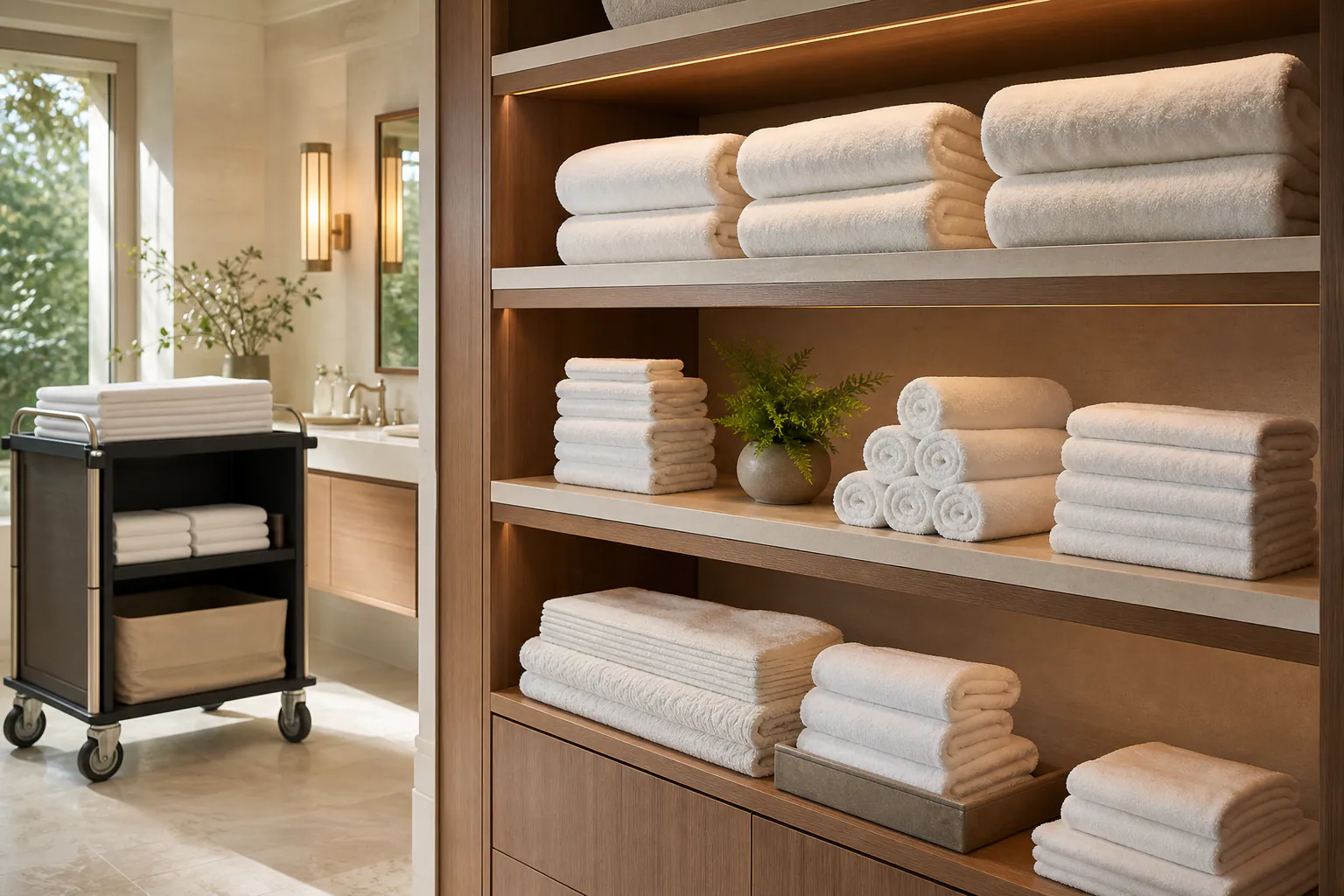
A hotel textile bid can become difficult to compare when suppliers combine a base specification with attractive upgrades, cheaper substitutions or optional packaging changes in the same headline price. The buyer may no longer know which offer meets the issued requirement and which depends on accepting a different product. A clearly separated alternate can be useful, but it should not quietly replace the base offer. This guide addresses that comparison structure and the operational decisions needed before selection. It is not a tender-rule interpretation, legal advice or authority to accept a departure from a property's purchasing policy.
Preserve a clean base offer
Evaluate the issued requirement before optional changes
Identify the current tender or request revision and the exact product schedule used for the base offer. Ask the supplier to state compliance and list any unresolved requirements or deviations in a visible record. The addendum reconciliation guide deals with changes to the issued request; this comparison keeps supplier-proposed alternates separate from that revised base. A later addendum should not be confused with permission to replace the specification unilaterally.
Require the base quotation to show its quantities, included components, pack configuration and relevant documentary scope. If a supplier cannot offer the base, record that fact instead of relabeling its nearest product as compliant. The purchasing owner should decide how such bids are handled under the property's policy. This article supplies no rule requiring acceptance or rejection; it helps keep the facts available for that authorized decision.
- Identify the issued request and revision.
- Keep base compliance and deviations visible.
- Do not relabel a nearest alternative as the base specification.
Give every alternate a specific change map
Name what changes and what remains the same
Assign a reference to each proposed alternate and show the exact changed fields: material, construction, dimension, closure, packing, quantities or delivery assumptions. Link those differences to the approved technical pack and product schedule. An alternate described as premium cotton or hotel quality is not specific enough to evaluate. Ask the supplier to confirm the construction and evidence offered, without inventing a performance improvement from a more expensive material name.
Identify the decisions the change could affect: the made-bed appearance, laundry route, staff handling, stock compatibility or retail-style guest presentation. Do not assume every unchanged field remains valid when the changed material alters another interface. The supplier should state exclusions and open technical questions. Several changes bundled into one alternate may need to be assessed together; splitting its price into separate additions does not necessarily prove each change can be accepted independently.
- Describe changed fields in measurable terms.
- Identify affected operations and interfaces.
- Keep bundled changes from implying independent options.
Make the price basis visible
An alternate can be a replacement offer or an increment
Ask whether the alternate is quoted as a complete replacement price, an addition to the base, a deduction or a separate scope. Keep the quantity and purchased unit attached to that figure. The quotation-comparison guide helps separate cost scope from the headline. Do not add an increment to a base offer whose exclusions or quantities differ from the alternate's assumptions; reconcile them first so the resulting amount has a clear meaning.
Review minimum quantities, sample development, packaging and delivery assumptions for the alternate independently where they change. The MOQ guide explains why a proposed material can create a different constraint even when the property's total finished-unit quantity stays the same. Treat a suggested price advantage as conditional until the supplier confirms the entire corresponding scope. No generic savings percentage should be invented to make an alternate appear more attractive.
- Identify replacement prices versus additions or deductions.
- Keep purchased units and quantities attached to prices.
- Reconcile changed minimums and exclusions before comparison.
Separate sample review and evidence review
A better-looking alternate is not automatically qualified
Build a sample comparison around the changed fields and their operational effects. Use the actual relevant room arrangement or staff routine instead of an unrelated showroom demonstration. The room mock-up record can identify which product version was seen and under what conditions. Compare alternatives fairly; if one has been washed and another is unprocessed, disclose that difference rather than score them as equivalent samples.
Review the documentary implications alongside appearance. A fabric change may require different evidence or a fresh assessment of an existing report's scope. The report-scope guide helps keep the offered version connected to the evidence. No sample score should average away an unresolved mandatory requirement. Put the alternate on an explicit hold where necessary while preserving a valid base offer separately, if one exists.
- Compare the changed fields in a relevant operational trial.
- Disclose differences in sample condition.
- Do not trade unresolved evidence for an appearance score.
Show the property-wide effects
One item can change stocking or service assumptions
Check whether adopting the alternate affects coordinated products, spare stock, laundry identification or replacement orders. If an alternate pillow or cover requires a different companion item, include that consequence in the evaluation rather than buying only the more appealing sample. The property size-standardization guide supplies related compatibility questions. Keep the operational team involved when a nominally small specification change alters how stock is used across room types.
Identify any transition between current and proposed products and who owns it. Record which rooms or phases would receive the alternate and what remains on the base specification. The stock-transition guide can help preserve replacement compatibility, but the property should not invent a shortage or discontinuation merely to justify an upgrade. The decision may be to defer an attractive alternate until a coherent future program rather than introduce a partial change now.
- Check companion products and spare-stock compatibility.
- Record affected rooms or project phases.
- Keep a deferred option distinct from an accepted substitution.
Release the selected offer, not the discussion
Turn the authorized decision into one controlled specification
Have the authorized purchasing and technical owners record whether the base, a defined alternate or a combination has been selected. Confirm that the combination is actually offered and technically compatible; approval of two separate samples does not create a supplier commitment to combine them. Update the product schedule, sample references, price basis and required evidence. Use the order change-freeze guide to prevent an old base description from remaining on an order for an accepted alternate.
Retain the unsuccessful or deferred alternates as reference, but distinguish them clearly from the released requirements. Buyers can share a base textile brief with separately labeled options for a scoped discussion. The useful outcome is not the most elaborate bid presentation; it is an accepted offer whose product, quantity, commercial assumptions and evidence can be traced without asking production or receiving staff to interpret the earlier negotiation.
- Record the authorized base or alternate selection.
- Confirm any combined option with the supplier.
- Issue one consistent released schedule and price basis.
Compare optional alternates without losing the base requirement. Freeze the chosen change map, commercial scope, operational consequences and evidence in one authorized released offer before purchasing.