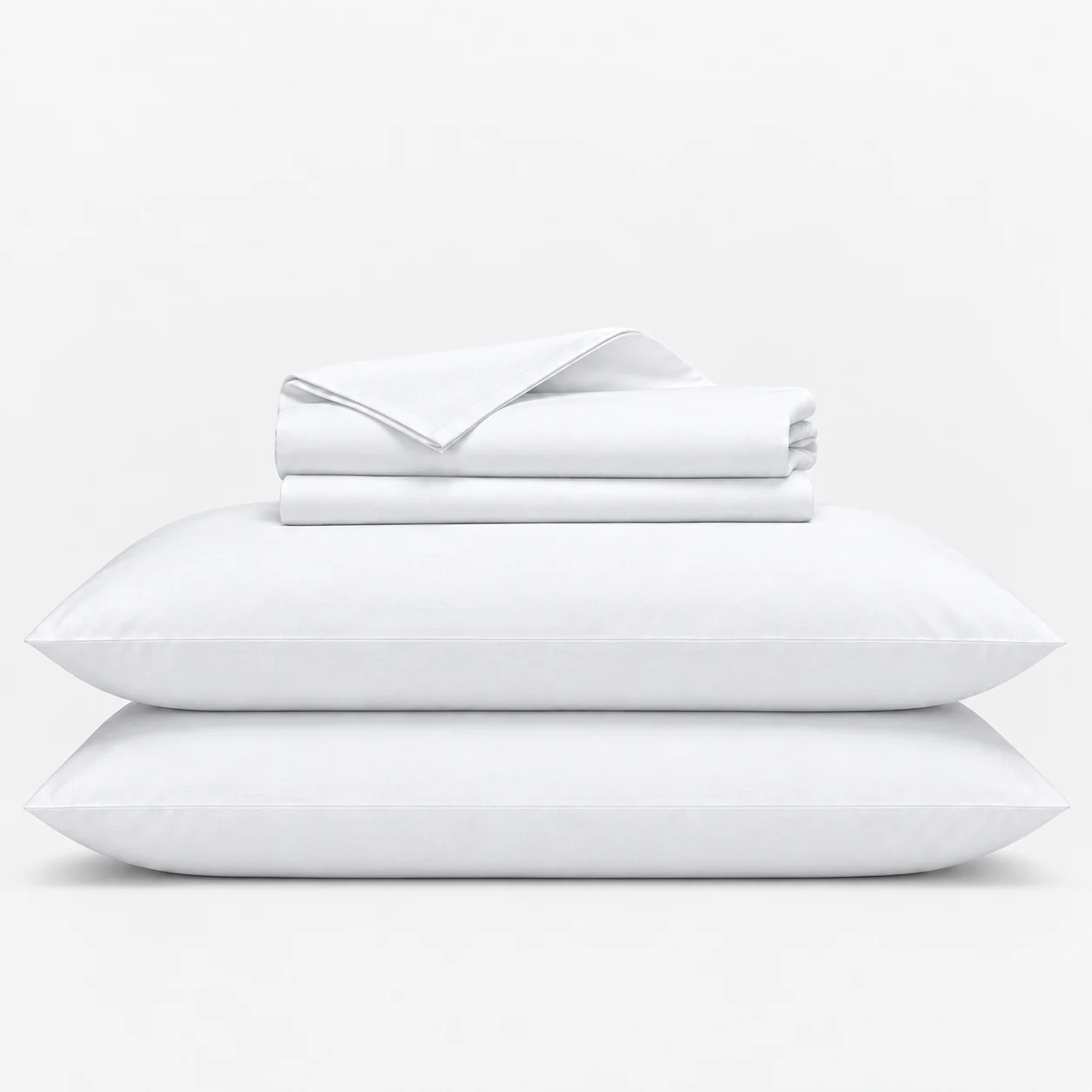
Percale and sateen describe weave structures, not a complete quality grade. Either can serve a hotel program when fiber, yarn, density, weight, finish, construction and laundering are matched to the property. Procurement should compare production-representative options after care and on the actual bed rather than choose from thread count or hand alone.
Understand what the weave changes
Percale uses a balanced plain-weave structure that often produces a matte, crisp and breathable character. Sateen uses longer face floats that can create a smoother hand, softer drape and restrained sheen. Those tendencies are not guarantees: yarn size, density, finishing and fiber quality can make two fabrics within one weave category behave very differently.
Request full construction data and physical samples through the fabric development overview. Do not use thread count as the sole comparator. Confirm how the figure is calculated and review finished weight, yarn construction, usable width, shrinkage, air permeability or other program-specific properties where they inform the actual service requirement.
Match hand and appearance to the property
Consider room temperature, humidity, guest expectation, brand presentation and the layers used above and below the sheet. A crisp percale surface can support a cool, tailored presentation; sateen can support a smoother, more fluid look. White color does not remove the need to approve shade, opacity and appearance under room lighting.
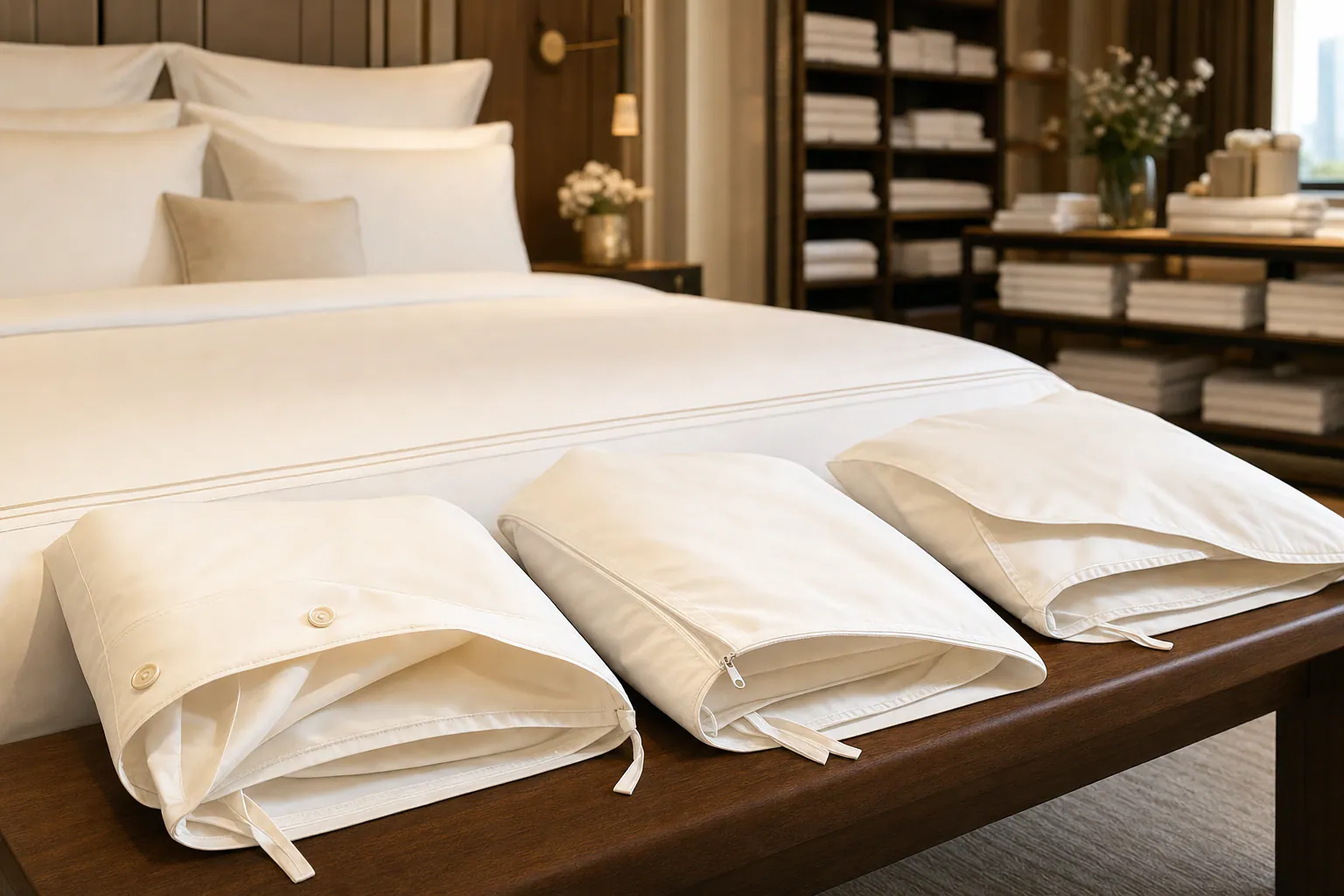
Make up complete beds with the nominated mattress, protector, topper and duvet. Use the hotel bedding specification sheet to record each assigned item and finished size. Ask housekeeping to assess corner fit, tucking effort, fold definition and visible wrinkling after the actual finishing routine.
Validate the commercial laundry route
Trial the exact wash chemistry, temperature, extraction, drying and finishing route planned by the property or laundry partner. Measure dimensional change, skew, shade, pilling, surface abrasion, seam behavior, hand and press result at agreed intervals. A favorable first wash does not establish how the fabric will present after repeated service cycles.
Align trials with the hotel linen care guide. Record cycle conditions and load identity so results can be repeated. If the preferred finish needs special ironing, lower temperatures or longer drying, include labor, energy and throughput effects in the decision rather than treating care as a separate operational issue.
Compare durability through relevant failure modes
Inspect tensile and tear behavior, seam strength, pilling, abrasion, snagging and chemical damage according to product risk. Longer sateen floats may require attention to surface snagging and abrasion, while crisp percale constructions still need adequate yarn and seam performance. Never infer finished-sheet life from weave name alone.
Build the evaluation through the bedding product testing plan and match each report to the approved fabric and finish. Combine laboratory information with cared-for room trials and production inspection. Service life depends on textile construction, processing, sewing, laundry discipline and removal rules working together.
Approve a complete, reorderable linen program
Select by item and property rather than forcing one weave across every need. Pillowcases, sheets and duvet covers may have different presentation, handling and durability priorities. Freeze fiber, construction, finished weight, color standard, finish, dimensions, workmanship, care instruction and approved physical reference for each released SKU.
Preserve the decision with the reorder control process. On later lots, compare shade, weight, hand, shrinkage and cared-for appearance against the retained standard. If the mill, yarn, finish or laundry route changes, treat it as a reviewed change rather than assuming the weave name protects equivalence.
Choose percale or sateen from production-representative, cared-for samples on the actual hotel bed. Freeze the complete fabric and operating specification, not only the weave name.