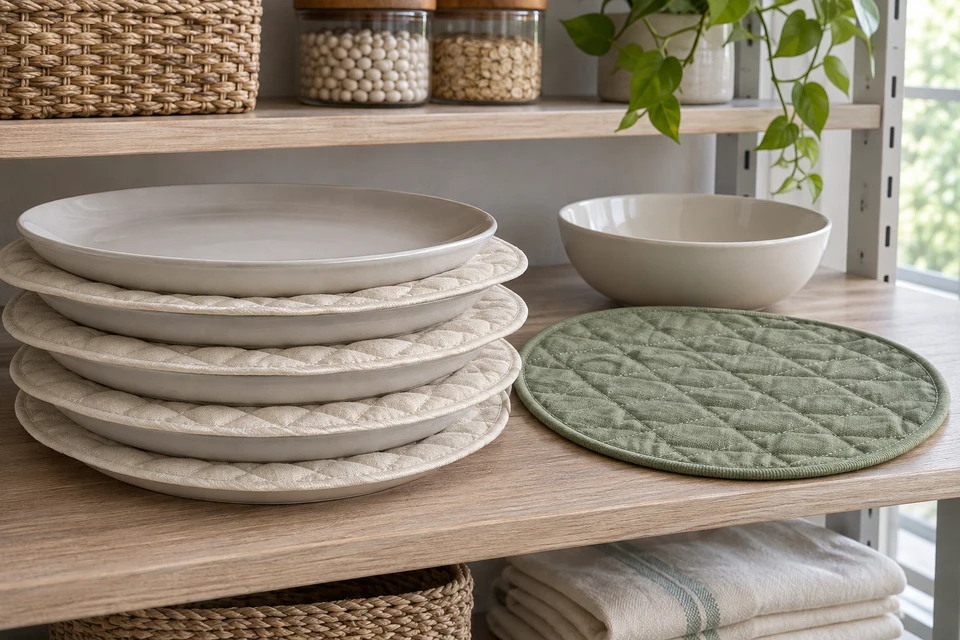
Plate separators are often specified as circles of a chosen diameter, but diameter alone does not explain how they sit between real pieces of tableware. The contact may occur at a raised foot, a broad rim or a narrow ring beneath a bowl. For a buyer assembling a home-storage accessory range, the useful sample is therefore a textile separator inside an actual stack. This guide concerns dry household storage and routine careful handling. It does not establish shipping protection, impact resistance, food-contact suitability or a guarantee against damage to a particular ceramic finish.
Define the tableware family first
Use profiles as well as diameters
Select representative pieces from the intended tableware range, including a flat plate and any deeper item the separator is meant to accommodate. Record the outer diameter, overall height and relevant contact rings on the underside. Photograph a side profile so the supplier can understand the space between stacked pieces. A round textile that covers the centre of a plate may still leave a raised contact point exposed near the edge.
Decide whether one separator size is intended for every item or whether the range needs several sizes. Label the proposed pairings clearly in the sample request. Do not describe a size as universal simply because it extends beyond the largest plate in a photograph. Excess textile can fold into a stack or become awkward to handle. The target is an appropriate separation arrangement for the defined tableware, not the largest possible fabric circle.
Locate the actual contact points
Examine the stack without forcing it flat
Place one separator between two pieces and lower the upper piece carefully into its natural resting position. Observe where the textile is compressed and where it remains unsupported. Repeat with the relevant tableware combinations, since a bowl-on-plate arrangement may behave differently from two identical plates. Record whether the bound edge sits beneath a contact ring or outside it. That location can matter more than a small change in the overall diameter.
Avoid pushing the upper piece down to make the sample look stable. If the separator bunches, folds or shifts during normal placement, document the behaviour and review the pattern or construction. A shaped edge, different thickness or revised diameter may be worth sampling, but each change needs another stack trial. Keep observations tied to the actual sample rather than treating a soft appearance as evidence of protective performance.
Compare quilting and edge treatment in use
Inspect the raised areas deliberately
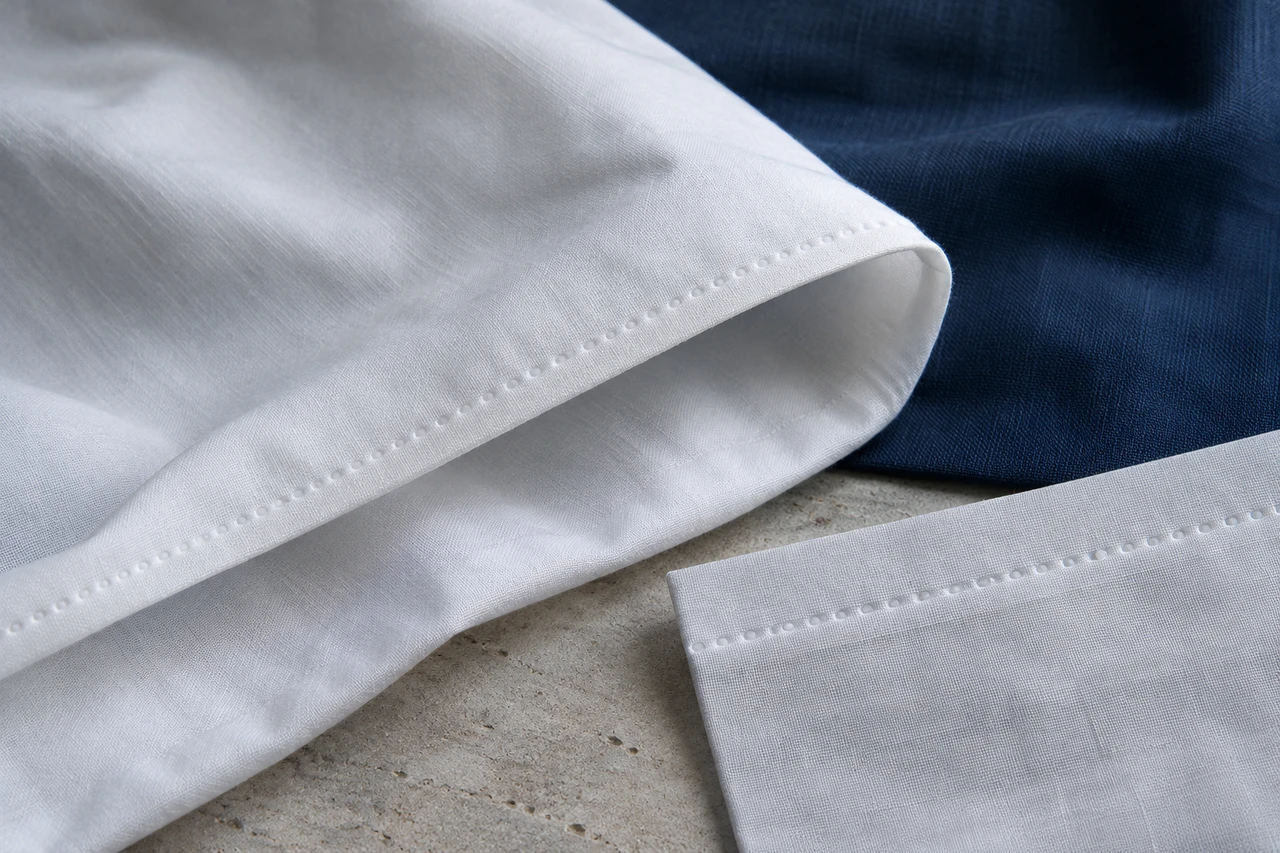
Request finished samples with the proposed quilting pattern and binding. An unquilted fabric square cannot represent the contact surface of a finished disc. Examine whether a seam, quilted ridge or joined binding section creates a local high point where the tableware rests. Ask the supplier to identify the construction layers and keep them in the approved specification. Do not infer filling type or thickness from an exterior photograph.
Review the textile surfaces after the agreed handling trial for visible marks, loose fibres or changes in the bound edge. Any claims about compatibility with a particular finish require suitable supporting evaluation. If the buyer offers the separator for several tableware materials, decide which combinations need separate evidence. A successful trial with one sample stack should not be described as proof that the accessory prevents scratches on every ceramic, glass or coated surface.
Build the full proposed storage stack
Count height as a range decision
Assemble the number of pieces expected in the customer's storage arrangement, using one separator at each specified position. Measure the complete stack rather than multiplying a loose separator's thickness by the quantity. Observe whether the upper pieces remain reasonably aligned during careful placement and removal. If the stack requires repeated straightening, review both the textile geometry and the proposed user instructions before approving the retail presentation.
Check the stack against the intended shelf space or storage box, while keeping clear that the separator is not automatically a transport restraint. Decide whether the retail pack should show a maximum illustrated arrangement or simply demonstrate the pairing method. Avoid converting an attractive tall stack into an unsupported capacity claim. The buying record should state which tableware samples, quantities and storage conditions were used for the review.
Make the pack understandable without unpacking everything
Match counts to the stated arrangement
Define whether the selling unit contains equal-size discs, a graduated assortment or a combination for plates and bowls. State the count of each size and the tableware examples used in the fit review. Where the pack illustrates a stack, confirm that the included quantity actually supports that arrangement. A decorative photograph with more separators than the selling unit contains can create a misleading expectation even when each individual disc is well made.
Discuss the proposed materials, cleaning guidance and relevant evidence requirements with FY Bedding before finalising the accessory brief. Supply photographs of the contact profiles and the results of the physical stack trial. Request project-specific confirmation of minimum quantities, sampling steps and delivery planning. Approve the finished disc, the full storage arrangement and the pack description together. Keep any transport or damage-prevention claims outside the sale copy unless the complete intended use has been separately evaluated and supported.
Check the real underside contact rings and the complete stack; a loose disc measurement does not demonstrate fit or establish protection claims.