A Roman blind is judged both as a lowered textile panel and as a raised arrangement of folds. Buying its fabric as though it were an ordinary curtain can leave the maker without essential information about construction, alignment or the complete operating system. An importer or hospitality buyer should decide what is being purchased: cloth, a sewn textile panel, or a complete specialist-supplied blind. This article covers the textile procurement brief and responsibility boundaries. It is not a measuring, fitting or cord-system installation manual, and approval of a fabric sample does not establish that a finished blind is safe or compliant in its destination.
Separate three supply scopes
Cloth, sewn panel and complete blind are different offers
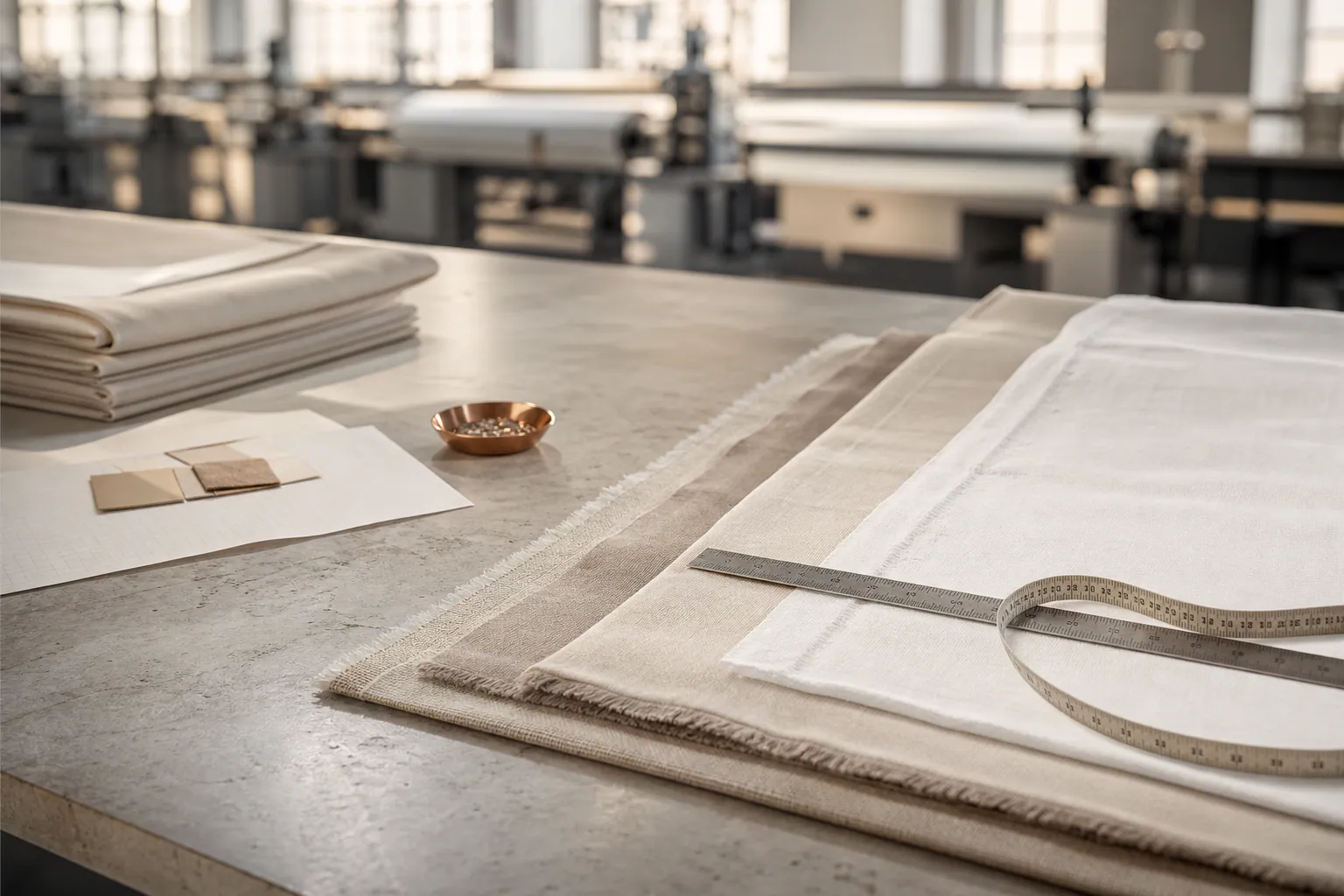
For a cloth-only offer, identify the fabric reference, usable width, direction, pattern repeat, quantity basis and whether lining is also supplied. For a sewn-panel offer, add the finished panel dimensions and the specialist maker's released construction drawing. For a complete blind, name who owns the operating system, hardware, site measurement, installation and required product documentation. Use the technical-pack checklist to expose omissions before asking several parties to quote what appears to be the same item.
A quotation that includes textile sewing but excludes the headrail is not directly comparable with an installed complete-blind price. Nor should an overseas textile supplier select substitute components simply because they fit the fabric. Record the nominated specialist and the interfaces that require its written acceptance. Keep the textile supplier's role distinct from the system supplier's scope. This prevents a successful fabric inspection from being presented as approval of parts or installation conditions that the textile team did not evaluate.
- State the purchased unit and included components.
- Name the specialist responsible for the complete system.
- Separate site measurement and installation exclusions.
- Require acceptance of every textile-to-system interface.
Request a two-view sample
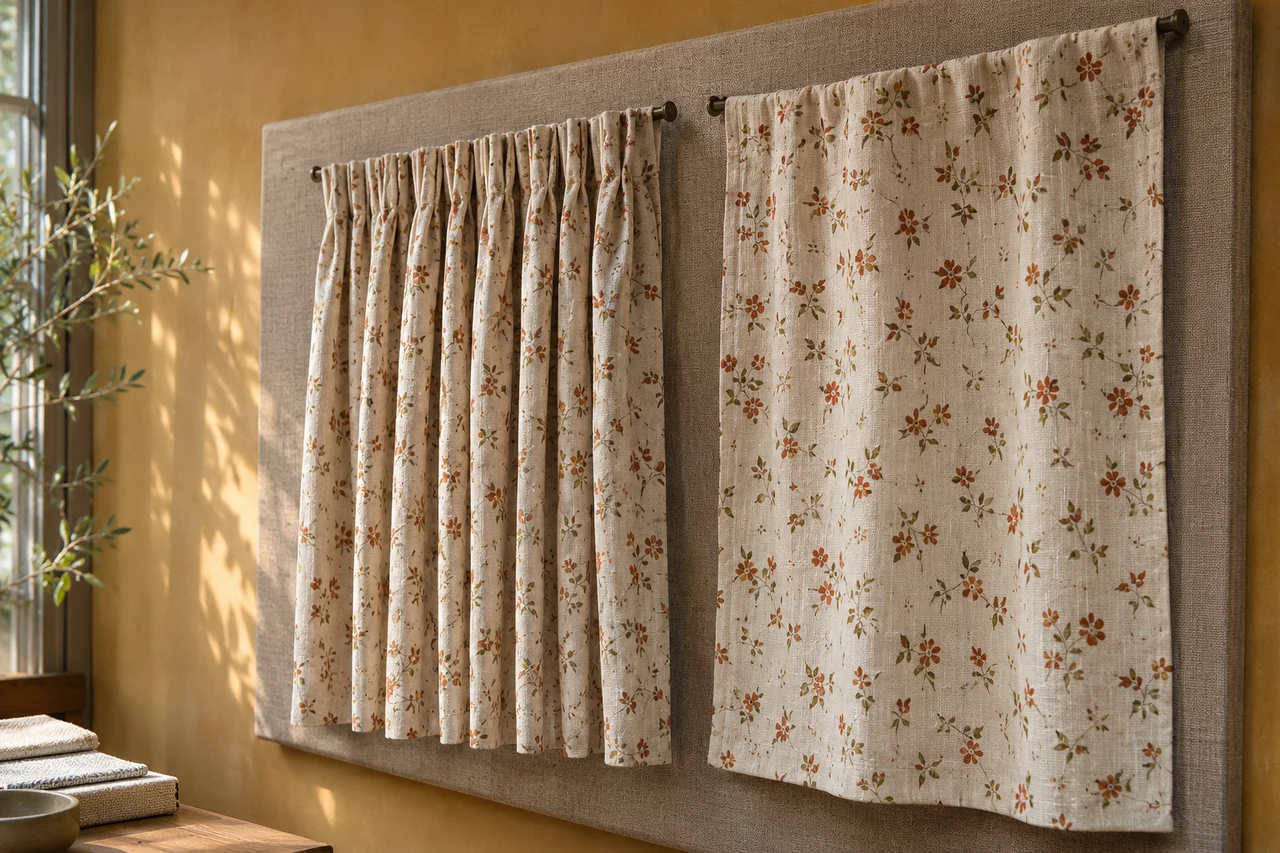
Evaluate the lowered face and raised folds
Identify the intended fold style before sampling. Different constructions can expose seams, make a fabric fold more softly, or show a contrasting bottom treatment in the raised position. Ask the specialist maker for a representative sample using the intended face fabric and lining. The room mock-up record can preserve lowered and raised views, the sample identity and the window context. A narrow hanging swatch does not show the complete fold arrangement or its effect on the selected design.
Manufacturer guidance reinforces why this must be construction-specific: BQ Design's Roman-blind ordering notes, linked in the method references below, distinguish styles with different seams and lining arrangements and ask for explicit alignment information. Treat that as an example of the questions a maker needs, not a standard pattern to copy. Obtain the instructions and limitations for the actual proposed system. Do not transfer another manufacturer's size limits, warranty conditions or component options into the project's specification.
- Request lowered and raised views of the same sample.
- Show the offered lining and decorative treatments.
- Identify construction-specific seams and folds.
- Use the actual specialist's instructions, not a borrowed system specification.
Map the room's pattern alignment
Treat neighboring panels as a coordinated group
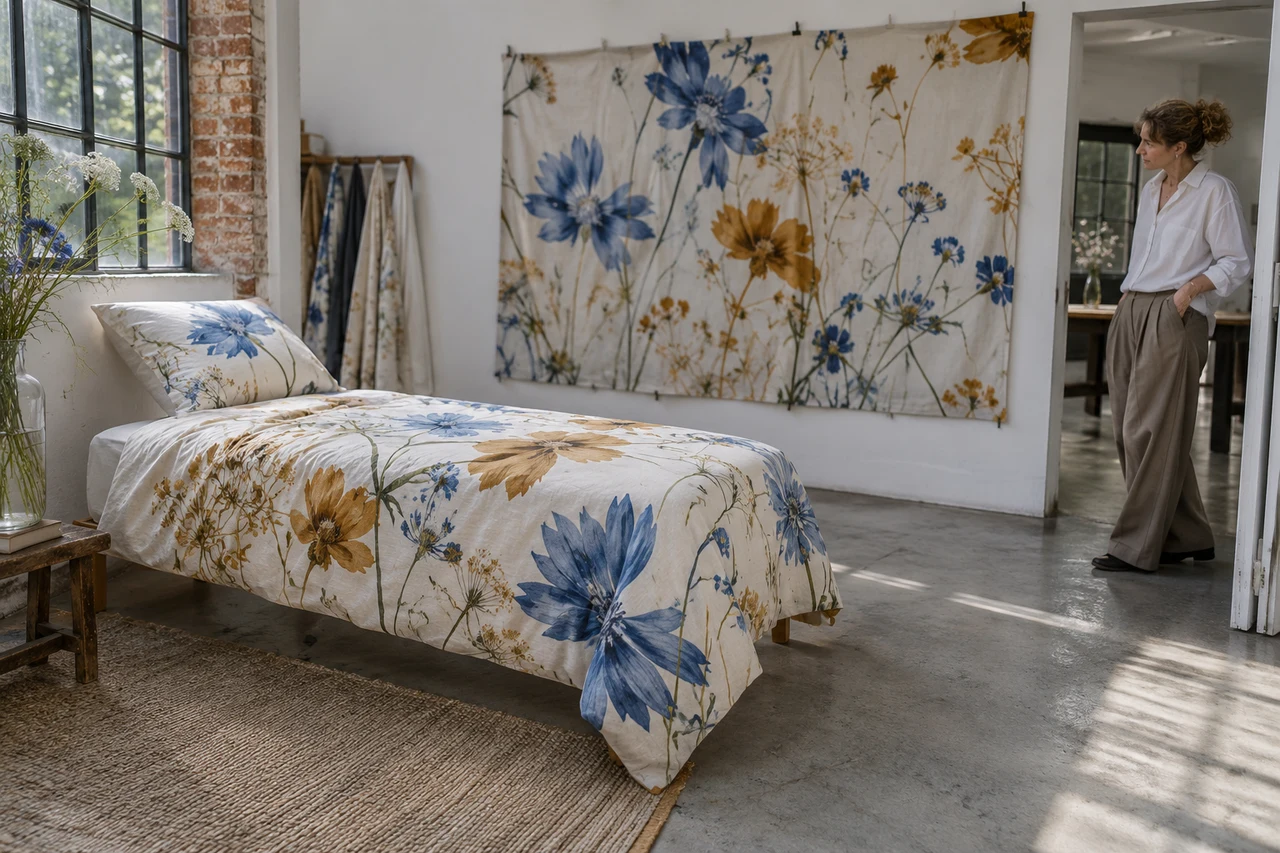
List each window by a stable room and opening reference. Record which blinds sit next to one another and whether the design is intended to continue or align across them. Distinguish matching the top motif from matching folds or maintaining a design across adjoining panels. The pattern-placement guide provides a useful record structure, but the blind maker must confirm the achievable arrangement for its construction and the actual fabric repeat.
Ask the textile and making suppliers to show the quantity effect of the approved alignment plan. Additional fabric allocated for matching is not the same as unexplained production waste. Where a join is proposed on a wide panel, review its face appearance in both operating positions before acceptance. Use the usable-width guide to separate nominal roll width from the cloth available to make the panel. Keep any alternative with a different join or pattern arrangement visibly separate in the quote comparison.
- Group the openings that must visually coordinate.
- Specify the required type of pattern alignment.
- Review joins in lowered and raised views.
- Keep matching allowance separate from unidentified waste.
Release measurement responsibility explicitly
Avoid an unexplained deduction from site dimensions
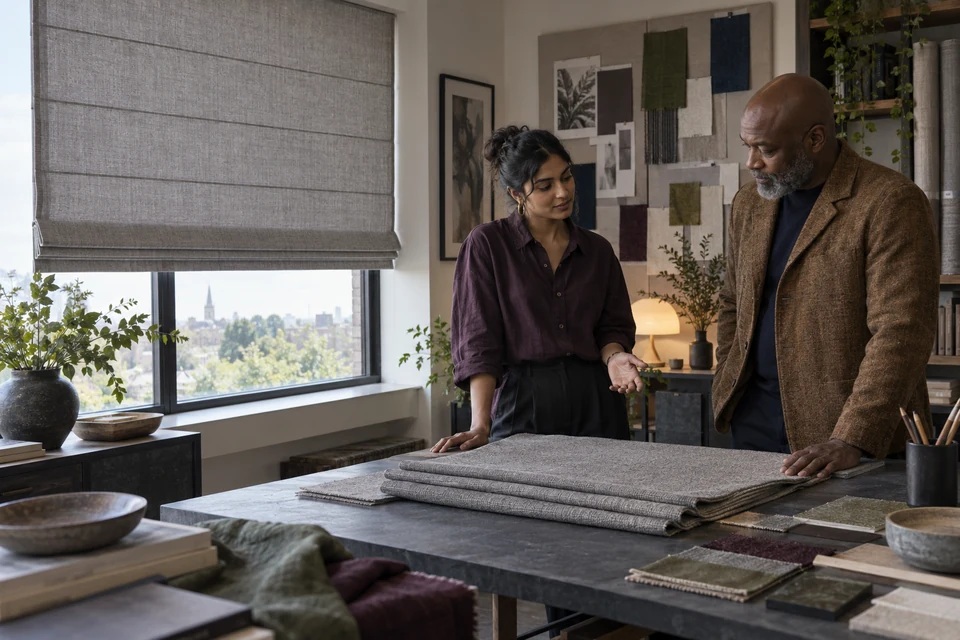
The site survey and specialist maker should establish the finished dimensions required for the approved mounting arrangement. The buying record must distinguish an opening measurement from a finished textile dimension and state who calculates any allowances. Do not let two suppliers independently apply deductions to the same number. Attach the authorized specialist drawing and version to the specification toolkit. If the survey has not been completed, identify the quotation as provisional rather than disguising assumed measurements as released production dimensions.
Review lining color, visible reverse appearance, attachment details and cleaning instructions within that released drawing. The responsible specialist should assess any applicable operating-system safety and destination requirements for the complete product. This article supplies no cord-length rules or universal installation clearance. Changes in lining, textile mass, panel construction or decorative trims should return to that specialist for compatibility review. A textile substitution approved for color alone should not automatically proceed into a mechanism that was assessed with a different panel.
- Identify opening measurements versus finished-panel dimensions.
- Give allowance calculations one responsible owner.
- Keep provisional surveys out of production release.
- Return material and construction substitutions to the system specialist.
Keep evidence with each window
Order records must survive making, packing and installation
For a multi-room project, issue a window schedule connecting panel identity, fabric lot, lining, orientation and maker drawing. Clarify whether the purchased quantity is panels, complete blinds, pairs or fabric meters. Packing labels should allow the receiving team to match the textile to the right opening without exposing the product to repeated unpacking. The SKU and master-data guide offers a related approach to maintaining identities, although blind schedules also need their site references.
Approve a repeat only after confirming that the window, system and textile references remain valid. Retain the actual specialist's documentation and any project-specific evidence separately from the fabric's general data sheet. Buyers can share a window-textile sourcing brief describing the purchased scope, room schedule, visual requirement and nominated maker. FY Bedding's involvement and the availability of an appropriate supply route should be confirmed from that brief; an editorial guide is not a claim that a particular complete-blind system is supplied or certified.
- Connect every panel to a released window reference.
- Make the ordered unit unambiguous.
- Retain system and textile evidence separately.
- Confirm the supply route rather than infer availability from editorial content.
Approve Roman-blind textiles as part of a named finished-panel and specialist-system brief. Preserve both operating views, the alignment plan, measurement ownership and the limits of the textile supplier's responsibility.
Method references: BQ Design: Roman blind ordering notes.