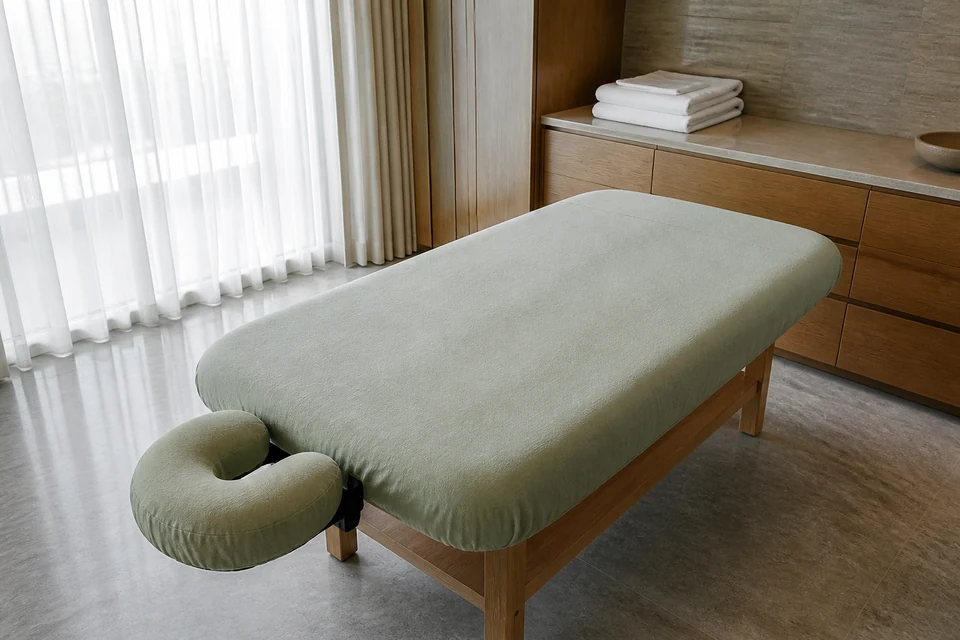
A nominal treatment-table size is rarely enough to specify a reliable spa cover. Rounded corners, padding depth, moving sections, face-cradle hardware and therapist access can make two apparently similar couches need different patterns. A cover that looks neat in a product photograph may pull away during adjustment or obstruct a feature the therapist needs. This guide focuses on fitted couch and face-cradle textiles as equipment-specific project items. It does not establish a hygiene protocol, medical barrier claim or universal equipment compatibility. Those requirements must be defined with the spa operator and relevant specialists before the textile design is released.
Survey each equipment family
Model identity and geometry are more useful than a size label
List the treatment-table models, padding shapes, adjustable sections and accessories used across the property. Measure the surfaces that the cover must fit and record the manufacturer's information where available. Photograph the table from above, below and at the corners without a cover hiding the geometry. The spa linen procurement guide helps plan the wider assortment; this record determines whether the fitted items can genuinely share one pattern.
Identify the operating positions in which the cover will be used. A table that articulates may need a different approach from a fixed couch, and a separate face cradle should not be treated as an ordinary rectangular cushion. Record any controls, hinges, attachments or ventilation areas that must remain accessible. The specification toolkit can hold the dimensional drawing, but equipment-specific fit should be confirmed on the actual model before the buyer consolidates quantities across locations.
- List equipment models and accessories.
- Measure padding depth and corner shape.
- Record all intended operating positions.
- Keep controls and attachments accessible.
Define the textile pieces and their boundaries
Do not combine fit, draping and hygiene into one vague requirement
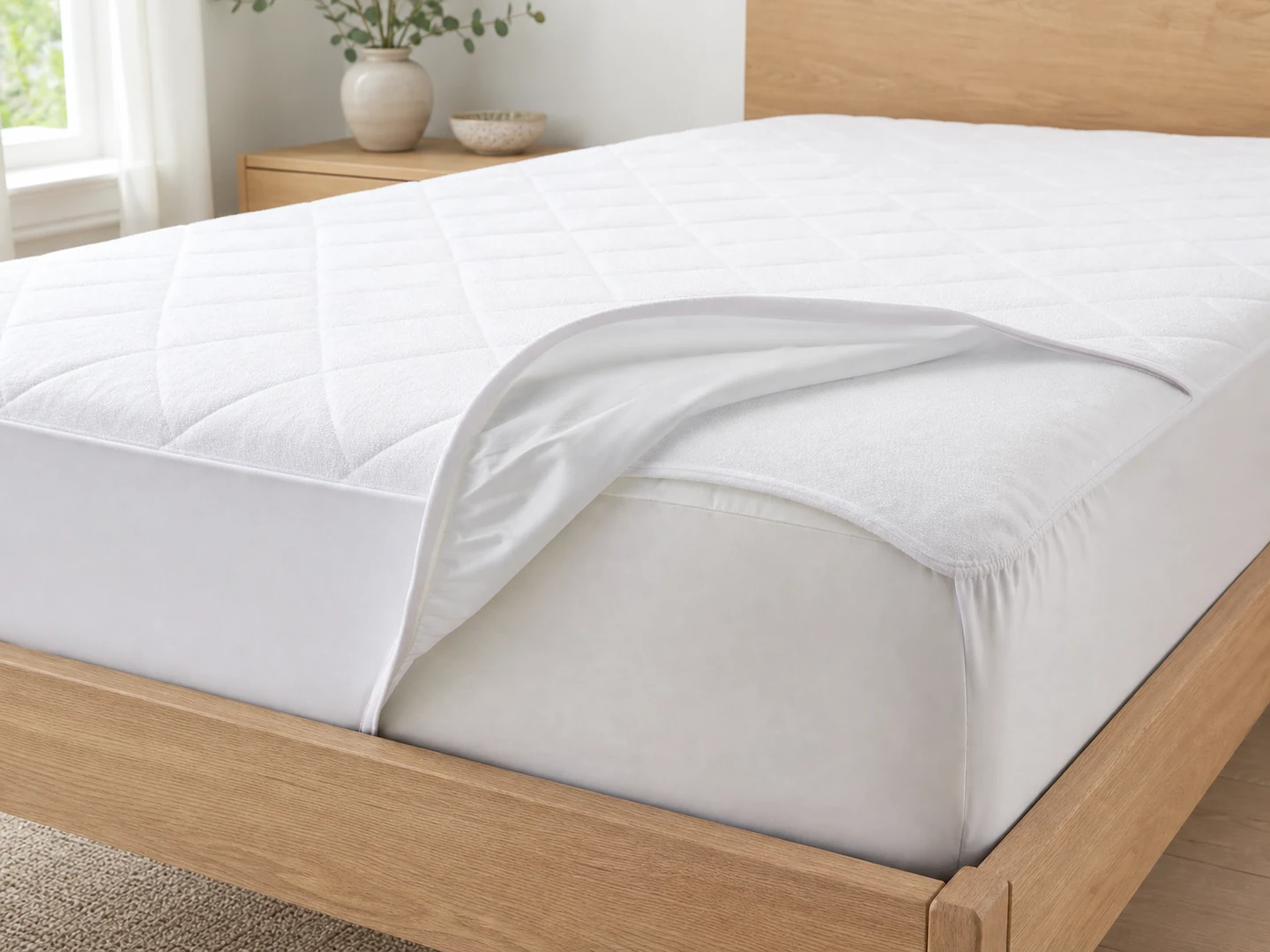
Decide which functions belong to the fitted base cover, treatment sheet, face-cradle cover and any disposable or specialist layer selected by the operator. State the material and care expectations for each piece. A fitted base cover may provide a neat surface without being the only layer changed between uses; the operator must define the actual changeover procedure. Procurement should not infer a barrier or antimicrobial function from softness, thickness or a supplier's general description.
For the face cradle, agree the opening geometry, seam placement and attachment method using the actual accessory. Check that the textile follows the shape without bridging or tightening across the intended opening. Review skin-contact areas with the operator and avoid bulky seams where they would be objectionable. The seam specification guide helps record construction choices, while any hygiene or specialist performance requirement needs its own evidence and competent review.
- Define the role of every textile layer.
- Record the operator’s changeover procedure.
- Approve the cradle opening on real equipment.
- Keep performance claims separate from appearance.
Prototype on the complete treatment setup
Check adjustment and access without a guest present
Fit the prototype on the identified table with the accessories and layers normally used. Ask trained spa staff to move the equipment through the permitted positions and inspect cover retention, bunching and access. Keep the trial unoccupied unless the operator has an appropriate supervised procedure for a later comfort assessment. Do not force an elastic edge over a control or hardware connection simply to produce a smooth photograph.
Record where the cover migrates and whether the operator can restore it with ordinary changeover movements. A revised pattern should be identified separately so comments from several versions are not mixed together. The size-set sample guide is useful when equipment families need related but non-identical patterns. Approving one convenient table should not automatically release covers for every room, particularly when padding has been replaced or accessories differ.
- Use the complete intended setup.
- Check permitted adjustment positions.
- Record migration and access problems.
- Keep prototype revisions and models distinct.
Validate care and changeover together
Post-wash fit is a practical operating requirement
Process samples through the intended care route and reassess the same dimensions and fit points. Record whether elasticised edges, closures or binding have changed in a way that affects retention. The dimensional-stability guide supports measurement planning. A cover that becomes very difficult to fit after washing can slow changeover and encourage staff to stretch or substitute it in ways that were never approved.
Observe removal, sorting, refitting and storage with the people who will perform them. Keep clean and used textile handling consistent with the operator's established procedure; this article is not a replacement for that procedure. The linen identification guide can help prevent visually similar covers being sent to the wrong equipment family. Choose identification that remains useful without creating an uncomfortable or obstructive feature on the finished item.
- Repeat fit checks after agreed care.
- Observe the complete changeover sequence.
- Preserve the operator’s handling controls.
- Identify equipment-specific cover families.
Release an equipment-linked project pack
Procure by validated fit family rather than a generic category
The final pack should connect the table model, textile pattern, material, care instruction, approved sample photographs and quantity allocation. Include spare or replacement needs based on the operator's actual rotation plan rather than an invented universal ratio. The project delivery reconciliation guide can help allocate the correct pieces to rooms and locations without losing the equipment link during receiving.
Agree a review trigger for new equipment, repadded tables, changed accessories or revised care conditions. Keep a reference sample for each released fit family and state how future reorders will be checked against it. Send FY Bedding a spa textile brief with equipment photographs, dimensions, piece functions and care requirements. That enables a focused prototype discussion while leaving hygiene, therapeutic and equipment-safety claims with the parties responsible for substantiating them.
- Link every pattern to equipment identity.
- Allocate quantities by validated fit family.
- Define equipment and care change triggers.
- Retain a reference for repeat orders.
Does the post-care cover fit the identified equipment in every permitted position while preserving access and the spa operator’s approved changeover procedure?