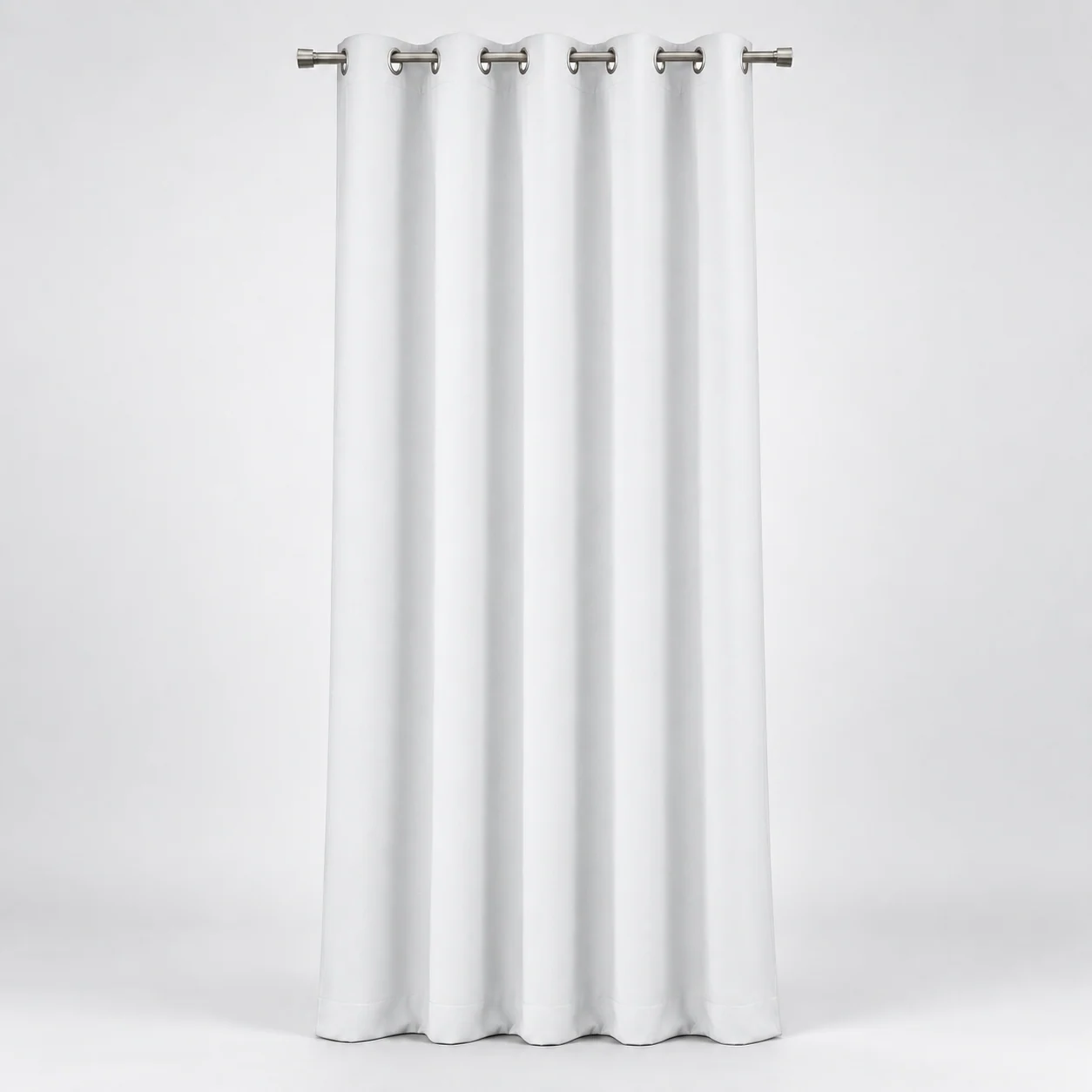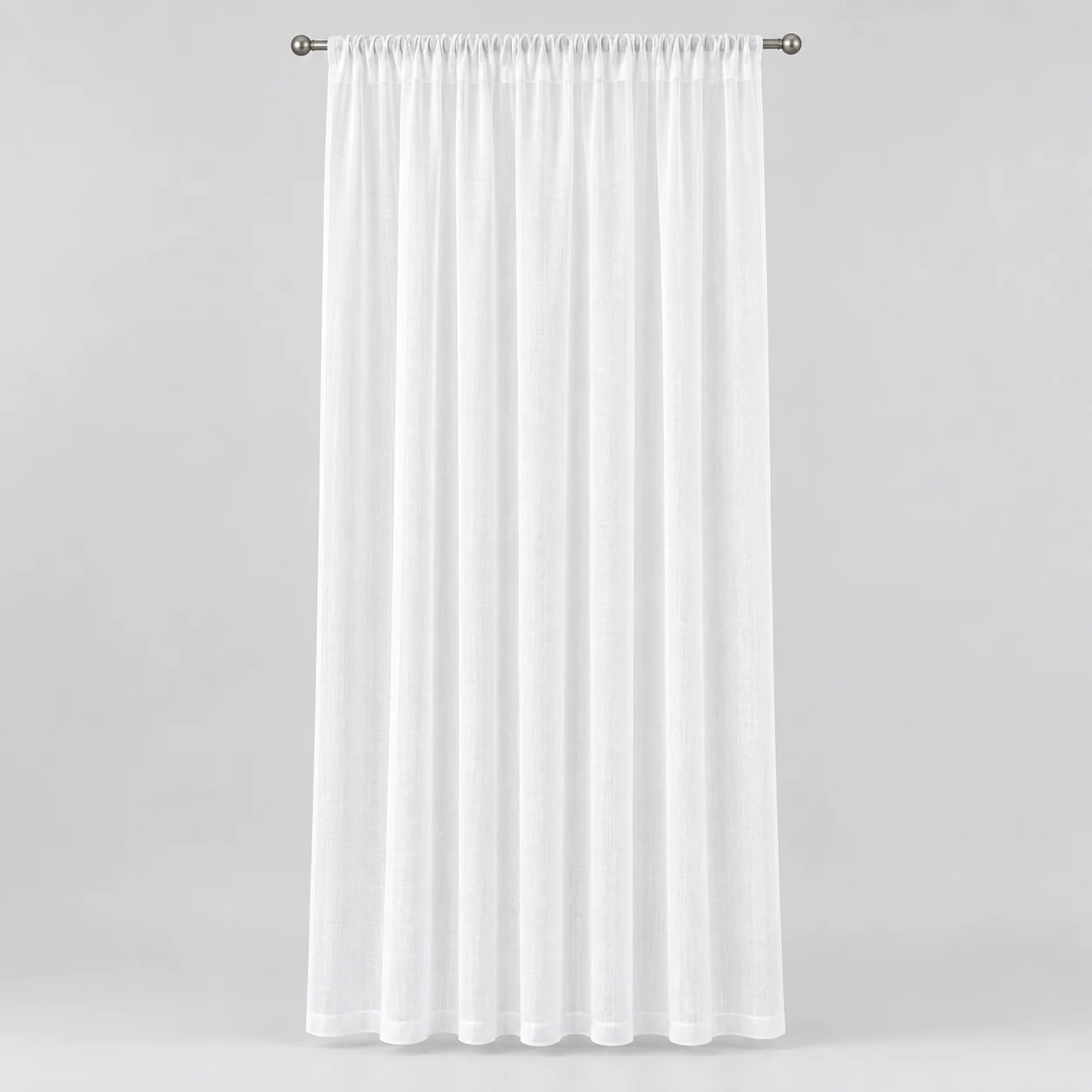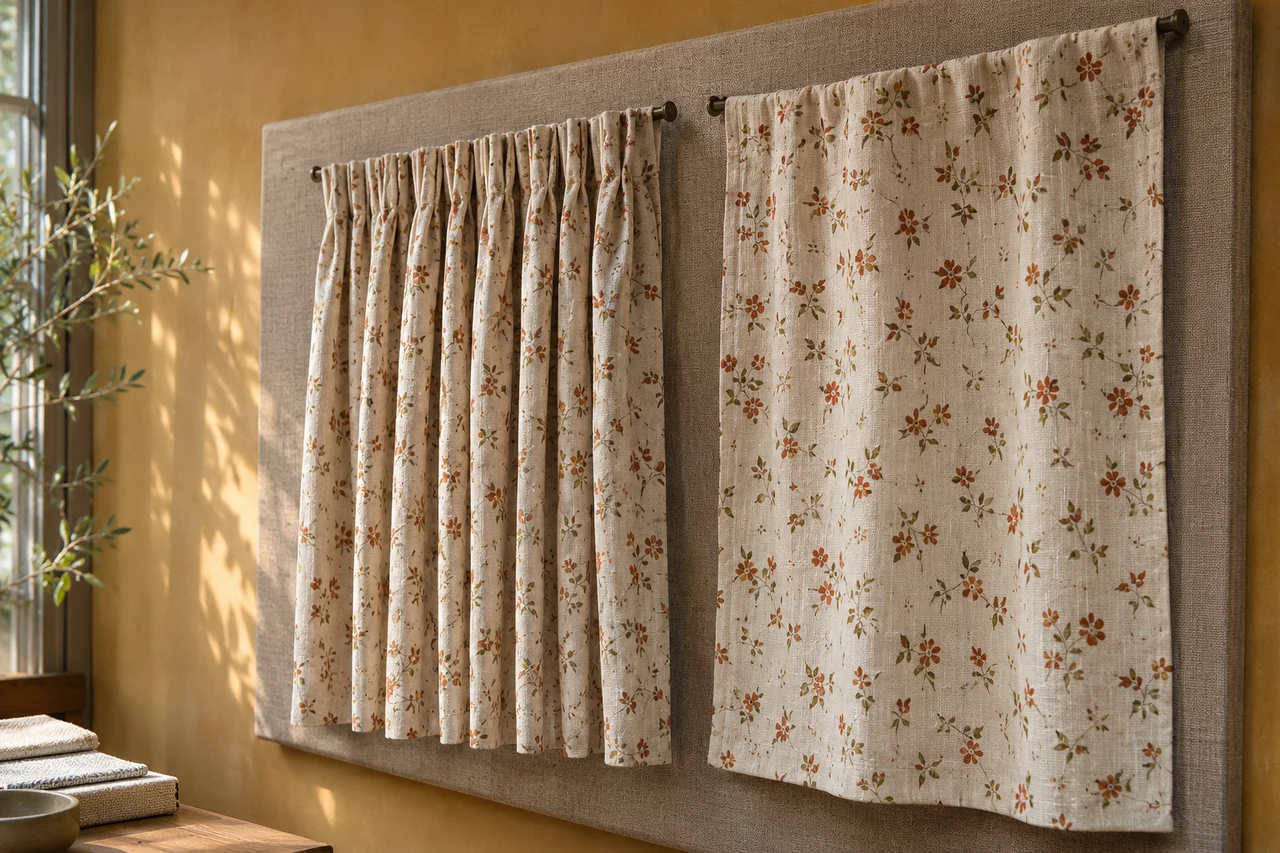
Tab-top curtains make the hanging loops part of the room's visible design. That simple appearance can encourage buyers to choose the fabric before examining the pole, the gaps between tabs or the way the panel will be removed for care. The better purchase begins at this interface. A tab heading is not a substitute name for hooks, rings or eyelets, and its installed length should not be copied from a different heading system without reviewing the reference points.
Identify the pole and the kind of tab
Continuous loops and opening tabs are different constructions
The M&S curtain guide describes tab tops as fabric loops fitted over a curtain pole, while NEXT's guide identifies tab and slot tops as pole-based headings. Use those descriptions to establish the format, not to assume compatibility with any diameter or finish. Ask for the actual pole reference, diameter, accessible ends and support arrangement, together with the proposed tab construction.
State whether each tab is a permanently sewn loop or includes a specified opening feature. Do not let a supplier change that detail without review, because it affects appearance, handling and removal. Keep hardware suitability and safe installation with the responsible installer or hardware supplier. The curtain project specification provides the broader room brief; this guide focuses on the fabric-loop interface within that project.
- Name the pole and the exact tab construction.
- Confirm compatibility with the responsible hardware specialist.
Separate the pole reference, tab drop and fabric body
One finished-drop number can hide different top lines
Request a drawing showing the pole reference, the visible length of each tab and the start of the main fabric body. NEXT's measuring guide uses the top of the pole as its tab-top measurement origin, illustrating why the heading type must be identified. For a custom project, confirm the actual measurement convention with the maker and installer instead of copying a retailer's dimensions without context.
On an assembled sample, check whether the main fabric starts at the intended architectural line and whether tabs hang evenly. Then measure the lower edge from the same accepted reference. Keep the hem and floor-clearance decision separate from changes at the top. Shortening the tabs to fix an overlong curtain may change the intended room view and pole clearance, so it requires a complete sample review.
- Draw and name all measurement origins.
- Record tab drop separately from the main panel body.
Review the gaps above the body and the folds below it
A decorative heading may not meet every room requirement
Hang a representative panel with the proposed tab count, spacing, fabric and lining. View it closed from inside the room and from the positions relevant to the project's privacy or light-control brief. Note the visible spaces between tabs and the relation to the window opening. A fabric sold as blackout does not by itself establish that the installed assembly has no light gaps.
Ask the design owner whether the visible pole and exposed spaces are acceptable for the room. If they conflict with the brief, compare another heading or an independently reviewed layered arrangement rather than adding unsupported blackout wording. The tape-heading guide and grommet interface guide describe separate alternatives, not interchangeable components.
Open the sample and inspect the fabric occupied beside the window. A changed tab spacing or fuller panel may alter both the closed rhythm and the open stack. Use the stackback review to document the available space. Do not select a tab count only because a close photograph looks balanced while the full window arrangement remains unresolved.
Observe operation with the real assembly
Fabric loops should be assessed, not forced
Have the authorized project team demonstrate opening and closing on suitable installed hardware. Observe whether the loops move as expected, bunch at a support or need repeated individual adjustment. Keep the trial within the hardware maker's instructions. Do not apply lubricants, alter a pole or pull harder to conceal a compatibility problem during approval.
Inspect tab attachment points and the main heading after the normal operation review. Note visible distortion, unequal drop or a change in the intended fold arrangement. Where attachment strength or durability is a requirement, agree the appropriate evaluation with the technical owner; a smooth demonstration does not establish a load rating. Record the assembly tested, including lining and trims, because adding material later changes what was reviewed.
- Log actual operation and any repeated adjustment.
- Do not infer hardware capacity from visual approval.
Plan removal and refitting before ordering
An attractive loop can create an inconvenient care route
Ask who is authorized to remove the curtain and how the chosen pole and tabs permit that task. Permanently closed loops may require access to a pole end, while an opening tab introduces its own closure detail. The project team should confirm a safe, practical method without improvised access equipment. Buying staff need an approved maintenance route, not a do-it-yourself installation instruction.
After the agreed care process, refit the identified sample using that route and compare tab opening, body drop and attachment appearance. Keep the tab and main fabric care compatibility explicit. If an opening tab is proposed, review its closure again after processing and state whether replacement parts are supplied. Preserve the accepted refitting reference so later staff do not recreate a different top line from memory.
- Name the authorized removal and refitting method.
- Recheck tab access and the installed drop after care.
Quote and pack the installed version
Panel identity should survive delivery and maintenance
List each panel size, fabric, lining, tab construction and intended pole group in the enquiry. Ask which material and sewing minimums apply, and include representative hanging and care samples in the development schedule. Specify whether the order unit is a panel or a pair. These commercial distinctions are easy to lose when a quotation contains only a total curtain quantity.
Agree packing that identifies the window and panel pair without confusing similar drops or different tab versions. Send FY Bedding the pole information, room-view target and maintenance constraints through a heading sample request. The curtain category can support an initial discussion, but any proposed tab-top construction, source, minimum and delivery plan must be confirmed against the specific project brief before ordering.
Approve the identified pole and tab combination, the visible top gaps, main-panel drop, normal operation and authorized removal route together. Keep visual acceptance separate from hardware and performance evidence.
Method references: M&S: fabric-loop tab-top heading description; NEXT: pole-based tab-top heading and measurement-reference example; project dimensions remain separately agreed.