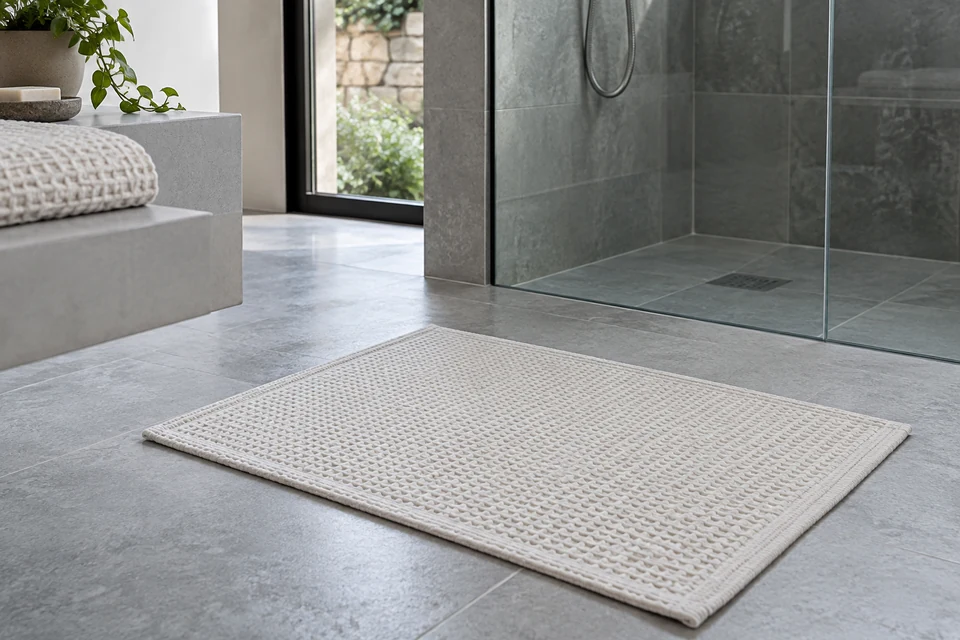
A woven waffle bath mat can introduce a visibly textured surface to a restrained bathroom scheme. The selection question is not simply whether the weave looks attractive. A hotel must decide how the finished mat sits near a door, how its edges lie after laundering and how staff present it consistently. This guide addresses an uncoated woven construction. It does not assess the adhesion of a bonded backing or establish slip resistance, and the word waffle should never be used as a substitute for either evaluation.
- 1. Identify the construction behind the waffle appearance
- 2. Compare the raised cells and the finished perimeter
- 3. Check where the door and the mat meet
- 4. Send the candidate through the intended laundry process
- 5. Let housekeeping prepare it without special styling
- 6. Order against the reviewed mat, not the texture name
Identify the construction behind the waffle appearance
A product name does not define the reverse or the edge
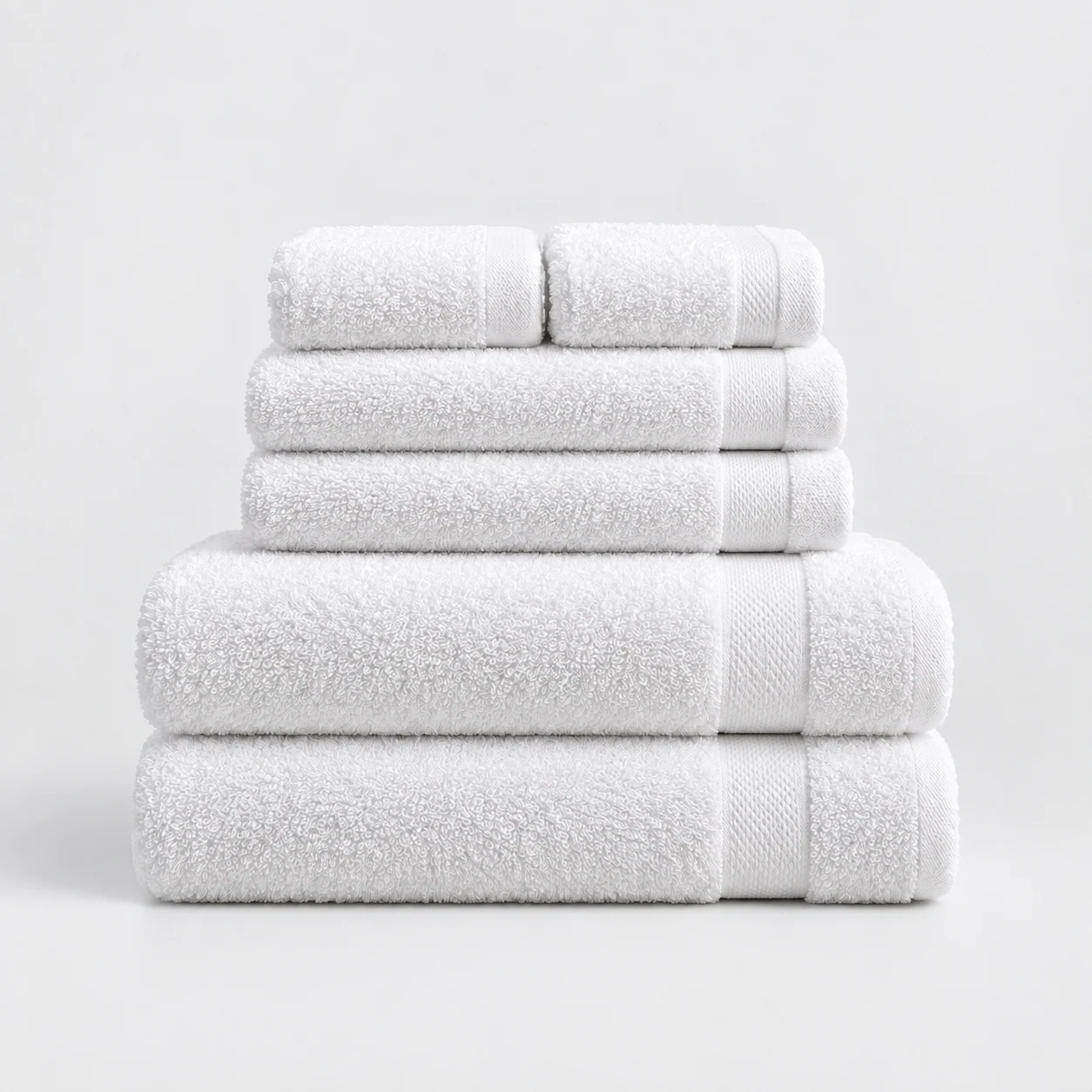
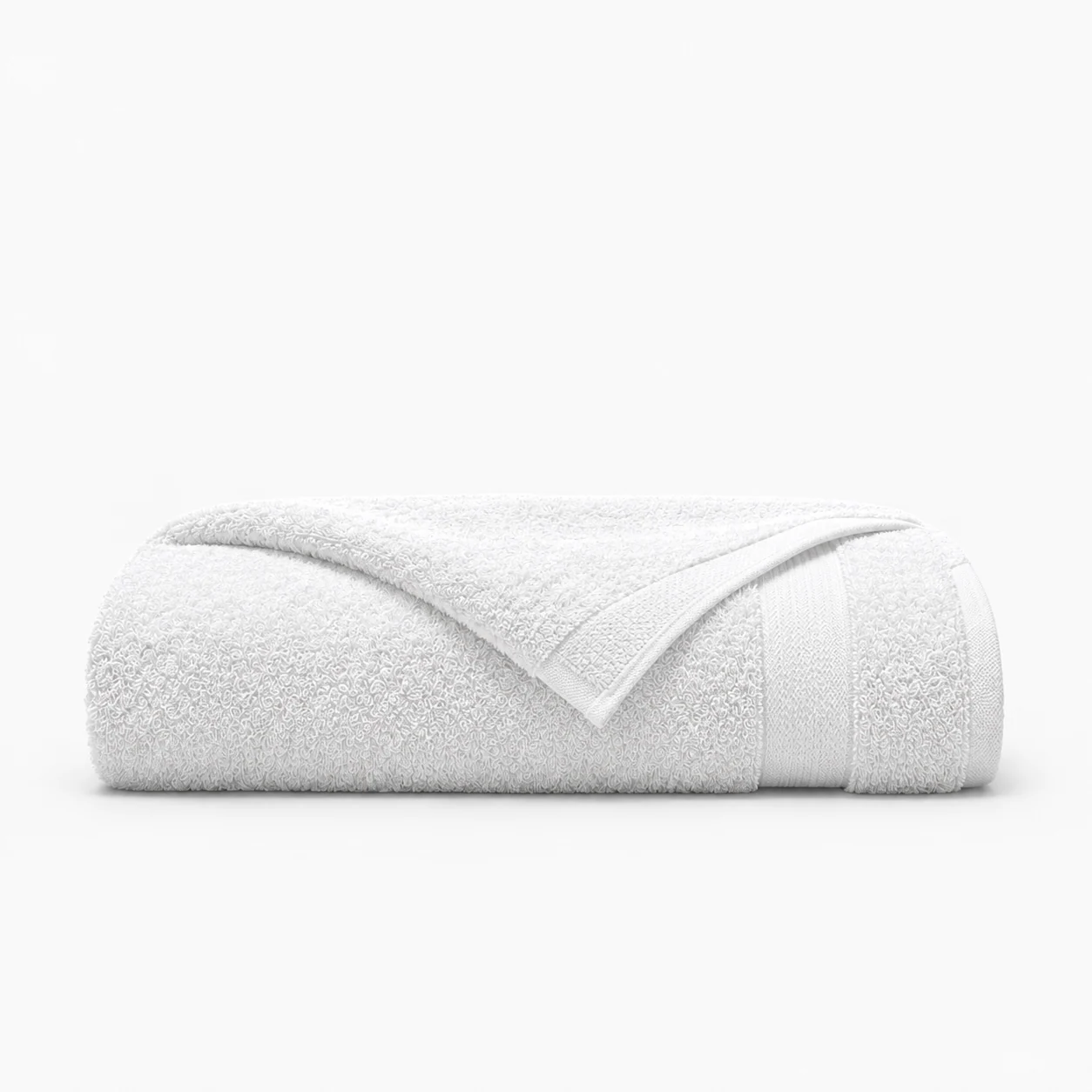
Boll & Branch's Turkish Waffle Bath Mat provides a current retail example described by the brand as having a dimensional waffle weave. This establishes that the texture is used in bath mats; it does not transfer that brand's material, care instructions or claims to another offer. Ask your supplier to identify the actual weave, fiber composition, finishing route and whether both faces have the same structure.
Confirm explicitly that the proposed mat is uncoated if that is the scope being compared. Inspect the reverse and finished perimeter rather than inferring them from a front photograph. Keep a different backing construction outside this comparison and assess it through the separate backed-mat review when relevant. Construction identity should remain fixed throughout the trial.
- Identify face, reverse, perimeter and any added layer.
- Record the exact sample composition and finish.
Compare the raised cells and the finished perimeter
Texture height alone does not describe the whole profile
Place samples in a defined relaxed condition on a clean, flat surface. Look across the raised cells under consistent side lighting and compare the field with the hem and corners. Note ridges, compressed areas or a perimeter that sits differently from the center. Record these as observations tied to the preparation state rather than announcing that one weave is intrinsically more comfortable or more stable.
If thickness or profile is an acceptance requirement, agree where and how it is measured. A hand pressing the center flat and a ruler placed beside an untouched hem do not provide comparable readings. The conditioning and measurement guide can help organize a repeatable record. Keep photographs of the entire mat as well as close views so an appealing cell detail does not conceal edge behavior.
Check where the door and the mat meet
Use the offered finished mat in the actual intended location
Take the sample to a representative bathroom and identify its planned position when the room is prepared and when the mat is in use. Observe the door's full intended travel with the mat arranged normally. A low center profile does not rule out contact with a thicker edge. If contact occurs, record the position and ask the project team to resolve the layout or product choice rather than trimming the sample informally.
Include the shower enclosure, nearby fixtures and storage location in the observation. Do not present this layout check as a wet-floor safety test, and do not invite people to demonstrate sliding or fall resistance. The operator remains responsible for assessing suitability and any required safety evidence. Submit room conditions with the hospitality specification brief so the supplier understands the physical constraint instead of receiving only a nominal mat size.
- Review the door travel and intended placement together.
- Record contact without modifying the trial sample.
- Keep safety evidence separate from a visual fit assessment.
Send the candidate through the intended laundry process
A domestic care example is not a commercial-laundry approval
Give the laundry team the proposed fiber and construction information and establish a trial route suitable for that offered product. Include preparation, washing, drying, any permitted finishing and the condition in which the mat will be evaluated. A supplier's generic cotton description is not enough to confirm compatibility with a property's process. Resolve incompatible care expectations before discussing bulk quantities.
Compare the processed sample with its identified unprocessed reference. Check overall dimensions, visible cell definition, perimeter shape and the ability to lay it out without special handling. Repeat the room-placement observation, including the door if its clearance is a constraint. Record the process and results in the sample approval record. A short trial supports a defined decision; it does not establish an unlimited laundering life.
- Compare the same finished locations before and after care.
- Document any shaping or pressing used before evaluation.
Let housekeeping prepare it without special styling
The accepted appearance should survive the ordinary routine
Ask staff to fold, carry, place and remove the dry trial mat using the proposed routine. Check whether the chosen fold leaves a prominent ridge that requires extra attention, whether the mat fits its storage space and whether the intended face is readily recognizable. These are operational observations, not claims that a particular construction reduces labor or dries faster.
Keep any acceptable preparation instruction short and reproducible. If the presentation only works after a designer repeatedly arranges each cell and corner, discuss a different construction or room standard. Use the sample photography guidance to capture the ordinary result rather than one unusually favorable angle. An image should document the trial, not replace the physical sample.
Order against the reviewed mat, not the texture name
Tie the commercial offer to the sample identity
The quotation should state construction, dimensions, color, edge finish and the agreed care basis. Ask which minimums apply by color and size, which samples are included and what changes require another laundry trial. Confirm the delivery fold and pack count so the receiving team can identify the product without opening every bundle.
For a FY Bedding sampling enquiry, send the intended uncoated construction, representative bathroom constraints and laundry requirements. Availability and suitability must be confirmed for the project. Keep unsupported non-slip, rapid-drying and service-life statements out of the brief and public copy until appropriate evidence exists for the exact offered mat.
Accept the named construction only after its relaxed profile, room placement, processed shape and ordinary housekeeping presentation have been reviewed; do not confuse these checks with safety certification.
Method references: Boll & Branch: dimensional waffle bath-mat product example.