A bath mat backing can crack, peel, transfer or change grip after care and moisture exposure. Yet a single hand pull or an informal bathroom photograph cannot establish a repeatable acceptance decision. Buyers should identify the backing system, approved floor surfaces, care state and intended use, then combine controlled adhesion observations with a safe wet-area placement trial. This guide structures that evidence without making a universal slip-resistance claim.
Define the backing system and intended environment
Connect material, coverage and floor interaction
Record the face construction, backing material as declared for the program, application pattern, coverage area, edge treatment and unbacked borders. Identify whether the mat is intended for a hotel bathroom, spa changing area or residential retail use. The textile certificate scope matrix helps keep any supplied material evidence matched to the specific backing and product scope.
List representative floor surfaces, such as glazed tile or sealed stone, only as confirmed project conditions. Surface texture, coating, residue and cleaning chemistry can influence interaction. Do not describe the product as suitable for every wet floor. Define the trial as a controlled comparison under agreed conditions and keep safety claims under the responsible buyer's compliance process.
- Face and backing material identity
- Backing pattern, coverage and edge
- Intended environment and handling
- Representative approved floor surfaces
Prepare traceable specimens and controls
Compare original, cared and exposed states
Select finished mats from identified development or production lots and record dimensions, weight where relevant, backing appearance and specimen condition. Retain an unexposed control. If laundering is part of the use case, follow the approved wash and drying route before evaluation. The dimensional stability guide helps document size state while backing integrity remains a separate observation.
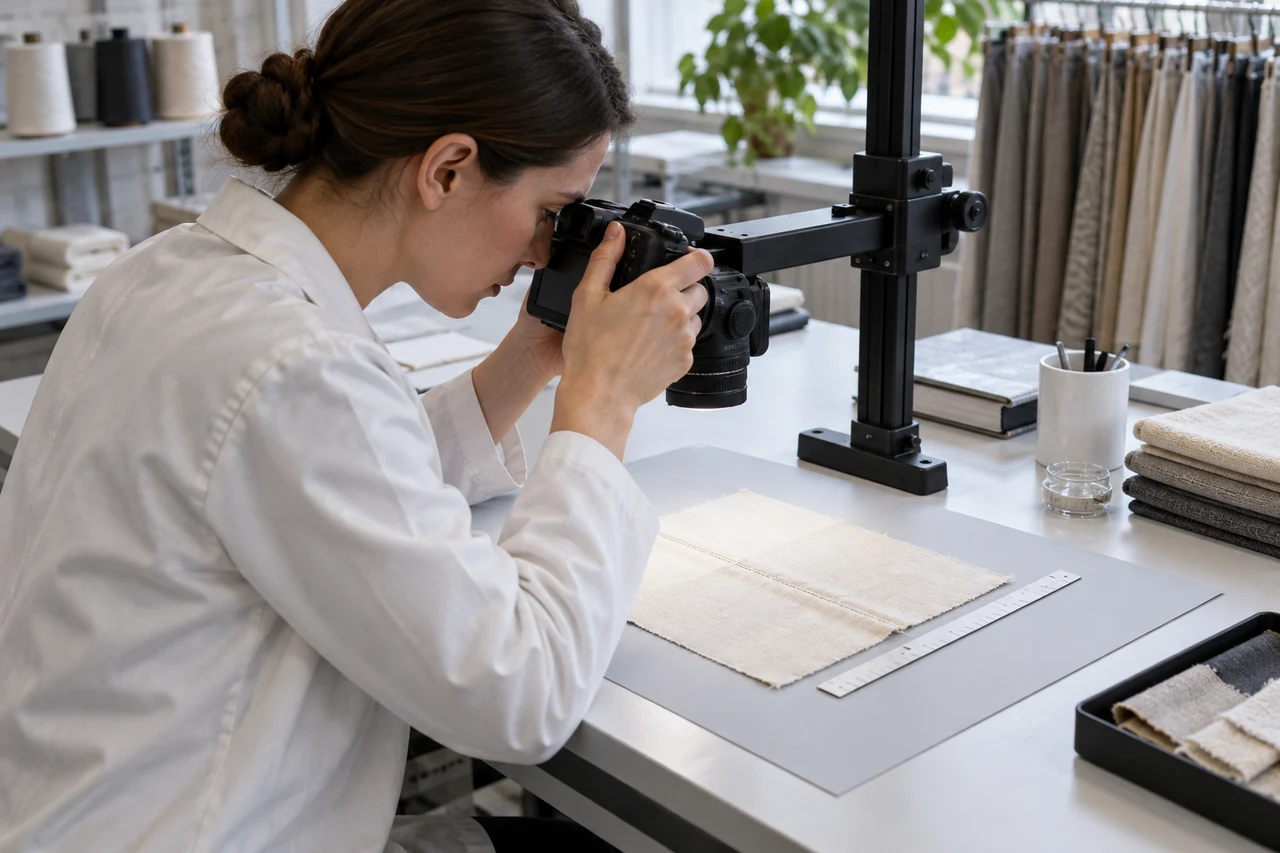
Condition specimens consistently and avoid stacking them while the backing is warm or damp. Photograph the full reverse and detailed edge areas under stable lighting. Mark observation zones without damaging the backing. If different colors or sizes use different application equipment or coverage, include representative variants rather than assuming one sample covers the whole assortment.
- Lot and specimen identity
- Original, cared and control states
- Conditioning and storage method
- Full-back and edge photographs
Evaluate adhesion and edge integrity
Use an agreed method instead of an uncontrolled hand pull
Define the buyer-approved or laboratory method for any peel, flex or adhesion measurement, including specimen width, direction, rate and result units where applicable. Results from different methods are not automatically comparable. If the review is visual, use consistent flexing and classify cracking, lifting, flaking and transfer separately. The bedding product testing plan can assign method, laboratory and decision ownership.
Inspect corners, cut edges, high-flex zones and transitions between backed and unbacked areas. Record actual observations and photographs rather than only pass or fail. Do not infer floor safety from backing adhesion alone; a well-adhered coating can still interact differently with different surfaces. Any acceptance limit should be linked to the selected method, approved sample and intended product risk.
- Named adhesion or flex method
- Direction, rate and result units
- Crack, lift, flake and transfer classes
- Approved reference and acceptance basis
Run a controlled wet-area placement trial
Manage floor condition and observer safety
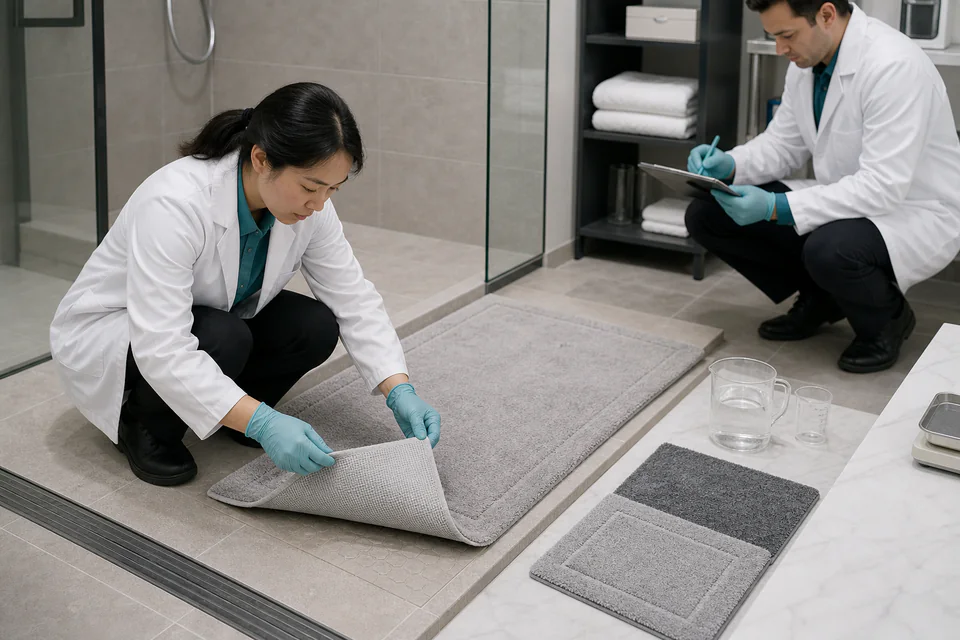
Clean and condition the chosen floor surface using an agreed procedure. Define dry, damp or other controlled states without creating uncontrolled standing water. Place the mat flat, verify full contact and observe edge curl, bunching, backing transfer and movement using a safe test protocol. The towel absorbency guide addresses water uptake in terry products and should not be used as a substitute for floor interaction evidence.
Use responsible technical personnel and a fixture or controlled action where the method requires force; do not stage a person slipping. Repeat placement after the agreed care cycles and on each representative surface. Record temperature or cleaning residues when relevant to interpretation. State the limits of the trial clearly and avoid converting one internal comparison into a broad certification or legal claim.
- Controlled floor cleaning and condition
- Flat placement and contact review
- Movement, curl and transfer observations
- Safe repeated trial by surface and care state
Control backing application in production
Verify coverage, cure and finished condition
At production, check backing identity, application pattern, coverage, missing areas, contamination, edge condition and any supplier-controlled cure or setting record. Inspect finished mats after sufficient stabilization rather than while the backing state can still change. The final inspection checklist can carry these named defects into the broader shipment review.
Repeat targeted trials when backing formulation, application equipment, face construction, floor requirement or care instruction changes. Keep retained approved and failure references protected from heat and contact. Buyers can share a bath mat use brief with dimensions, care route, floor types and evidence needs so the supplier can propose a controlled development and verification plan.
- Backing identity and coverage
- Cure or stabilization record
- Finished edge and transfer inspection
- Material or process reapproval trigger
Approve a backed bath mat only after its material identity, care state, adhesion method, edge condition and controlled floor trial are documented without overstating the result.