Convertible hotel rooms place a specific demand on the linen programme: the same space must work as two separate beds and as one joined sleeping surface. Ordering sheets from nominal bed names can leave housekeeping with an awkward fit, an uncomfortable centre transition or stock that supports only one configuration. The buying decision should begin with the actual mattress and base system, then define a complete linen arrangement for each approved room state. This guide builds that conversion record and connects it to samples, laundry handling, replenishment and the final room release.
Record both mattress configurations
Measure the complete sleeping surface
List the exact mattress and base models, their joining arrangement and any accessories specified by the equipment provider. Measure the separate mattresses and the completed joined profile, including any approved topper or gap-management component. Do not assume the joined width is simply the nominal twin width multiplied by two. The hotel size record should preserve actual dimensions, depth and relevant tolerances for both configurations, with photographs that show the centre and outer edges.
Review whether the mattresses have matching heights, corner shapes and surface profiles. Those features influence how a single sheet lies across the joined bed. Ask the equipment supplier which conversion components and procedures are approved for that system. Linen should be selected around that arrangement; it should not be used to force incompatible mattresses together or conceal a mechanical problem. Record the boundary between the bed equipment approval and the separate textile fit decision so responsibilities stay clear.
- Identify mattress, base and joining components.
- Measure twin and joined configurations separately.
- Include approved toppers in the height record.
- Resolve equipment compatibility before linen fitting.
Choose a linen arrangement for each state
Compare complete systems rather than isolated sheets
Build a component list for twin mode and joined mode: protectors, sheets, duvet or blanket options, covers and decorative pieces. Decide which components can be shared and which need a separate size or quantity. The bedding specification sheet provides a useful structure. A shared component should pass its own fit and use checks in both states, rather than being accepted because it reduces the number of items on a purchasing spreadsheet.
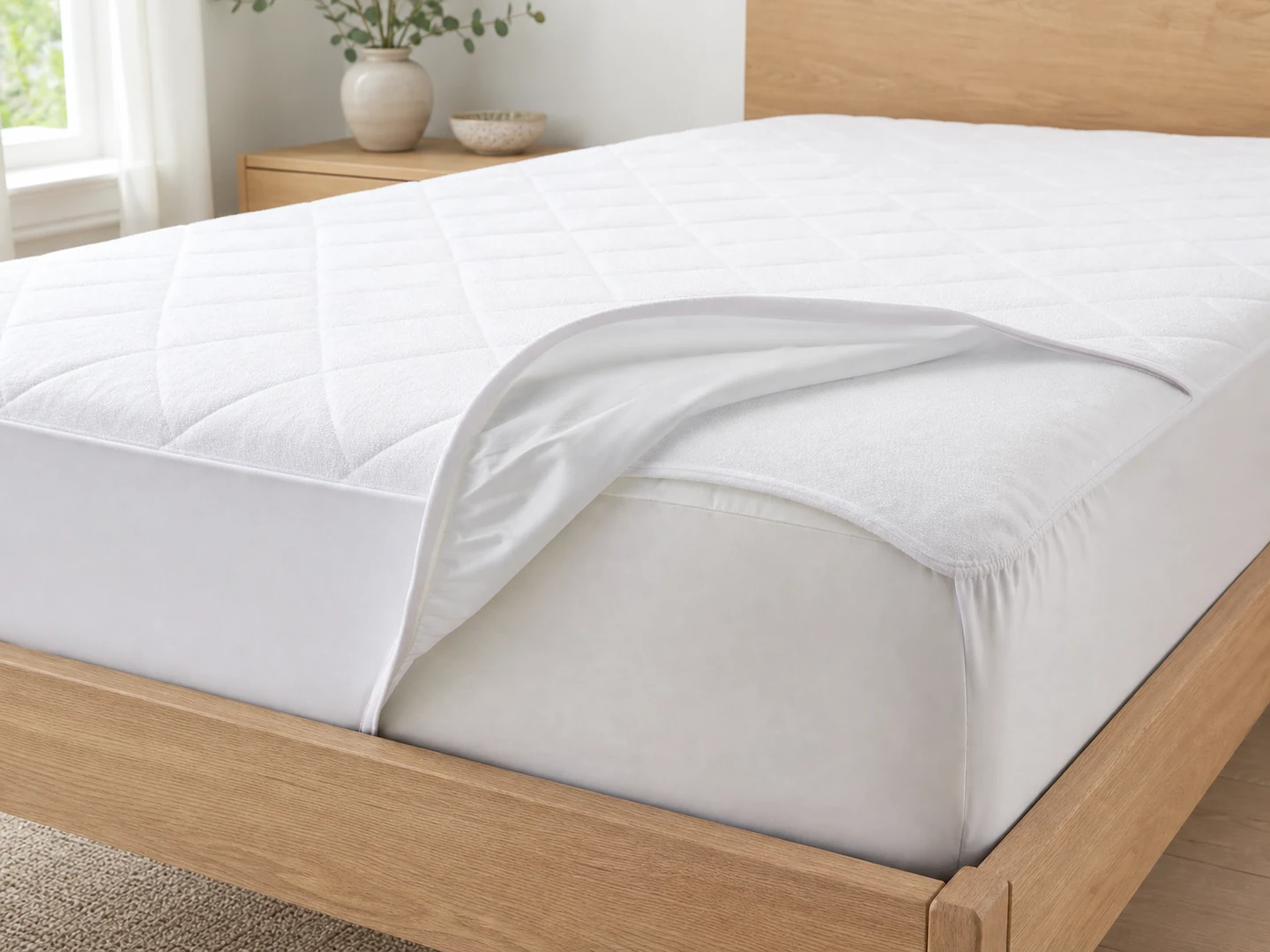
Discuss the trade-off between separate fitted sheets, a joined-bed sheet and any property-approved flat-sheet arrangement. Review the resulting surface, tuck, centre appearance and changeover effort with housekeeping. Protector decisions deserve their own attention because a change in the number or type of layers can alter depth and feel. Use the protector procurement guide to document the selected stack. Keep guest presentation and the actual housekeeping procedure in the same comparison record.
- List every component in each room state.
- Mark shared and configuration-specific items.
- Evaluate the complete layer stack.
- Record the reasons for the chosen sheet arrangement.
Run a repeatable conversion trial
Observe the work from stripped room to ready room
Ask the property team to convert a representative room using the intended equipment procedure and complete linen sets. Record the sequence, tools or assistance required by the equipment provider, and any textile handling difficulty. The bed-making trial guide helps structure observations. Include both conversion directions because a joined-to-twin change can expose different storage, identification and handling problems from the initial twin-to-joined demonstration.
Inspect the finished bed from the positions relevant to the guest and the housekeeping supervisor. Check outer corners, centre presentation, side drops and whether the linen remains properly arranged during ordinary approved use. Record sample identity and the precise configuration in photographs. If the team adjusts the fold or substitutes a component mid-trial, note the change and repeat the affected check. A polished final photograph alone cannot show whether the procedure is practical for everyday room turnover.
- Trial both directions of the room conversion.
- Follow the equipment provider's procedure.
- Record handling difficulty and substitutions.
- Inspect the centre and outer edges consistently.
Plan laundry and stock by configuration
Count what each conversion actually consumes
Create a stock matrix showing quantities consumed per twin room and per joined room, including items temporarily held during conversion. Apply the property's occupancy and laundry assumptions explicitly rather than using a generic par multiplier without explanation. The par-level planning approach can inform the method, while bed-linen quantities must reflect this specific room mix. Include a scenario where several rooms change configuration on the same turnover day.
Use clear size identification so staff can distinguish the items after laundering and folding. The size-marker guide helps define placement and readability. Run the agreed care trial before confirming fit because post-care dimensions can change the available tuck or corner coverage. Store alternate components in a way that preserves clean condition and makes the correct configuration easy to assemble, then verify the count during routine replenishment.
- Count components separately for twin and joined use.
- Model a realistic peak conversion day.
- Validate size markers after laundering.
- Confirm post-care fit and alternate-stock storage.
Approve a room conversion package
Make reordering reproduce the same arrangement
The final approval should contain the bed models, equipment procedure reference, layer stack, textile dimensions, sample revisions, care observations and stock matrix. Identify the event that triggers another review, such as a new mattress model or a different protector. Keep the mock-up room record with the buying specification so a replacement order can be assessed against the actual approved room arrangement rather than a broad king-size description.
Send FY Bedding a convertible-room linen brief with the twin and joined measurements, room count, likely configuration mix and laundry route. Request samples for both states and ask the quotation to distinguish shared components from separate stock requirements. If a trial reveals a fit problem, revise the relevant textile specification and repeat that configuration before bulk approval. This gives purchasing and housekeeping a common basis for release and later replenishment decisions.
- Release the room and linen records together.
- Define changes that require renewed fitting.
- Quote shared and separate items transparently.
- Recheck revised components in the affected state.
Can housekeeping create both approved room configurations from clearly identified stock, with verified post-care fit and a repeatable conversion procedure?