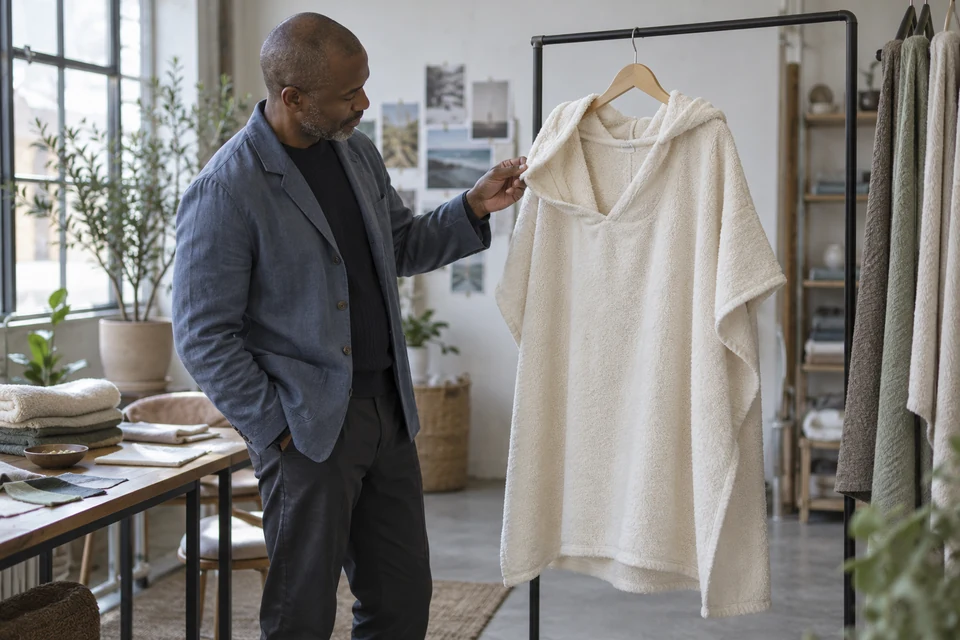
An adult hooded towel poncho is a shaped garment, not a flat beach towel with an extra accessory. Its head opening, hood connection and side arrangement determine how someone puts it on and how the photographed form relates to the item in a retail package. This buying guide addresses an ordinary adult slip-over textile garment and the scope of its sale. It excludes children and makes no protection, drying-speed or universal-fit promise. The useful procurement question is whether the proposed pattern, material and customer information describe one understandable finished item that the intended adult wearer group can review.
- 1. Define the adult garment before selecting towel material
- 2. Draw the entry route and the hood connection
- 3. Observe putting on and removal with the proposed instructions
- 4. Review hood placement and side access as connected pattern decisions
- 5. Confirm the sold unit and the first customer view
- 6. Request a poncho-specific offer with unresolved questions visible
Define the adult garment before selecting towel material
Keep the slip-over brief separate from towels and bathrobes
State the retail setting, intended adult wearer range and role of the proposed garment in plain terms. Identify whether it is sold in a resort shop, as part of a branded leisure range or in another adult retail channel. Do not borrow a one-size description from a display photograph. Ask which sizes or pattern options the source proposes and what each description means in finished garment dimensions. Leave any special use or performance statement outside the accepted brief until the appropriate owner can define its evidence.
Specify that the project is a hooded slip-over poncho if that is the intended design, including whether its sides are open, sewn or provided with another arrangement. A front-opening bathrobe brief addresses a different garment and cannot determine head entry here. Likewise, the flat retail beach-towel guide does not approve a poncho pattern. Use these neighboring categories to clarify the distinction rather than combine several products under one towel quotation.
- Name the adult wearer range and slip-over configuration.
- Keep children and unsupported specialist uses outside this purchasing scope.
Draw the entry route and the hood connection
Finished openings need landmarks, not a single chest width
Ask for a flat drawing of the complete garment showing the head opening, neckline shape, hood join, body panels and side openings. Define the landmarks used to measure each opening without stretching or forcing it. Request the finished front and back lengths separately where they differ, and show where any slit, overlap or closure begins and ends. The technical-pack framework is useful for organizing these details, but the actual garment drawing must supply the poncho geometry.
Review the hood attachment from inside as well as outside and identify the proposed edge finish around the entry. Ask the maker to explain how the material and joining method are represented by the sample. A neckline measurement alone cannot describe the route through which the wearer passes the head or how the hood sits afterward. Where the design includes a component beyond plain textile openings, seek its own appropriate technical review. Do not invent an acceptable attachment or access condition from a photograph of someone already wearing the item.
- Map the whole path from head entry to the settled hood position.
- Show side openings and joins on the same controlled garment drawing.
Observe putting on and removal with the proposed instructions
Review entry before assessing the settled silhouette
Arrange a project-appropriate fitting review with consenting adults or suitable fitting resources representing the proposed range. Use the actual sample size and the information that customers are expected to receive. Observe whether the front, back and opening are understandable before the garment is worn. Record assistance and adjustments that would not ordinarily be available at purchase. If a sample does not permit an appropriate fitting, stop that attempt and return the issue to the pattern owner rather than treating forceful entry as an approval method.
After the garment is settled, ask for specific comments about hood position, visible length and ordinary arm access within the agreed review. Then observe removal through the intended route. Identify the sample, conditions and limited wearer range behind each observation. The instruction-led accessory review offers a related documentation approach, but a poncho needs its own entry and body assessment. One convenient fitting cannot establish suitability for every adult, and a flattering model image is not a substitute for these garment-specific observations.
- Record entry and removal as well as the worn view.
- Tie every observation to the actual size, sample and review scope.
Review hood placement and side access as connected pattern decisions
A useful adjustment must work on the whole garment
Locate comments on the drawing: the hood seam sits in an unwanted position, the side opening exposes more than the approved presentation, or arm movement pulls a particular body panel. Ask the pattern maker for a targeted revision and identify that version separately. Increasing an opening or moving a join may change several relationships, so review the whole garment after a change rather than accepting only a close image of the corrected area. Include the inside finish that the wearer actually encounters.
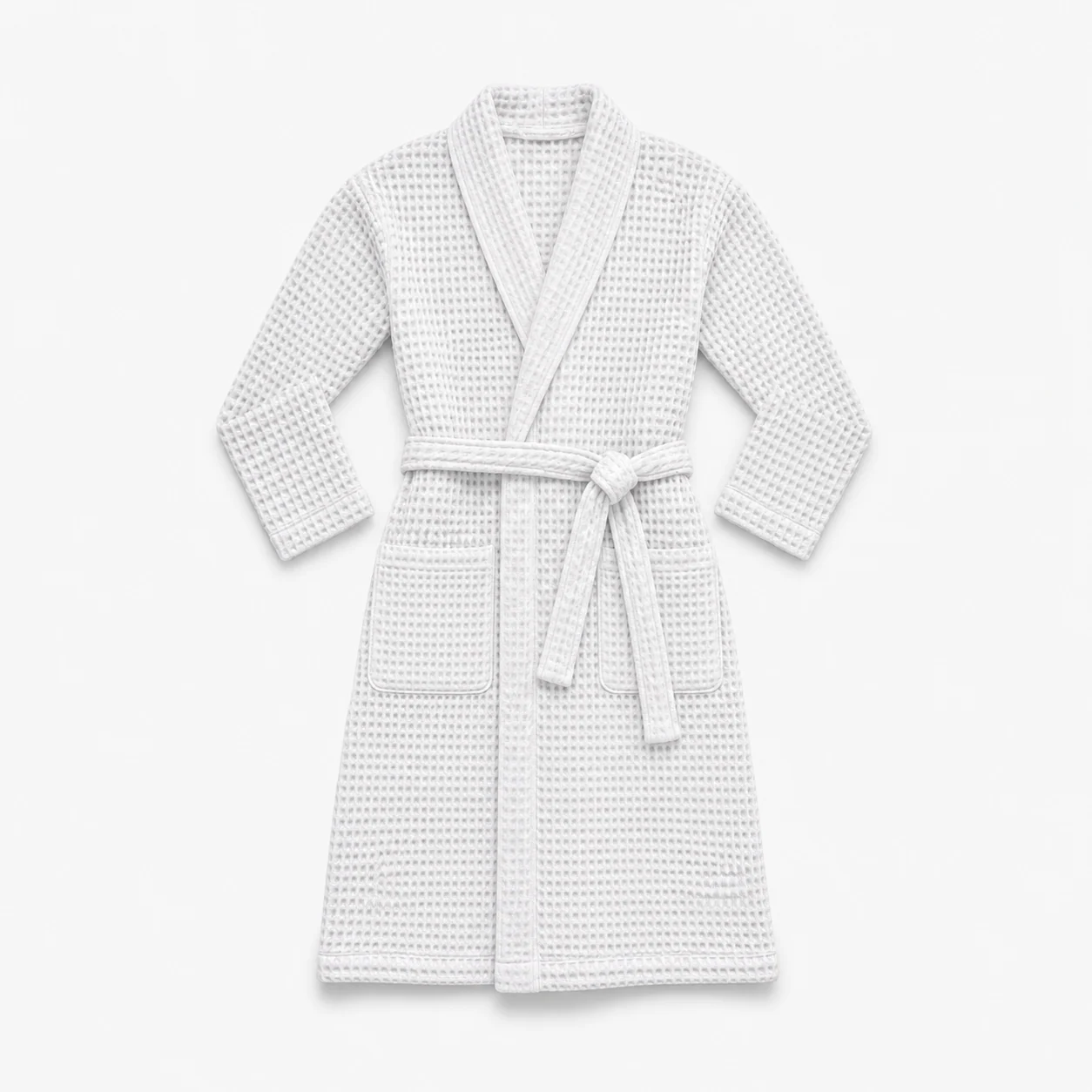
Examine the material in the assembled openings, not only as a loose towel swatch. Confirm the declared composition and offered construction, then observe how the actual bulk affects the reviewed entry and hood arrangement. The robe collar-and-cuff review illustrates why local joins deserve attention, but its sleeve and collar results cannot transfer to this design. Keep any claim about absorbency, drying behavior or warmth separate; a more comfortable pattern does not independently substantiate those statements.
- Map feedback to exact pattern locations before requesting a revision.
- Repeat the complete entry and worn review after material or pattern changes.
Confirm the sold unit and the first customer view
Retail images must not quietly include unpurchased extras
List exactly what one SKU contains. State whether the order is for the poncho alone or includes a separate carrying item or other named component, and distinguish display props from supplied goods. Choose a fold that allows the customer or shop team to identify the garment without mistaking it for a rectangular towel. Photograph the opened poncho as well as the retail presentation, using the same sample revision. Where several sizes are offered, make their identities visible in the range and pack record.
Check that care information, material description, size wording and any wearing illustration refer to the complete garment that was reviewed. Use the care-artwork record to connect the proposed instruction with the sample and responsible review. Agree a care assessment for the assembled garment, then revisit opening geometry and the customer presentation in that state. Do not promise a particular lifetime or an unchanged fit through untested care conditions. Any limits in the review should remain visible to the retail-copy owner.
- Identify every supplied component and exclude styling props.
- Show the opened garment and the same revision in its retail pack.
Request a poncho-specific offer with unresolved questions visible
Availability must be confirmed against the actual garment scope
Combine the adult range, complete pattern reference, material identity, size allocation and sold-unit list in the sourcing request. Ask the supplier which sample can demonstrate the finished openings and hood and which choices set the actual minimum quantities. Seek a proposed sampling and delivery sequence for the intended destination rather than assuming a beach-towel order has the same development path. The broader bath-textile category is a starting context, not confirmation that a particular adult poncho is already available.
Present the remaining fit questions clearly instead of using an attractive image as a completed specification. Buyers can submit an adult towel-poncho development brief with the opening drawing, intended retail channel and size questions. Ask FY Bedding to confirm whether the proposed sourcing route can address that scope and what complete sample is required next. Retain the accepted entry instruction with the garment reference, and require a new review when a material, opening or hood change affects the identified design.
- Quote the garment pattern and sold unit, not a generic towel weight.
- Keep open fit questions attached to the request until the correct sample resolves them.
An adult hooded towel poncho should be purchased through its identifiable garment pattern, reviewed entry and removal route, hood and side arrangement, and honest sold-unit information. Keep the fitting scope adult-only and limited to the actual review; neither an easy demonstration nor a towel material description creates a universal-fit or protection claim.