A beach towel bought in a resort shop has to make sense twice: first on display, then in use. A velour face can be part of that proposition, but the word leaves much undefined. Which side carries the design? What is on the reverse? How large is the usable surface after care? This guide focuses on choosing a two-face retail towel, rather than running a circulating hotel pool-towel program.
Understand what the two faces offer
Velour describes a surface, not a complete specification
Ask the supplier to identify the actual face-finishing process and reverse construction. CottonWorks describes shearing as controlled trimming of protruding surface fibers; Allure Bath Fashions provides a commercial example pairing a velour face with a terry-loop reverse. These references explain the terminology, not the performance of an untested towel. Keep fiber composition, yarn and finished dimensions as separate fields rather than treating velour as a fiber name.
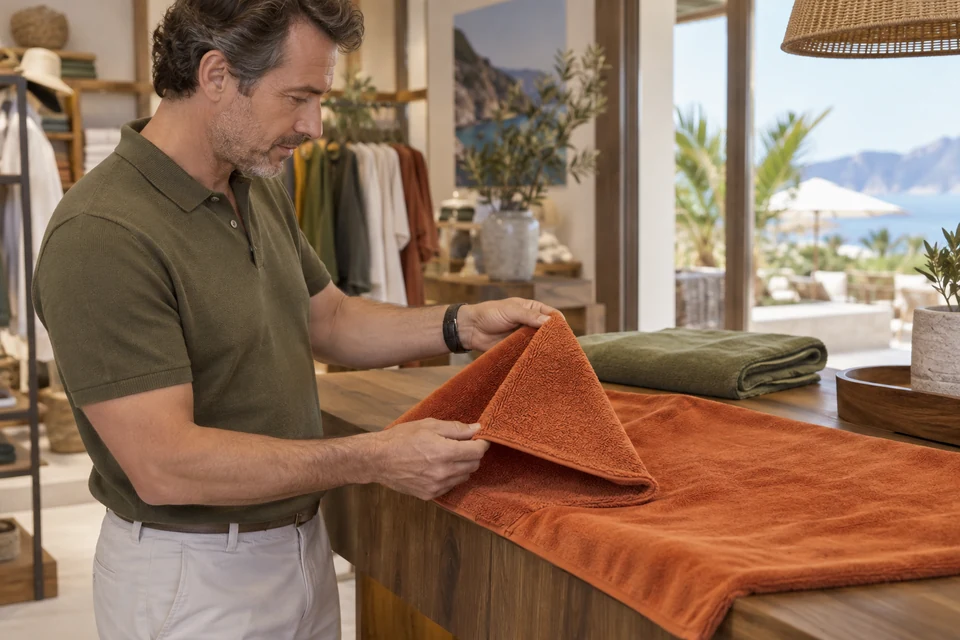
Handle both sides of the offered sample. Turn back a corner, inspect the transition at the hem and compare the whole surface instead of relying on a single close photograph. The existing towel construction guide covers pile and ground details; here the decision is whether the proposed combination of faces fits the retail product you want to sell. Ask explicitly whether substitutions preserve both faces.
- Identify the presented face and the reverse.
- Request the actual fiber declaration.
- Keep the two-face sample together during comparison.
Merchandise the whole towel, not just its best corner
Check design visibility in the intended display
Spread the towel, hang it in the proposed display and fold it for sale. A motif can disappear inside a narrow fold; stripes may look balanced when open but show only one color in the pack. Choose a repeatable presentation. Do not assume that a velour finish automatically produces better printing or that every decoration route gives the same result.
View the face from more than one direction under ordinary shop lighting. If moving the towel changes its apparent shade or surface character, decide how photography and display instructions should represent that appearance honestly. The approved-sample photography approach is useful for linking images to the physical item. Include at least one reverse view so customers are not left guessing what they will receive.
Evaluate the drying side on its own evidence
A surface description is not an absorbency result
Tell the supplier how the guest is expected to use the towel: drying after swimming, resting on a lounger, carrying it to the beach or using it as a souvenir at home. These are different observations, even when one item serves several purposes. Ask the trial team to record which face contacts the user and whether the product description makes that choice understandable. Avoid replacing actual use review with a softness vote.
Where absorbency matters, agree the relevant evaluation with a laboratory or technical owner and connect it to the identified construction through the absorbency procurement guide. Request separate evidence for any drying-speed, lint, colorfastness or sand-release claim. The reviewed sample and care state must be clear. A reference brand's description cannot substantiate the proposed supplier's towel, and a favorable demonstration cannot establish every future use condition.
- Name the intended drying face.
- Separate touch preference from measured performance.
- Limit claims to the construction and conditions actually assessed.
Choose coverage and carry format together
The largest option is not automatically the best retail choice
Review the open dimensions against the intended adult use, then fold the sample into the bag or shelf format planned for the range. Record the towel's own weight as well as any quoted weight per area. Neither number replaces a hands-on comparison of coverage, fold bulk and carrying convenience. If the range includes several sizes, explain the use difference clearly enough that staff can help a guest choose without opening every pack.
Use the specification toolkit to state measurement condition, face orientation and the intended care route. Review cared-for samples before fixing the retail dimensions and label copy. A separate pool operating program may need different stock, identification and laundry decisions; do not quietly combine that order with souvenir-shop quantities just because both products are called beach towels.
Build a credible color assortment
Ask where the minimum quantity actually sits
A proposal for one finished towel can contain separate decisions for color, stripe or artwork, face finishing, decoration and packaging. Ask which of those choices creates a minimum or a development charge in the offered route. The assortment planning guide can support the quantity discussion, but the supplier must confirm the actual towel minimums rather than inherit a bedding example.
Begin with colorways the shop can explain and replenish; do not label a new shade as a performance upgrade. Request a sample showing the face, reverse, decoration and edge finish together. If it is only a material reference, mark what it cannot yet demonstrate.
- Separate construction minimums from color and pack minimums.
- Identify which sample represents the proposed finished item.
Pack for the shop and the guest
Finish the buying brief with handling and delivery decisions
Choose a band, bag or other individual presentation only after checking how it holds the selected fold and what part of the face remains visible. Review the reverse and border for marks after unpacking the sample. Keep product identity, size, composition and care information consistent with the approved item; the packaging approval checklist helps separate that information from decorative retail copy.
Plan delivery around the store's opening or seasonal display date, including time to approve the final pack and receive the goods. State the destination, color allocation and whether cartons should arrive grouped by shop or by style. Ask for the proposed development and delivery sequence, not an unverified standard lead time. Send FY Bedding the intended resort-retail setting, target quantities and sample questions through a product sourcing inquiry; availability and the appropriate supply route need confirmation against that brief.
Choose the towel as an identified face-and-reverse combination. Approve its open use, retail fold and customer information together, while keeping every performance claim tied to relevant sample evidence.
Method references: CottonWorks mechanical-finishing terminology; Allure Bath Fashions two-face towel example.