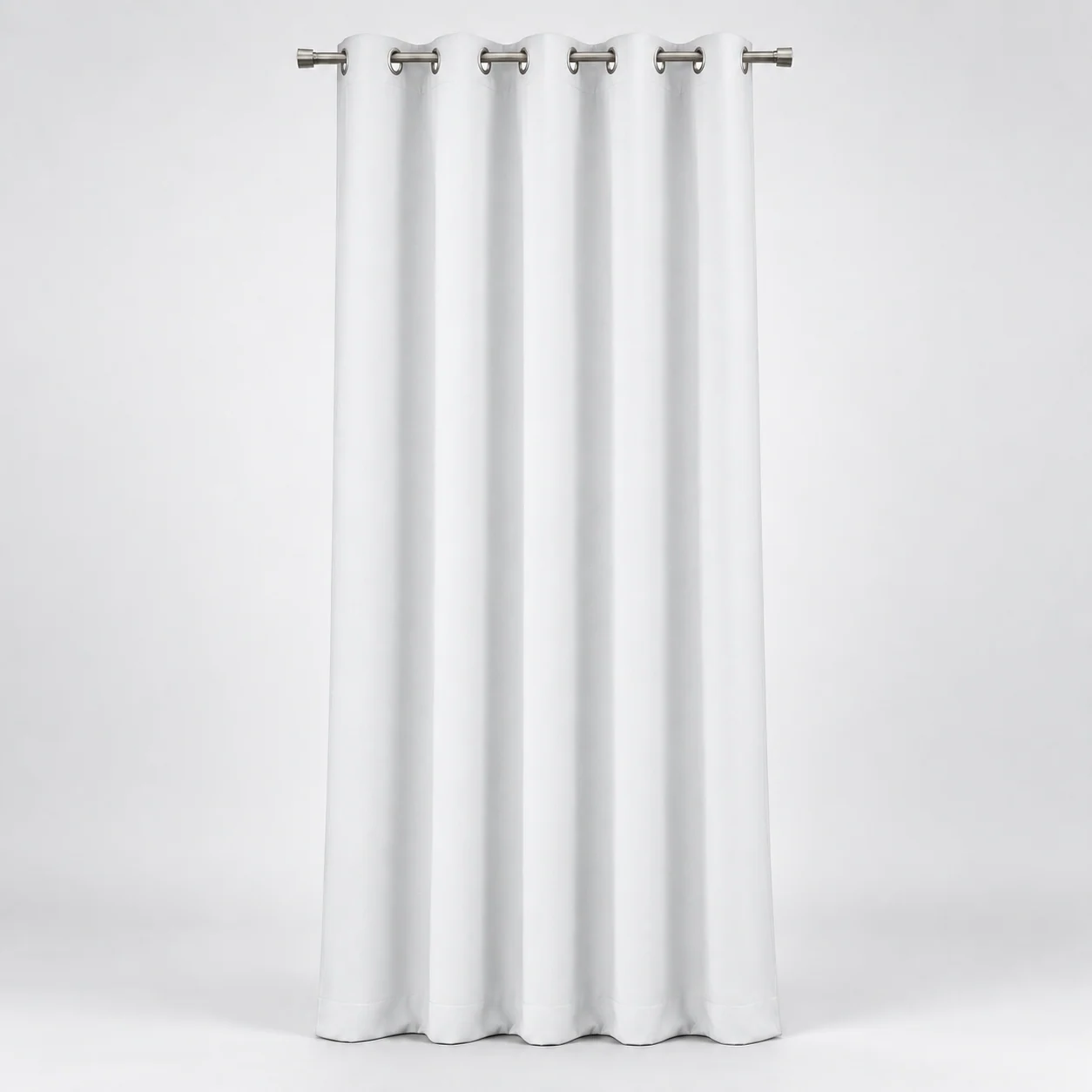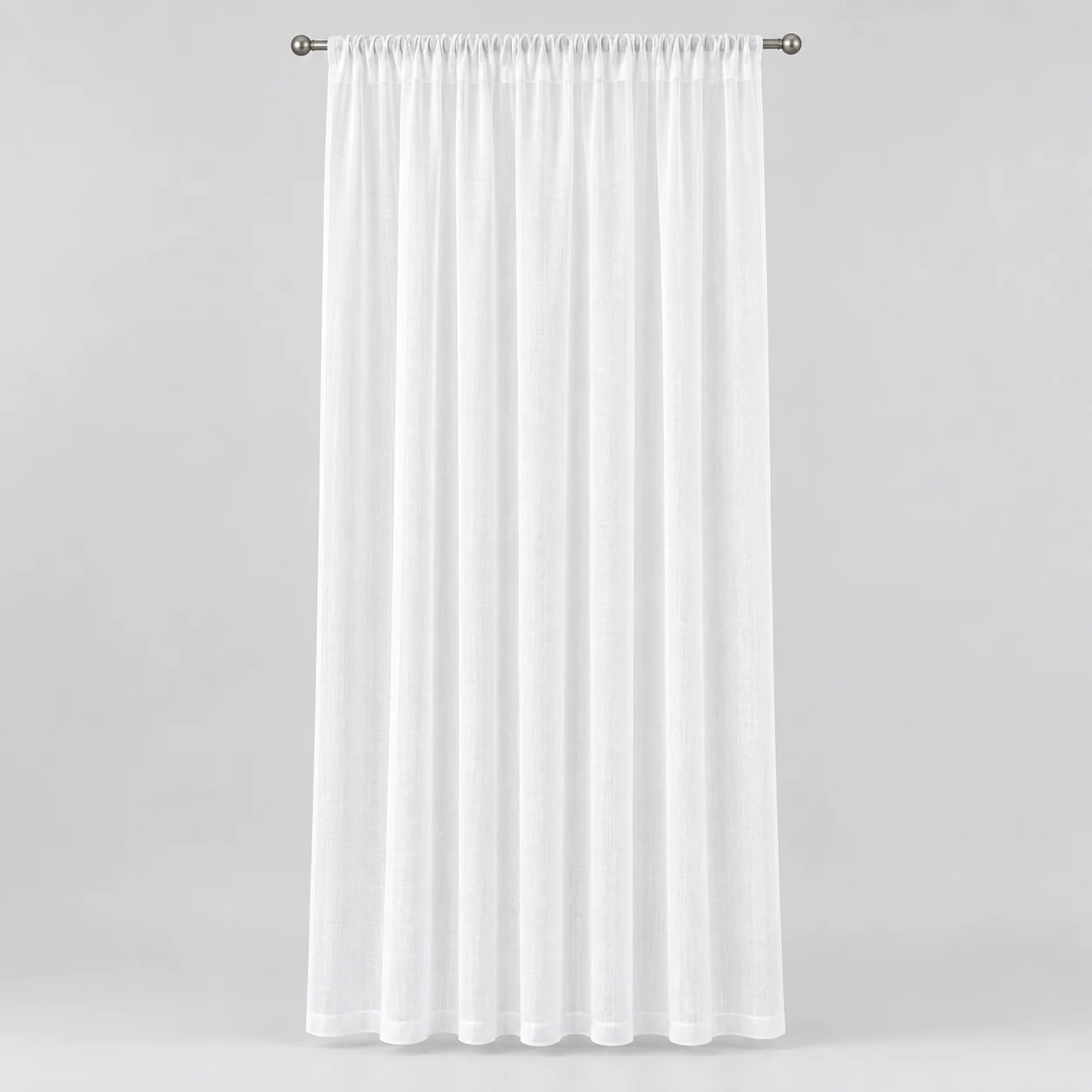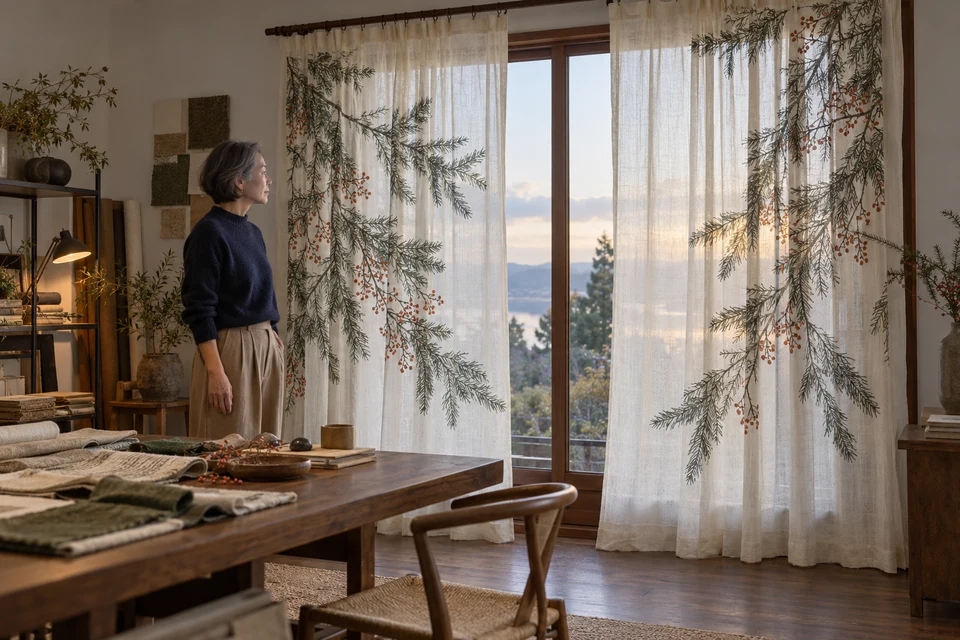
A sparse fir-branch print can create a Christmas window story without a dense all-over pattern. Its most important layout decision is often the center opening. Branches can approach each other, overlap visually or form a deliberately open frame around the glass. Those relationships change when the curtains gather or move apart. Buyers should therefore approve a directional pair at the proposed installed width, rather than treating two attractive flat panels as a finished window design.
Draw the two-panel composition before ordering repeats
Mirroring and continuing a branch are not the same operation
Identify a left and right panel viewed from inside the room. Show the top, inner edges and outer edges on each artwork file. Decide whether the branches mirror each other or belong to one continuous scene. A mirrored design can be balanced without matching across the opening; a continuous scene needs an agreed relationship between the two inner edges. Keep that distinction clear when requesting print layouts.
Use the technical-pack checklist to retain the complete pair drawing and individual panel files. Extend the illustration into the proposed hem and heading allowances so hidden areas are visible to the development team. Mark any branch tip or berry cluster that must stay clear of a finished edge rather than relying on a generic centered-artwork instruction.
- Name the pair orientation from the room side.
- Separate mirror symmetry from a continuous two-panel scene.
Review the print at the intended gathered width
Flat artwork does not show how folds hide the branch
Hang the sample with the nominated heading and usable panel width. Record the installed span and gathering condition. A long horizontal branch may disappear into several folds, while a vertical stem can become more prominent. Decide which parts of the illustration need to remain readable and which can be naturally interrupted. Do not pull the panel flat solely to make the photograph match the digital layout.
The voile panel planning guide helps separate fabric transparency from window coverage. Add the directional print review to that record. If a different heading is proposed, repeat the hanging comparison; the same fabric width can form a different fold distribution. Avoid specifying a universal gathering ratio without reviewing the actual design and window brief.
- Record heading, installed span and gathering condition together.
- Judge motif readability in natural folds, not a stretched photograph.
Approve closed, partly open and fully drawn-back views
The branch relationship moves during ordinary use
Close the pair to the intended meeting position and inspect the two inner edges. Then open it to a representative everyday gap and draw the panels back. Note whether a branch appears abruptly cut, the visual balance shifts to one side or an intended open center becomes crowded. A layout need not look identical in every state, but the buyer should accept the changes deliberately.
Use the curtain stackback review for the physical opening space. This article's additional decision is where the fir composition remains visible within that space. Keep operating clearance and decorative appearance as separate approvals. A visually pleasing open view does not establish that the track, rod or curtain assembly is suitable for the installation.
- Retain three ordinary operating states in the sample record.
- Review decorative continuity separately from hardware and clearance.
Check small fir details on the actual sheer ground
A crisp artwork preview cannot establish the printed result
Request a print sample using the proposed fabric and process. Look at the small needles, branch junctions and accent berries from close range and normal room distance. Review the panel against daylight and against the room's darker surfaces. Keep the approved degree of softness or transparency visible in the reference. Do not increase contrast digitally and then use that image as the physical acceptance standard.
The print strike-off guide supports the material and color record. Add a complete hanging sample before final layout release, because a small strike-off cannot demonstrate pair continuity. If the ground or print route changes, repeat both the detail and window review. Claims concerning privacy, fade resistance or care performance need their own supporting evidence.
- Review detail close up and at normal room distance.
- Retain the actual print-ground combination used for approval.
Make left and right identities survive packing
Two correct panels can still form the wrong delivered pair
Give each directional panel a clear internal identity and specify the supplied quantity as a complete pair or individual panel. Review an opened retail pack to confirm that the intended two pieces are present. If the range includes several window widths or lengths, verify that matching artwork versions are packed together rather than relying only on the shared Christmas collection name.
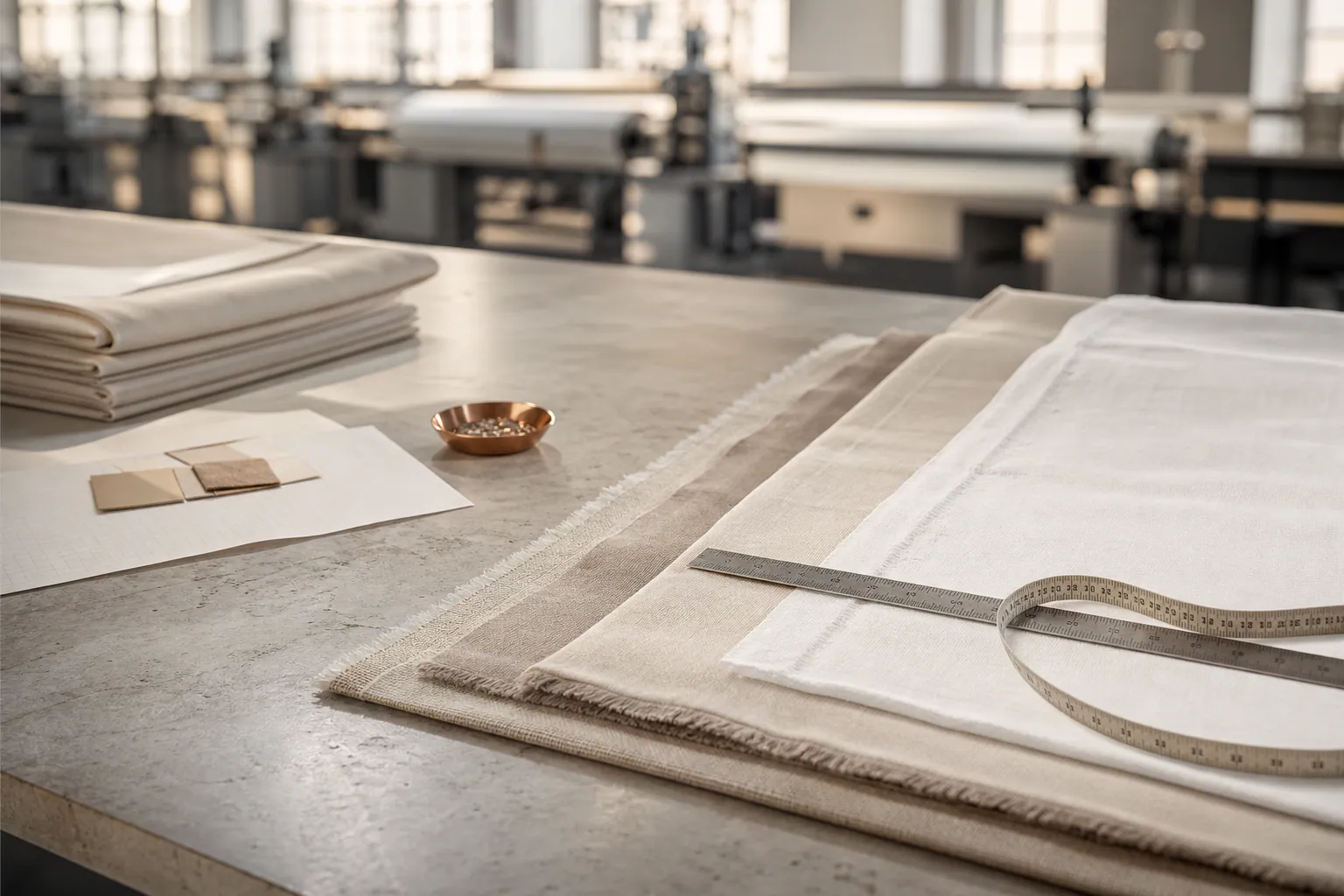
Use the set completeness record to reconcile the panel variants. Confirm print minimums, sampling requirements and the proposed production timeline for the actual pair layout. The generated editorial scene illustrates a design direction, not an approved print, available stock or guaranteed pre-Christmas delivery. Retain the final hung pair as the repeat-order reference.
- Confirm pair versus single-panel selling units explicitly.
- Keep the left-right artwork versions linked through pack-out.
Ask FY Bedding to review your window span, heading and fir-branch artwork as one pair. Request a hung sample in closed and open states, then agree the directional panel identities and pack contents before releasing the Christmas sheer program.