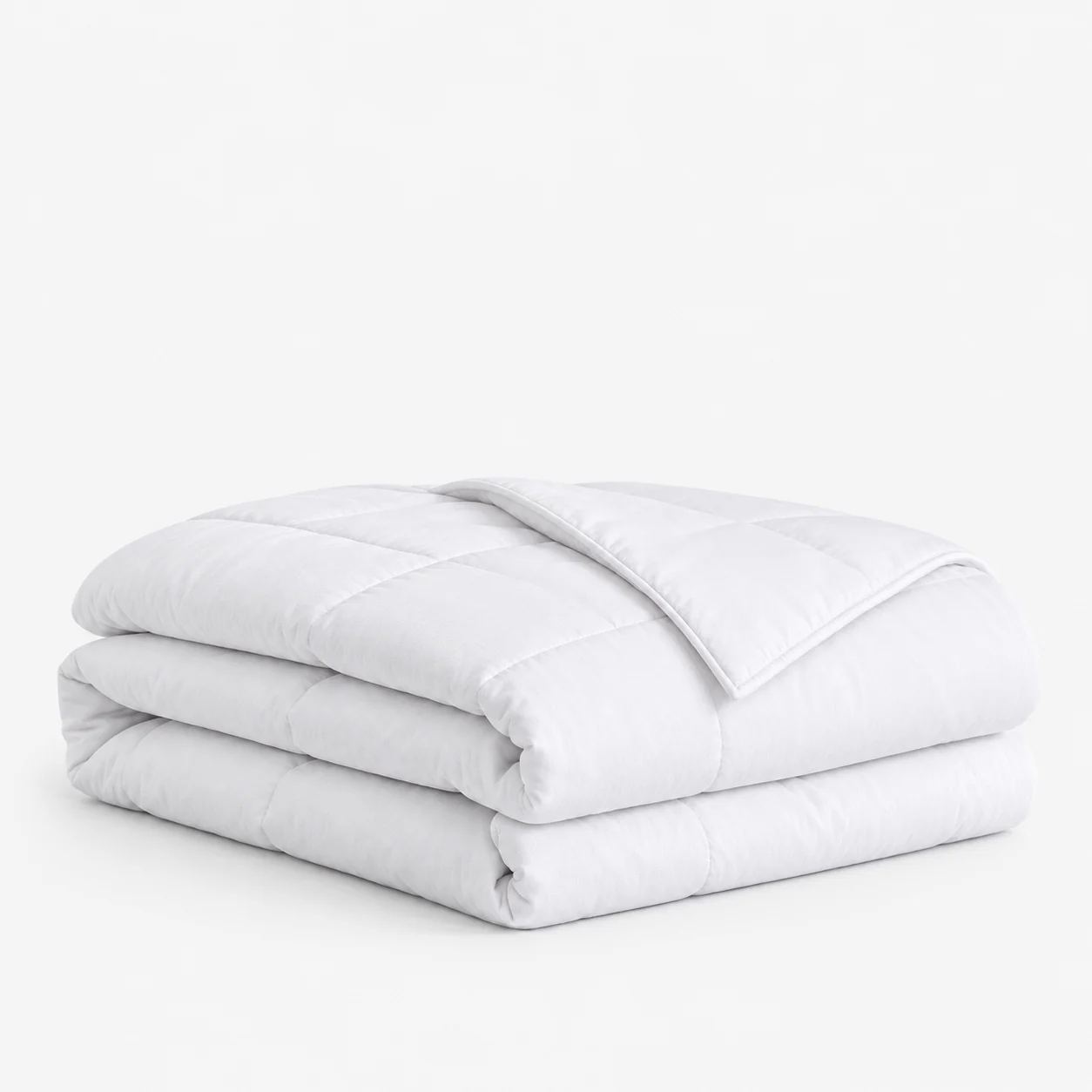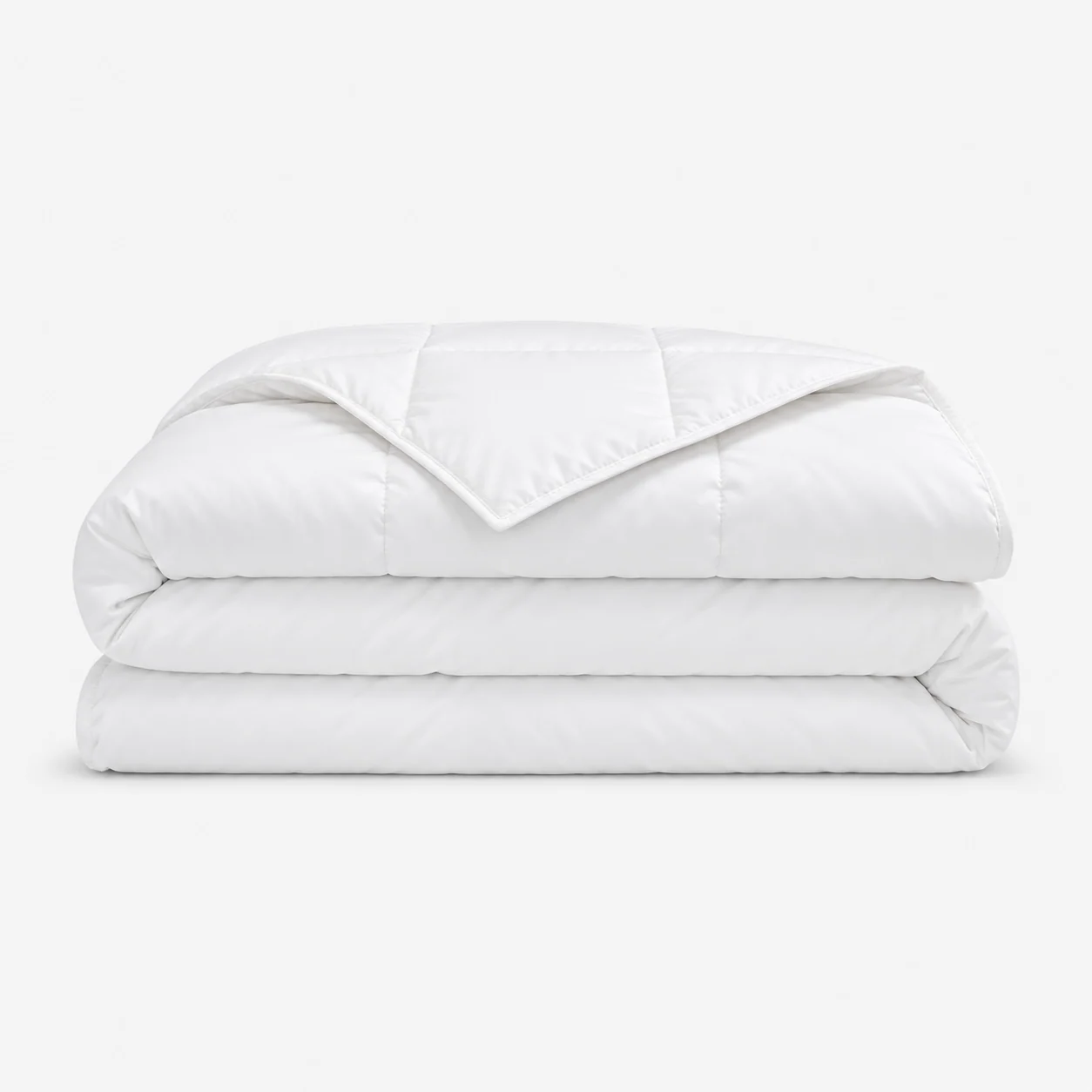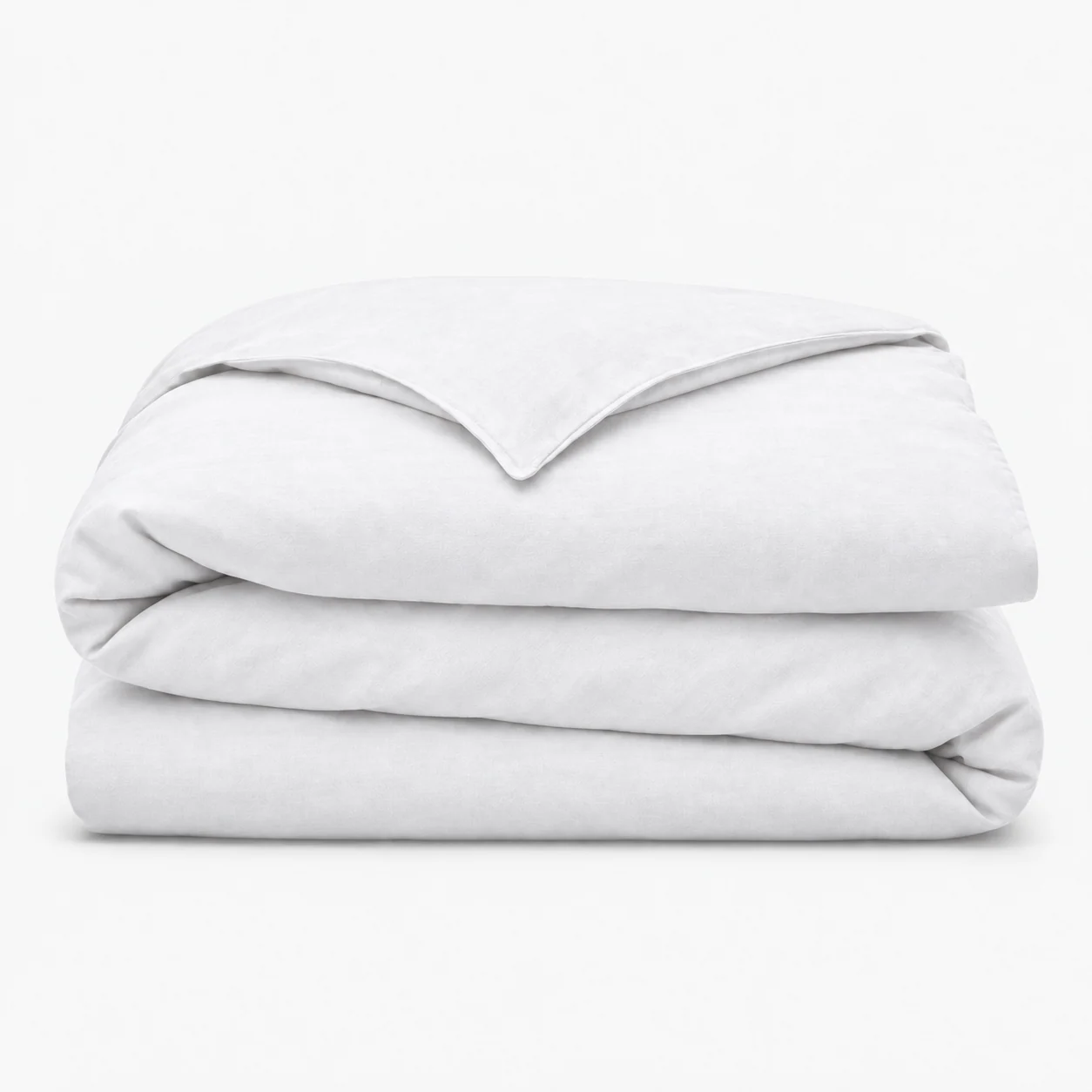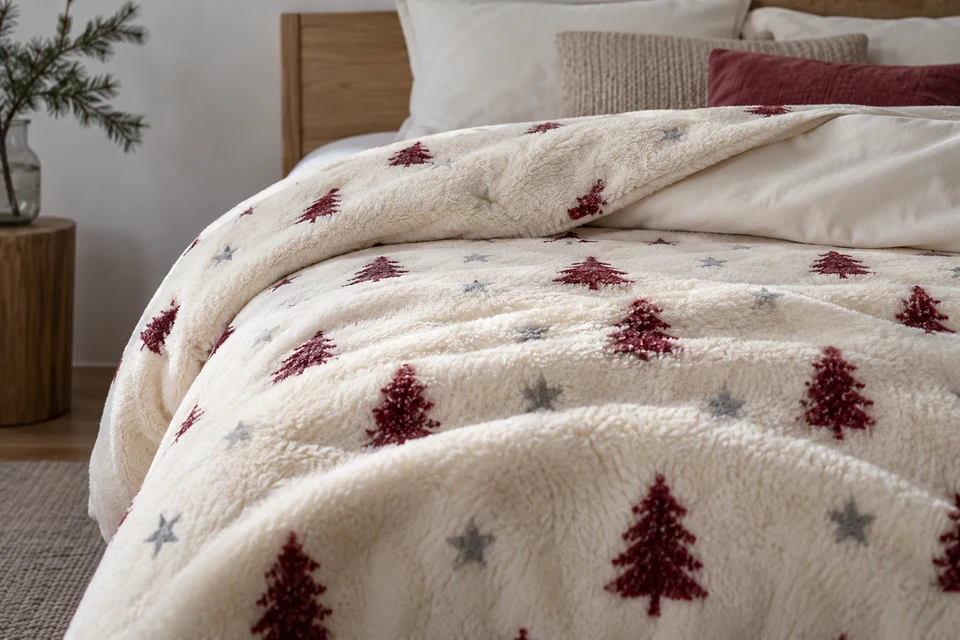
A Christmas tree printed on a plush duvet face is viewed across a textured surface, not a flat paper proof. The motif may be presented brushed, folded or turned back, while the inner face can be an entirely different fabric. Buyers should approve those views deliberately. Start with the offered construction and the intended retail presentation, keeping visual softness separate from unverified warmth, care or durability claims.
Name the face and inner fabric separately
Plush describes an appearance, not the whole bill of materials
Ask the supplier to identify the proposed face fabric, its actual composition and the decoration route. Record the inner face, closure and any coordinating pillowcase components separately. A cream fabric that looks soft in a photograph does not establish its fiber content, pile construction or performance. Keep the component identities in the technical pack rather than relying on a single seasonal collection name.
Clarify whether the quotation covers a duvet cover only or a set and whether an insert is excluded. Distinguish the printed outer face from the material intended to contact the sleeper. If the supplier proposes a different plush surface for cost or availability reasons, request a new relevant sample instead of treating it as a visually equivalent substitution.
- Record outer face, inner face and included set components.
- Do not infer fiber identity or warmth from the illustrated texture.
Approve motifs at the offered pile scale
Fine artwork needs a textile interpretation
Choose a representative panel containing the smallest stars, narrow tree tips and larger solid areas. Review it at close range and from the distance used to view a made bed. Decide which details must remain readable and which can be simplified with the designer's approval. Keep the accepted textile interpretation alongside the original artwork so a supplier is not judged against impossible paper-level detail.
Use the strike-off approval workflow for the actual proposed substrate. A print approved on smooth fabric is not the same reference as the plush face. If changing motif scale improves one feature, review the complete repeat again before releasing it; larger trees may alter spacing, cropping and the balance of the pillowcases.
- Include small and broad motifs in the representative print sample.
- Approve the print on the actual proposed face fabric.
Compare ordinary pile states and folds
Do not approve only a groomed flat panel
Agree how the sample will be prepared and observed, then compare a relaxed surface, the intended brushed presentation and normal folds. Keep lighting and viewing direction consistent enough to make the comparison useful. Record changes of apparent shade or motif definition without automatically describing every directional change as a defect. The accepted reference should show the range the buyer intends to present honestly.
Fit a finished cover to the nominated insert within the size-set sample review. Check the central face, side drop and turned-back edge. A satisfactory loose swatch does not establish how a large decorated face looks when the insert creates curved folds or when one edge exposes the inner fabric.
- Record preparation rather than silently grooming every sample differently.
- Review the made-bed fold and turned-back edge on the finished cover.
Keep care evidence attached to the complete cover
A pleasing surface is not a test result
Ask the technical owner to define the evaluation needed for the actual face, reverse, decoration and closure combination. Review the identified finished sample before and after the agreed process, retaining records of any permitted preparation. Observe the motif, surface and relationship between the two faces. Do not transfer a result from an unrelated plush fabric or a plain swatch onto the decorated finished cover.
The product testing plan can separate appearance observations from claims requiring formal evidence. Avoid adding anti-pilling, colorfast, hypoallergenic or thermal language merely because those phrases appear in a supplier's general catalog. Quote only the evidence scope that has been checked for the actual offered product and destination.
- Link assessment records to the exact component revision.
- Hold unsupported care or performance claims out of customer copy.
Release images and quotations from one approved version
The retail view should match the sold construction
Photograph the accepted cover with its ordinary surface variation and clearly show the turned-back inner face where useful. Use the retail image approval record to prevent retouching from making every printed detail artificially crisp. Mark editorial concept imagery as illustrative rather than evidence of a stocked or tested product.
Request quantities and minimums by actual face fabric, artwork and size. Identify development panels, finished samples, set contents and packing as separate commercial inputs. Keep the approved material references and images together so a repeat-order substitution cannot retain obsolete product photography. Confirm the real production and shipping plan before promising a Christmas selling date.
- Show the inner face and sold contents accurately.
- Recheck customer imagery after any material or artwork substitution.
Share your Christmas artwork, intended pile appearance and inner-face requirements with FY Bedding. Ask for a representative print panel followed by a made-bed sample and a product-specific evidence plan before approving bulk supply.